Exclusive: interpack director Thomas Dohse hails the return of the “Tech Olympics”
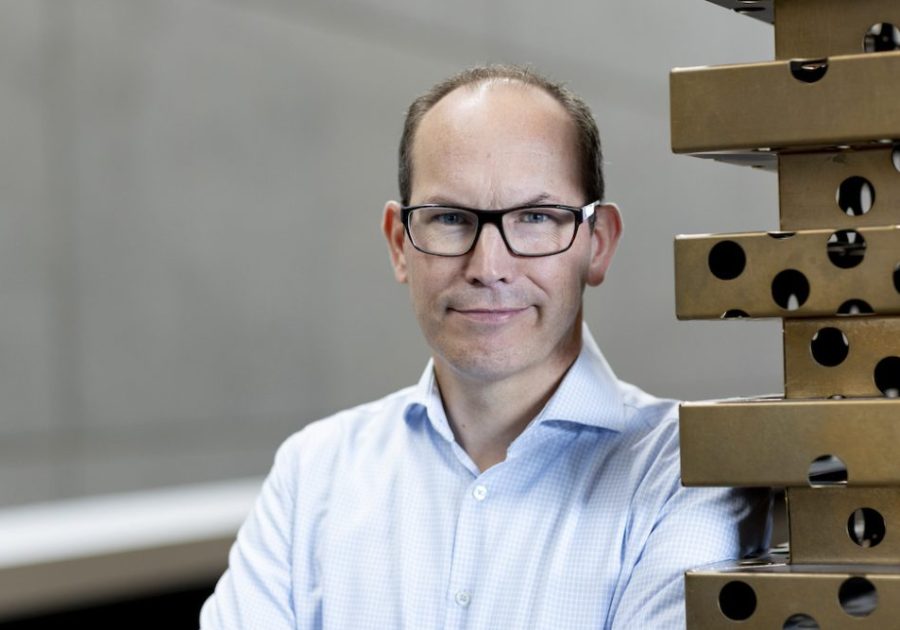
Thomas Dohse, director of Interpack offers his views on how the 2026 event is shaping-up. Pic: Messe Dusseldorf
Held every three years, there remains huge anticipation surrounding plans for interpack, which sits atop of the premier league of global packaging and processing events. Editor Neill Barston meets-up with event director Thomas Dohse to gain the lowdown on this year’s showcase in Germany
When interpack’s engaging director Thomas Dohse last spoke to our title three years ago, he enthusiastically described the event as being the ‘Olympic Games of the packaging world.’
It was certainly a bold statement to make about prospects for the leading sector showcase held once every three years, especially given the fact it had been absent since 2020 due to the pandemic. Watch our key video version of the interview below.
After such a lengthy pause, there had been some doubt as to whether there would be serious appetite for ‘mega events’ once again after being put in the deep freeze in unexpected fashion.
However, the director’s passion for the key Düsseldorf trade fair proved fully justified, as it gained a visitor tally of 143,000 eager to explore more than 2,700 international exhibitor stands.
Clearly, this year’s showcase, which spans everything from confectionery, snacks and bakery machinery manufacturers, through to specialists in pharma, consumer goods and materials, has plenty to live up to.
From experiencing its compelling mix of innovations across packaging and processing technology, as well as wider cross-industry systems, it’s truly a spectacle not to be missed.

Indeed, it’s an ultra-bustling melting pot of intense networking, information exchange and insights, as well as game of extreme endurance in making your way around its vast site located in the German city’s vast Messe halls on the banks of the Rhine river.
This year’s show appears to be ramping up to the next level, with an enhanced tally of 2,800 businesses across industries – which itself indicates a level of resilience to the sector, despite wider geopolitical issues of wars in Iran and Ukraine, as well as wider economic caution in many locations, that all impact on manufacturing sectors as much as other areas of global economies.
So, as I catch up with the event director in London as part of a promotional tour for this year’s iteration, just as the year’s Winter Olympics comes to a close, does he still maintain that interpack holds the same spirit and mentality as those iconic sporting events?
“I think it still is like the Olympics – although that is every four years rather than three for interpack. But it feels similar, as you have the whole world in Düsseldorf at a venue, where single square metre is taken.
“There are more than 65 countries exhibiting, and more than 150 countries from all over the world on the visitor side, with one of the main reasons to visit being that the industry’s decision makers are there, which is important,” reflects Thomas, smiling with a level of confidence befitting an executive who has put his own hard yards in for laying the groundwork for the latest installment of the trade fair.
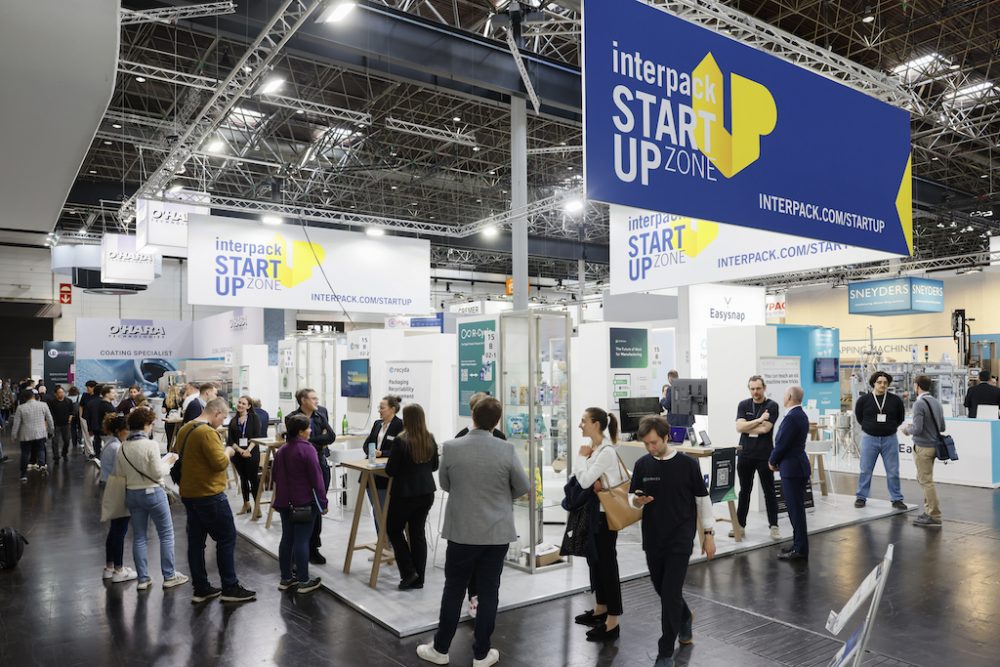
As he breezily explains, “preparations are going great” for this year’s event, which is set to open its doors between May 7-13, with its 176,000m2 of space offering solutions across the full value chain, from packaging and processing machines, distribution solutions, through to a parallel focus on components for core machinery for the sector.
Interestingly, he adds there are a wide range of confectionery, snacks and bakery businesses that are once again engaging with the showcase, demonstrating considerable loyalty to the event.
One of its real strengths, as we have previously covered, is the fact many companies continue to base their natural cycle of equipment innovation around each edition of interpack.
This remains a unique selling point for the show, which trades on being ‘the place’ to launch new systems upon the global market within the food and drink sector, and many more industries besides.
Interpack on tour
Notably, the event director has certainly been putting in the hours of part of a grand tour during the past few months that has seen him mix with industry specialists in wide-ranging locations as far afield as the US, Thailand, Brazil and Asia, using each experience to glean new insights in order to further meet the ever-increasing expectations of event visitors.
As the industry veteran explains, having spent over two decades in the sector, he says there was plenty of fine feedback from the last edition of the event from which the event’s management is continuing to build and evolve.
For many visitors to the last edition, there was a sense of the sector very much being ‘back in action’ even if visitor numbers were
down on its previous edition. So, what were his main takeaways from 2023?
“That’s a tough question. But we had almost 1000 exhibitors from the packaging material field, which was a third of the show, which made it the largest of its kind in the world, which was a highlight.
It was also great to see all the machinery and equipment live and in action – for example, seeing full 30 metre lines producing for the show, which is something special that you don’t see at other events,” he adds of the event.
As he explains, it is particularly satisfying having a set three-year exhibiting cycle in which to prepare for each edition, which requires extensive work in fashioning a show that provides something for everyone across industries.
On his travels, he continues to relish engaging with a dynamic audience from across the sector – but what are the biggest regional variations that he is continuing to experience?
“Some of the differences around the world can be surprising sometimes – when we talk from a Europeans perspective about what is sustainable, what is the best possible material for the future, we are talking very much about alternatives to plastics.
“But in Asia, by far the number one material is plastic, either rigid or flexible. And it will stay this way for a long time, with this being the fastest growing and the biggest market, together with Middle East, so it is the case that plastic is the number one material in the world,” which he observes in itself poses shared challenges on how environmental goals can be balanced against meeting consumer and commercial demands in an ever-shifting marketplace.
Crucially, the core premise of the event, as a vast shop window for advancements in machinery across industries, comes at a significant period for many industries – which are experiencing relatively buoyant machinery sales, amid rising global demand for food and drink across categories.

Interpack is back for 2026. Pic: Messe Dusseldorf
Moreover, continuing advances in automation systems, which are being enhanced through deployment of AI-based technology, are increasingly under development as labour shortages persist in many markets around the world.
Indeed, according to figures from Grand View Research, the global value of the packaging machinery market is estimated to top $80 billion by 2030, with its figures asserting that the overall food technology sector will be worth some $183 billion within the next five years, demonstrating a steady upward curve over prior results.
“The demand for equipment and systems is there – because the main drivers are still the population growth on the planet and the urbanisation, the rising incomes around the world and so, and the people need to eat, they need consumer goods, they need pharmaceuticals, and these all have to be packed.
“There are great growth rates, mainly in Asia, in the Middle East, smaller rates, while markets are increasing in Europe, US, South America, So the whole industry is still in a very good position.”
As the organising team behind interpack have noted, as far as confectionery and bakery markets are concerned, these are also experiencing encouraging levels of expansion. However, there are also significant pressures to transform, through meeting higher environmental and general operating standards, which requires significant investment across the sector.
In respect of this, the Düsseldorf show will include three dedicated halls to these segments (1,3 and 4), across 40,000 square metres, forming a sizeable amount of focus for the event.
Manufacturers will find solutions there covering the entire value chain – from raw material processing through shaping and coating to primary and secondary packaging.
As you’ll see from our key preview of the event in this month’s edition, a host of businesses, from smaller specialist equipment’ producers, to major corporations will be represented in Germany.
This includes a strong contingent of British firms including BCH, DT&G Ltd, alongside large international operations such as Aasted, Gerhard-Schubert, Solich, Theegarten Pactec, Sacmi Packaging & Chocolate, Bühler and Coperion, among many others, eager to showcase their latest systems to both existing and new customers.

Schubert at Iast year’s major Interpack event. Pic: Neill Barston
Despite supply chain tests impacting confectionery markets, there are positive signs in many locations around the world – including newly released figures for the US, revealing what is a $55bn market, with similarly encouraging figures for many parts of Europe.
As interpack’s team also notes, the bakery world is also experiencing bright sparks, with a worldwide market requirement of 177 tonnes of baked goods in 2024, which continues to rise. Growth of 9.6 per cent is expected by 2029, driven by upturns in the Middle East and Africa, as well as in Latin America.
Moreover, as for what is in store in terms of technology breakthroughs, there will be some genuine innovations in store that companies have been carefully preparing for over the past few years.
“I’m always fascinated with what the engineers of those companies produce and how they develop a further three years on, what’s the next step? Sometimes you think, okay, this is such a masterpiece of engineer art, how can you further develop it? But still, and I think when you look back 20 years, you’re surprised how many steps we have been through, and this will now the next revolution with AI is just starting, which I think will be developed even more. In three years from now, we will see much, much more of this,” adds the director, of the robotics and automation trends that are now dominating many industry conversations, as machinery development is rapidly being influenced by such digital tools that can help devise ever-more efficient systems.
Expanded regulations
Significantly, as Confectionery Production continues to report on, regulatory requirements are always continuing to changes around the globe, with interpack gearing-up to play its part in those discussions through a series of education sessions.
Linked to this, one of the most pressing matters hanging over the industry at large, is the upcoming delivering of packaging and waste recycling regulations (PPWR), which are occupying the thoughts of many sectors over the levels of compliance required.
How much of a difference does the interpack director believe legislation such as this will make on the sector?
“I think that PPWR regulations will have a big impact ppwr, because everyone has to follow these rules. So, if you want to do business with Europe, which is a great and big market in the world, then you have to comply with these regulations.
“And the regulations are, of course, something critical for companies, so we will also bring up the topic, for example, in our forum spotlight in the in the main entrance north, which will also focus on ,innovative materials, sustainability, and future skills for the industry.”
Welcoming venue
Significantly, the host nation for interpack remains an especially vital location for manufacturing within the packaging and processing sector – with Germany being consistently hailed for the quality of its machinery and equipment for the food and drink sector.
As interpack’s director notes, Düsseldorf itself is a notably hospitable location, with the event generating an exceptionally high level of positive feedback – some 95 per cent of visitors report they would return to the event on its next staging.
With a vibrant and engaging city centre packed full of restaurants, cafes and other cultural gems, there’s a memorable experience to be had in lingering to appreciate the area beyond the extensive site of the showgrounds itself.
“Dusseldorf is a relatively small city of around 600,000, and it’s in an easily accessible place to come to from all over Europe – and because of its smaller size, that’s a nice thing as you get to meet people outside of the show, in the old town area that you can experience as well, so it feels like the event is going on not for just seven days, but seven nights, so this is something that you have to experience,” concludes Thomas of the what is destined to be one of the hottest tickets in the technology world this May, as the packaging and processing sector assembles for what is clearly anticipated to be a landmark moment in the industry’s calendar.
Topics
AI bakery confectionery Conference equipment event machinery new products Snacks sustainability systems technology
PeopleOrganisationsRegions