Ghana’s Cocobod lifts cocoa crop prices, yet wider major market challenges remain

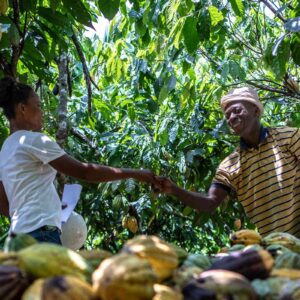
Ghana cocoa production (picture ICAM)
Ghana’s Cocobod government-backed industry organisation, has confirmed elevated producer prices for its 2026/2027 cocoa season, in a bid to tackle major challenges facing the sector, writes Neill Barston.
As the group asserted, its latest announced prices, rising from GH¢41,392 ($3,500) per tonne in the 2025/26 season to GH¢42,400 ( $3,630 per tonne) for the forthcoming season, come in the wake of the Cocoa Board Act.
According to Cocobod, this stands 71.18% of the gross price, which in turn equates to GH¢2,650 ($226) per 64-kilogram bag of cocoa, that has been brought in with immediate effect, with the nation, and its neighbour, Ivory Coast, supplying two thirds of cocoa supplies for the global chocolate industry.
This follows the introduction of Cocobod’s Ghana Cocoa Board Act of 2026, which has pledged to revitalise an industry that has faced intense pressures that have resulted in a fresh crisis for the sector.
While the latest rates does in fact send a positive signal, it comes in the wake of a significant pay cut of 30%, from GH¢ 3,625, to GH¢ 2,587 per 64kg bag, following a significant slump in prices that fell from key highs of $12,000 a tonne on futures markets in New York and London, to around $3,000 per tonne earlier this year, which have returned upwards in the region of $5,000 within the past two months.
However, key concerns over pricing volatility remain, with widespread warnings surrounding El Nino weather conditions, as well as significant issues over crop disease including swollen shoot virus that is reportedly impacting up to a third of cocoa crops within the region.
Among the key stated goals of the Ghana Cocoa Board Act, is a target of more than 50% of cocoa farmed in the country, to also be processed locally, thereby potentially leading to greater profits being retained at source. However, as organisation including Fairtrade, as well as regional observers have noted, this would only provide substantial benefit to farmers themselves if clear policies of significantly enhanced pay and conditions were directly linked to such processing policies.
Stakeholder consultation
According to Cocobod, its latest crop prices had been carried out with extensive conversation with involved stakeholders, with greater returns for farmers being reportedly high on its agenda to ensure further growth for the industry.
Significantly, the organisation confirmed that the government would continue implementing Productivity Enhancement Programmes aimed at reducing the production burden on farmers and increasing farm yields. This is set to include supply of free fertilizer, free hybrid cocoa seedlings, and the Cocoa Disease and Pest Control Programme.
Furthermore, Cocobod believed its latest efforts would also help tackle cocoa smuggling – which has been reported in the region, as farmers seek to gain higher rates for their crops in neighbouring nations including Cameroon. In relation to this, the government-backed body called on the sector, to support its efforts in helping stamp out such issues.
Similarly, the region has also been hit by ongoing issues of illegal gold mining activity, known as Galamsey, where farmers, often earning well below World Bank definitions of poverty, at under $1 a day, have felt pressured into selling up their plots to illicit commercial activities.
In addition, Cocobod has confirmed that it is has fully deployed the Ghana Cocoa Traceability System (GCTS) across all cocoa-growing areas of the country, asserting that it is ready for EUDR compliance with the deforestation regulations coming in at the end of this year.
Related legislation on human rights and corporate due diligence is also being brought forward within the EU Parliament, and Cocobod welcome these initiatives in supporting transparency across the value chain.
Furthermore, the organisation also cliamed that existing rates and fees applicable to other stakeholders within the cocoa supply chain have been maintained, including buyers’ margins, hauliers’ rates, warehousing and internal marketing costs, and other agricultural activities.
Cocobod stated: “We remain committed to working with cocoa farmers and all industry stakeholders to improve productivity, strengthen transparency and traceability, protect cocoa farms, promote domestic value addition and build a financially sustainable cocoa industry.”
TopicsOrganisationsRegions