Global ofi ingredients group makes continued strides on cocoa sustainability
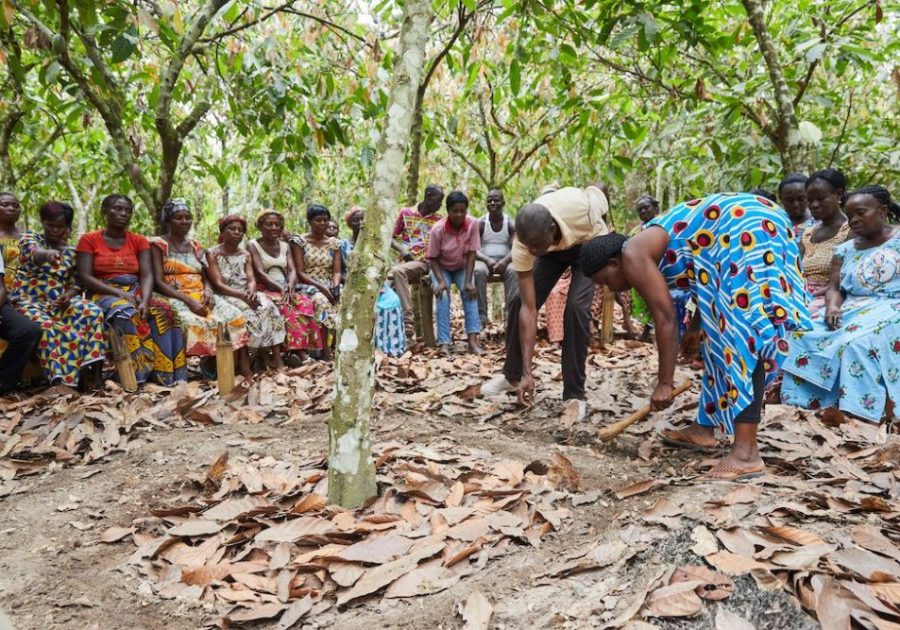
pic: ofi
Global ingredients group ofi has unveiled its Choices for Change impact report, charting progress on key sustainability goals within cocoa and other key commodity supply chains, writes Neill Barston.
As the business explained, its latest study underlines an ongoing commitment to farmer income and livelihoods, which remains pivotal to addressing issues including child labour and the overall viability of sectors, with many agricultural workers in the wider sector still reportedly earning below official poverty wages in core markets of Ghana and Ivory Coast.
The latter two countries have been hit especially hard, as the region’s respective governments dramatically reversed last year’s pay rise, cutting back the gains farmers had made in the past year, as cocoa commodity values tumbled in both New York and London to around $3,000 a tonne, from a peak of $12,000 at the start of last year.
For its latest report on sustainability, which once again takes centre stage at this year’s World Confectionery Conference event being held on 10 September at America Square in central London, ofi detailed progress against its 2030 commitments across cocoa, coffee, dairy, nuts and spices markets.
Among key figures for the report, it detailed that while it was slightly short of its target of 600,000 farmers across its value chains in agriculture now receive some level of income support (it reached 574,000), it was able to attain 100% of targets in other areas. This included a target of ensuring 80,00 farming households had attained a recognised living income standard – which it more than doubled, at 202,000.
Significantly, the company confirmed that it had attained its goal of 100% of its agricultural operations having systems in place to monitor and remediate cases of child labour, as well as protocols surrounding human rights provisions – which is especially crucial given the EUDR and supply chain due diligence legislation that is due to be enacted at the end of this year within Europe, impacting businesses around the world.
As ofi noted, for customers facing tighter expectations around traceability, due diligence, Scope 3 emissions and the evidence behind sustainability claims, it offers a clearer view of where progress is being made and where challenges remain.
It also shows how ofi combines origin presence, sourcing insight and integration at scale to help customers build more resilient supply chains and respond to changing regulatory and market demands.
Furthermore, the company noted that its report has been published against a backdrop of commodity price volatility, changing regulatory timelines and rising expectations around responsible sourcing, the report shows where ofi has made progress, where challenges remain and where more work is still needed.
The report also found that there had been core progress in other areas of its operations including ofi’s Scope 1,2 & 3 climate targets were validated by the Science Based Targets initiative, and ofi also achieved 41% renewable energy use across its tier 1 processing facilities.
Transparency focus
As regards traceability, some 730,000 farms are now reportedly geolocated on ofi’s EUDR-ready Track and Trace system, with deforestation risk assessments and action plans across all high-risk supply chains
Roel van Poppel, Chief Sustainability Officer at ofi welcomed the progress made in the past year: “Customers are asking for better visibility and more reliable data across supply chains. This report brings that information together in one place and gives a clearer view of the progress we are making across our supply chains, where more work is still needed and what we are learning as we go.
“Over the next five years, the opportunity is to take what we’ve built and scale it further – working with customers and partners to expand traceability, improve data transparency and scale specific programs such as agroforestry and living income initiatives, even in a tougher operating environment. That’s central to our purpose to be the change for good food and a healthy future.”
In addition, ofi cited two significant case studies for building greater resilience in supply chain, including the living income program in Honduras with ALDI SOUTH Group and global agroforestry program with Nestlé.
Rachel Vujovic, Sustainability Director, ALDI SOUTH Group, said: “Strong partnerships empower us to achieve greater impact, develop better solutions, and broaden our positive influence – as demonstrated by our Living Income Project with ofi. Providing direct market access, agricultural training, and tailored guidance helped farmers to increase productivity, enhance livelihoods, and support their communities”
For his part, Darrell High, Cocoa Plan Manager at Nestlé, also believed the initiative had been fruitful so far.
He commented: “We’re working with ofi to provide forest and fruit tree seedlings and training to farmers to support this transition [to agroforestry]. It helps farmers, supports the resilience of our supply chain and contributes to our shared climate goals for 2030 and beyond.”