Sector plaudits for ofi, as major cocoa supply chain crisis continues
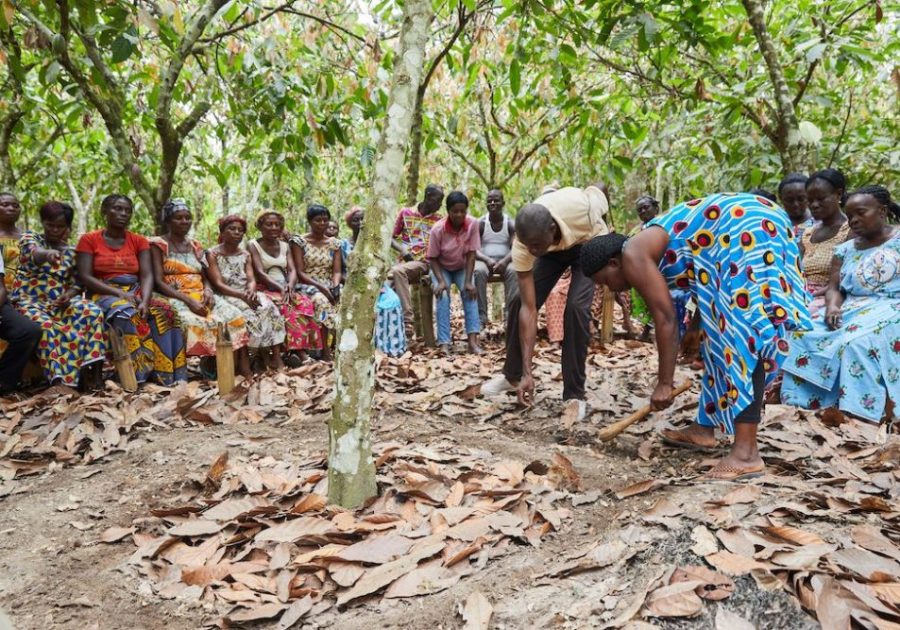
Pic: ofi
Global ingredients group ofi is in celebratory mood after gaining industry recognition for its policies designed to address farmer earning gaps by the Platform Living Wage Financials (PLWF) initiative, writes Neill Barston.
As Confectionery Production has reported on numerous occasions, key agricultural sectors serving the confectionery industry, especially the cocoa sector have seen farmers gaining less then UN defined poverty level wages – with recent price crashes worsening the situation.
As ofi noted, its evidence-based approach to making inroads into tackling the living income problem has been central to its progress on the key topic, which is central to the future viability of supply chains.
Moreover, as the business added, according to PLWF, ofi is one of four companies to disclose the (estimated) income gaps between the incomes in their supply chains and established benchmarks. It is also the only company to show the effectiveness of its policy in closing the gaps.
Furthermore, ofi has collaborated with customers and partners to advance farmer livelihoods for over two decades. Under its Choices for Change sustainability strategy, it is working towards two 2030 goals: providing livelihood support to one million farming households, and a guiding principle for 200,000 farmer households in its network to achieve a living income. In 2024 ofi provided livelihood support to over 450,000 farmers, and more than 150,000 of them earned a living income.
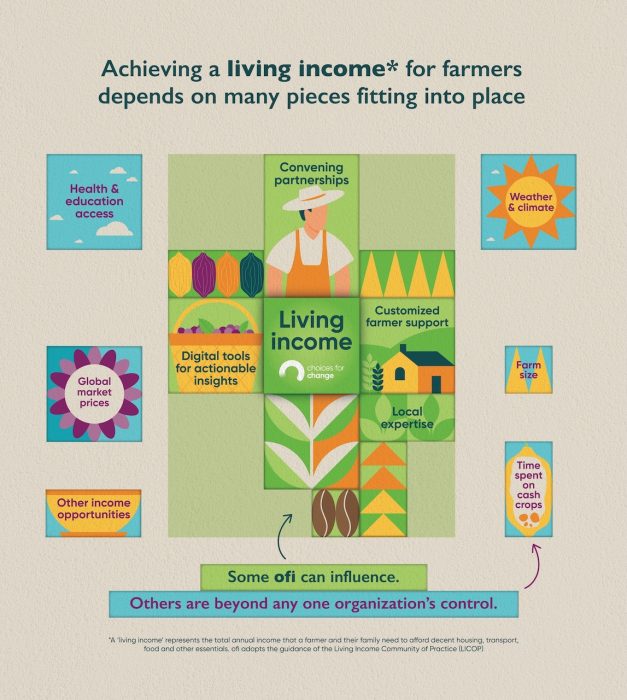
The company notes that living income remains heavily influenced by external factors such as commodity prices, so progress is best understood by tracking trends over time using consistent, data-led measurement.
As our title has reported in the past two month, dramatic price falls in the cocoa supply chain for Ghana and Ivory Coast, as well as neighbouring Cameroon, has caused a fresh sector crisis in the region.
Prices have swung wildly from $12,000 a tonne on futures markets in New York and London at the start of 2025, through to below $2,000 in the past month, before recovering slightly to just over $3,000 a tonne in March.
This is the value that markets traded at around two years ago – but with farmers in Ivory Coast suffering a 60% farmgate income cut from the government-backed authorities organising the industry, and Ghana having 30% cut from payment rates in the sector, the industry remains in severely challenged situation.
To encourage sector-wide alignment, ofi is working with other industry partners, led by SaaS platform TRACT and IDH, to refine its Living Income Calculator. This initiative aims to help turn what is currently a costly and complex process into one that is simpler, collaborative, and comparable across the industry.
It offers a practical tool to help companies address the steps outlined in the new technical guidance for Living Income in Due Diligence, recently presented by LICOP at an EU Parliament roundtable hosted by MEP Saskia Bricmont. As an active participant in the event, organised by the Living Income Community of Practice and the Fair Trade Advocacy Office (FTAO ), ofi shared key living income learnings with policymakers.
Roel van Poppel, Chief Sustainability Officer at ofi, commented: “Living income is a complex, systemic challenge shaped by factors beyond any single company’s control, from land size and productivity to wider economic conditions, so this recognition is encouragement to deepen collective action rather than a signal that the job is done.
“By sharing our tools, data, and learnings, we aim to help partners better understand the challenges of living income in their supply chains. This enables more targeted actions to drive progress, while promoting a common understanding of the private sector’s role in this space.”