Barry Callebaut explores advanced agroforestry for cocoa growing benefits
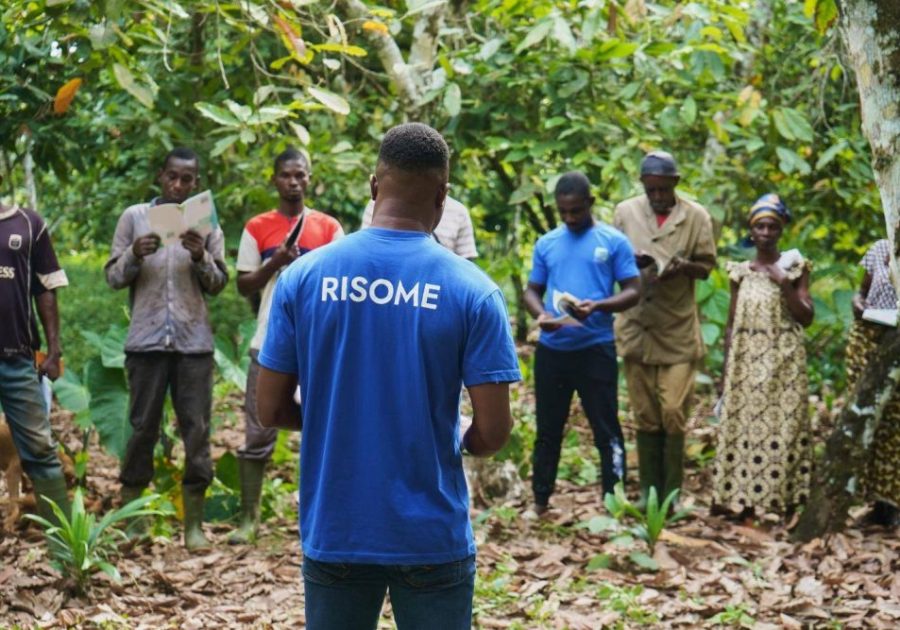
Barry Callebaut is looking to advanced agroforestry techniques favouring natural regeneration of forests to support cocoa growing communities in Ivory Coast. Pic: Barry Callebaut
A distinctive shift in approach to agroforestry is being explored by Barry Callebaut, with research asserting that naturally regenerating trees can grow and develop faster than their planted equivalents, reports Neill Barston.
According to last agricultural studies, the consensus on this key issue is now being challenged, as the Swiss-based business places its Assisted Natural Regeneration (ANR) programme into practice in Ivory Coast – which remains its biggest cocoa producing market.
Significantly, as Confectionery Production has previously reported, the country, and its immediate neighbour Ghana, have faced major deforestation issues over the past sixty years, with as much as 80% of its primary forest being lost due to commercial activities including cocoa production, logging industry, as well as ongoing significant issues of ‘galamsey’ illegal gold mining in the region – which governments have attempted to stamp out, yet remains concerning for the sector.
In response, Barry Callebaut has unveiled its agricultural strategy in aiming to protect and manage naturally occurring wildlings and young trees alongside targeted planting, in a bid to further validate research findings that favour organic methods of farming.
As the company noted, the approach marks an important evolution in how we think about agroforestry: not simply planting more trees, but finding the right combination of natural regeneration and planting to build healthier, more resilient cocoa landscapes.
Furthermore, Barry Callebaut stated there had indeed been significant pressures on cocoa growing regions during the past decade, which is, as Confectionery Production has reported, down to a combination of factors including crop disease (including swollen shoot virus), the ongoing impact of climate change, as well as the negative impact of illegal gold mining operations that continues to strip land otherwise used for farming both Ghana and Ivory Coast, which account for two thirds of the cocoa supply chain.
As the global chocolate group asserted, without sufficient shade, cocoa trees are exposed to drought, extreme heat and erratic rainfall, making them more vulnerable to climate stress.
Restoring shade is therefore becoming increasingly important, yet experience has shown that planting trees alone is not always enough. Growing evidence shows that working with nature by supporting natural regeneration may offer a complementary and more effective approach.
Significantly, research on tree regrowth has, according to the company, been 10% faster in spontaneous regrowth compared to deliberately planted trees, but after 30 years, timber volume is said to be 41% higher than with their planted equivalents.
Consequently, spontaneous trees are said to be able to store more than twice as much carbon after 20 years, and evolve a stronger root system than planted trees, and are more naturally adapted to their environment.
Forever Chocolate programme
Furthermore, as the business added, its long-running Forever Chocolate commitment, which pledged to lift some 500,000 farmers out of poverty during its multi-year programme, ‘climate smart farming’ has long been favoured as an approach.
As part of this, it has observed that restoring tree cover at scale has generated important lessons. Across the sector, practitioners have faced recurring challenges, from low seedling survival rates to the difficulty of adapting standardised interventions to diverse farming realities.
Commenting on its progress, Jessica Wettstein, Barry Callebaut Global Lead, noted: “Climate & Nature is already showing us the way. By combining its potential with farmers’ knowledge and the latest science, we can help build cocoa landscapes that are more diverse and resilient for the future.”
These practical lessons, combined with advances in scientific research, are reshaping how agroforestry is approached today. Research conducted by the French agricultural research and international cooperation organization, Cirad, and the National Polytechnic Institute Félix Houphouët-Boigny (INP-HB) has deepened our understanding of forest restoration processes in Côte d’Ivoire, revealing the significant potential of natural tree regeneration within cocoa landscapes.
The research highlights that trees can naturally regenerate, offering an underused opportunity for cocoa agroforestry projects.
In addition, the company also cited Cocoa4Future, a 2020-2025 research and development project aimed at supporting the agro-ecological transition of West African cocoa farming, Cirad identified that even after forests are cleared, trees can regrow within cocoa farms, supported by remaining large trees in the landscape and seeds already present in the soil.
Significantly, Barry Callebaut explained it began its journey on delivering advanced agroforestry in 2023, working with French/Ivory Coast environmental organisation, RISOME, and Cirad, in works that would lead to the Assisted Natural Regeneration project.
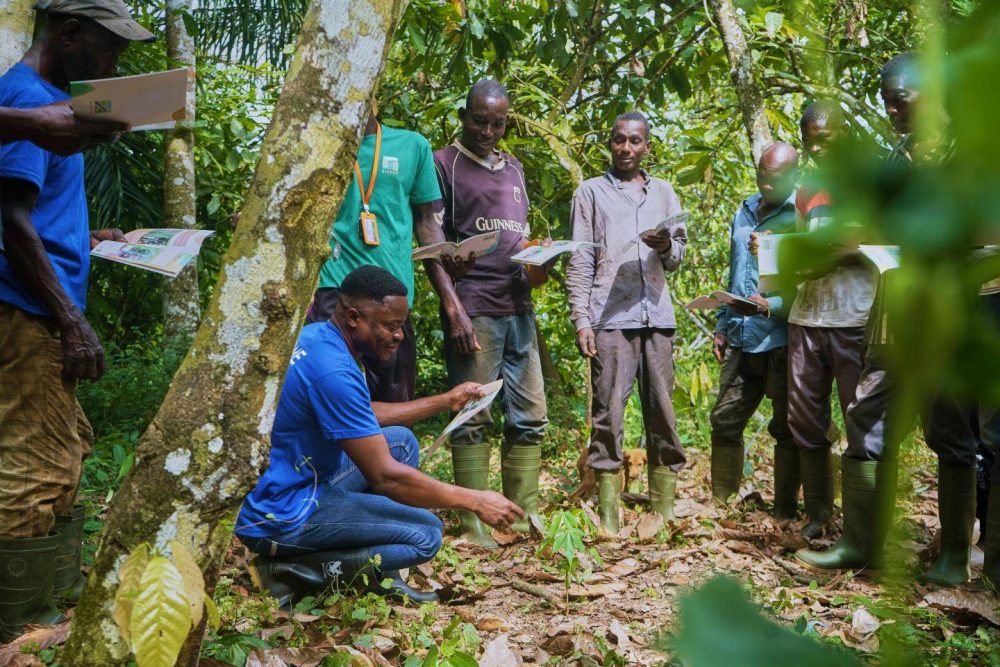
In the past two years, this has resulted in promotion of the project on over 3,000 hectares of land in Eastern Ivory Coast. This has involved identifying, selecting and protecting naturally regenerating wildlings and young trees, as well as preserving remnant trees. This was complemented with planting to enhance species diversity.
The project’s early results suggest that working with natural regeneration can deliver benefits both for farmers and for cocoa landscapes. Beyond reaching 1,800 farmers, the initiative has demonstrated that spontaneous tree growth is widespread, biodiverse and more likely to survive over the long term than planted trees.
Finally, this year, the company has expanded its approach to West Ivory Coast, in a bid to scale its impact. In its view ANR offers a key route to strengthening forest resilience, supporting shade restoration, and enriching soils, as well as encouraging biodiversity, as the business explores how cocoa communities can respond to growing climate challenges that pose a significant threat.
As Confectionery Production has reported, this is especially the case with the much-is especially the case with the much-forecast factor of El Nino weather conditions anticipated in West Africa and around the wider region over the coming months that pose a particular destabilising influence.
Topics
agroforestry best practice chocolate confectionery farming research science studies supply chains techniques technology
PeopleOrganisationsRegions