Exclusive: Interpack 2026 extended event reflections

Interpack made another successful return to Düsseldorf in May, as we discovered in our extended reflection on this year's event. It will return again in 2029. Pic: Messe Dusseldorf
Held every three years and hailed as the “Olympics of packaging and processing,” the 2026 iteration of interpack proved a major recent highlight, as editor Neill Barston found reporting on the major global event, for our special extended reflection on the must-attend global show.
After all the hype and build-up that surrounded this year’s interpack event in Düsseldorf, the event more than lived up to its considerable hype in enticing the packaging and processing world to Germany.
With global affairs causing a notable level of uncertainty for many sectors, including across the manufacturing, ingredients new product development world, including wars in the Middle East, Ukraine, as well as the ongoing impact from US tariffs, there have seemingly few reasons to celebrate given the challenging state of the world.

Dusseldorf formed a striking backdrop to this year’s interpack
However, the spirit of a global industry community rekindling old friendships was very much in evidence for this year’s show staged in May, which drew an eclectic mix of visitors from around the globe, proved that the thirst for such major week-long expos was alive and well.
With hot topics including the delivery of ‘smart factories of the future,’ development of AI, and emergence of machinery able to handle a greater variety of materials to meet incoming legislation requirements all on the table, this proved a highly productive and engaging event.
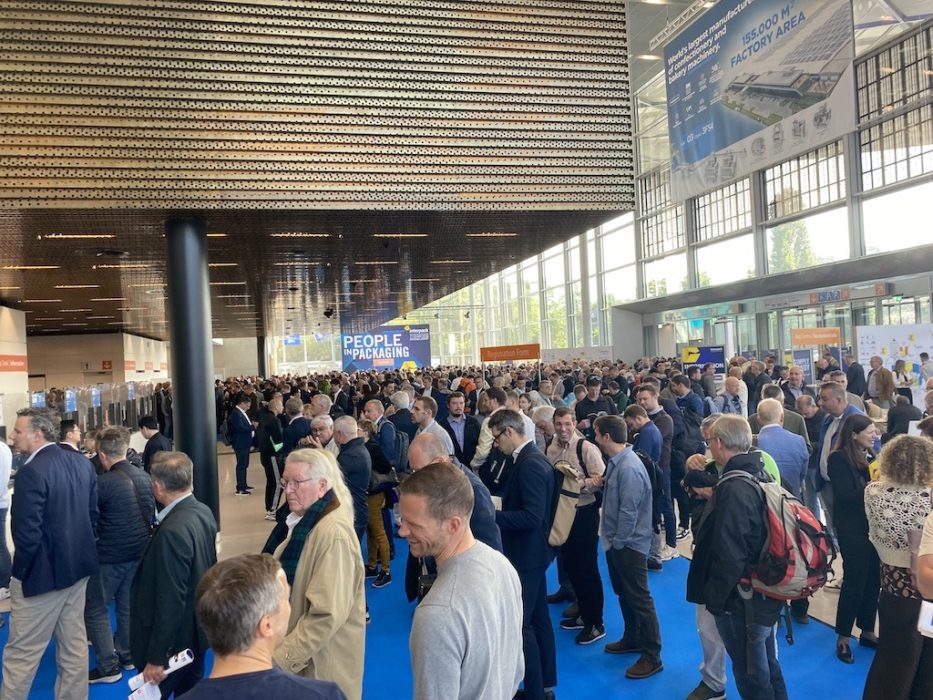
Speaking to Confectionery Production during the event, director Thomas Dohse, believed the Messe Düsseldorf show had exceeded expectations, and while he acknowledged that the final visitor numbers may not quite have matched the previous edition, the quality of it was notably high.
In total there were 127,000 attendees against 143,000 three years previously, with 165 nations represented, with some 2,800 exhibitors joining the extravaganza.
“That was a top interpack. Busy halls, intensive exchange and concrete projects showed the strength of this global community. interpack is the most important meeting place for the industry worldwide, and this edition impressively confirmed that,” reflected the show’s director on conclusion of the global showcase.
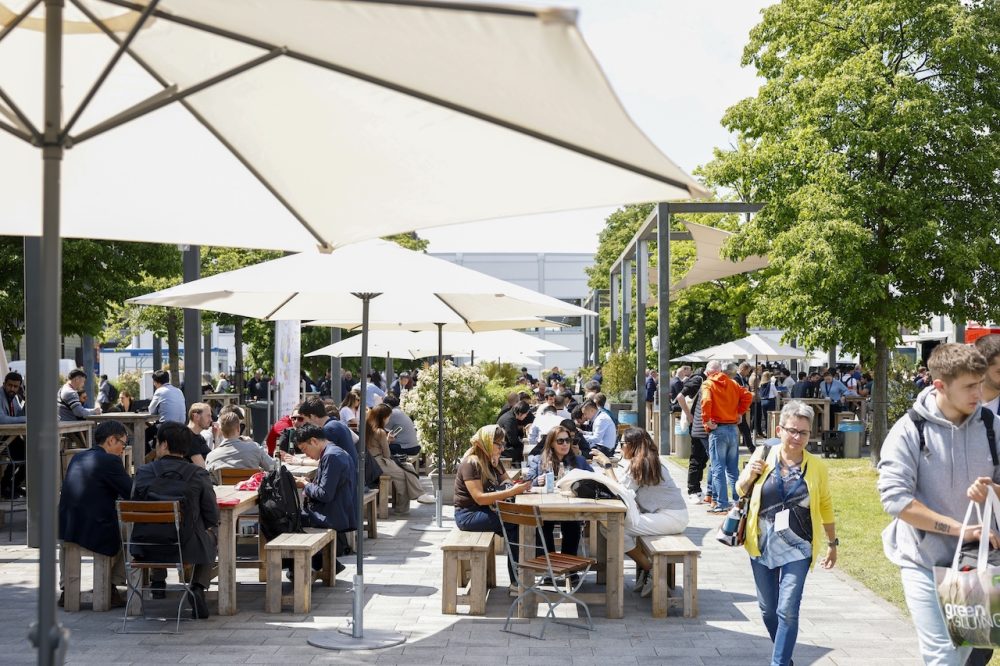
As the event’s leader explained to our title prior to the trade fair, the striking showcase, which has affectionately been dubbed as ‘the Olympic games of packaging and processing’ genuinely has proved unrivalled on a number of levels for the industry.
Perhaps chief among these points is the undeniable fact that many leading manufacturers across market segments, including for confectionery, snacks and bakery frequently time the release of new machinery and systems purely for the show floors of interpack. (See our two exclusive video reviews of this year’s event below, and subsequently).
This was definitely in evidence at the 2026 event, though proceedings started on somewhat of an unexpected note, as key businesses including Theegarten-Pactec packaging systems, Acma, and Loeschpack issued a joint statement warning the sector that it was aware of companies seeking to clone genuine equipment, which would not be tolerated.
Undeterred by this, the show’s 18 halls buzzed with energy, as companies played their part in delivering equipment and systems that responded to the ever-evolving demand for lines that meet sustainability needs, as well as being both efficient and swift in their operation.
As we have noted previously, among other most-requested requirements from manufacturers is in devising lines that are also packed with user-friendly automated systems.
With an ever-expanding range of food, snacks, and bakery items, devising systems that are also flexible in their operation has proved a winning move for many equipment companies.
Marking 60 years in industry
One of the most notable early launches for the trade fair came courtesy of Germany’s Gerhard Schubert. The Crailsheim-located business pulled out the stops for the trade fair, which it used to celebrate the company’s 60th anniversary of trading.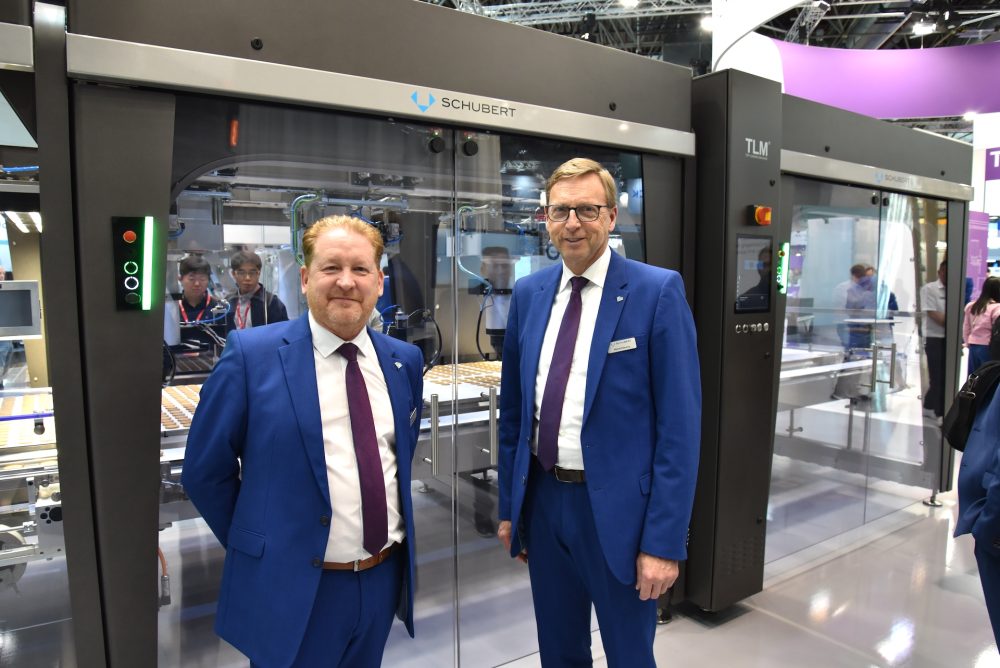
Marcel Kiessling (above right, with colleague Mark Stepney (left), managing director of sales for Schubert, noted to our title: “Sixty years is a pretty important milestone for us, after Gerhard Schubert founded the company back in 1966. Many things have happened since then in the markets that we are serving, so we are very proud to be turning 60 as a family-owned company, with a third generation of the Schubert family taking on more responsibility, focus on the future for our customers.”
“We’ve had a very good year, and in the press conference for this event, it was shown how 2025 had been another record year for us, with around €450 million in sales, with turnkey orders being very strong, and the business in Turkiye and the Netherlands in particular, being really good. So, in all, the past year has been superb for us,” adding that present conditions in 2026 were more complex, with geopolitical factors such as the Iran war and tariffs being imposed in the US, meant there was a little more caution about its outlook for the coming months.
However, with a strong pipeline of innovation on its books, he remained confident of the general direction of travel for the company as it continues to set a high bar of attainment.
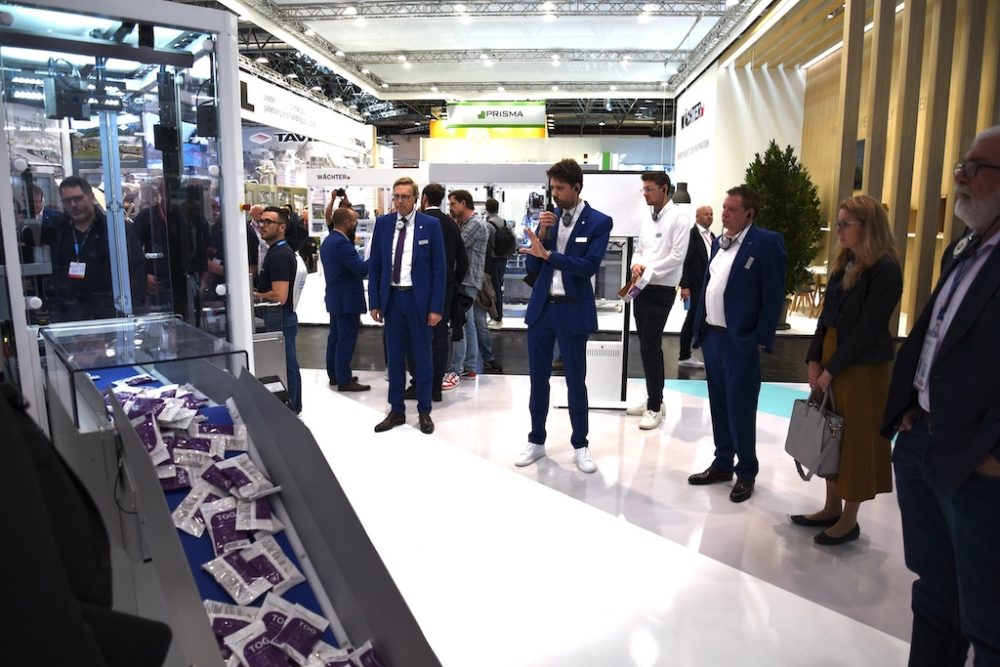
As the company noted, the first day of the event saw Marcel, alongside Ralf Schubert, Managing Partner, vividly outline how Schubert is successfully navigating present challenges
In addition, the business also observed, another equally important issue was PPWR. This core EU regulation on the reduction of packaging waste, which will come into force next month (August 2026), has been a concern for the industry for years.
Questions regarding implementation, machine compatibility and material selection need to be addressed to ensure that packaging remains legally compliant in the EU beyond 2030.
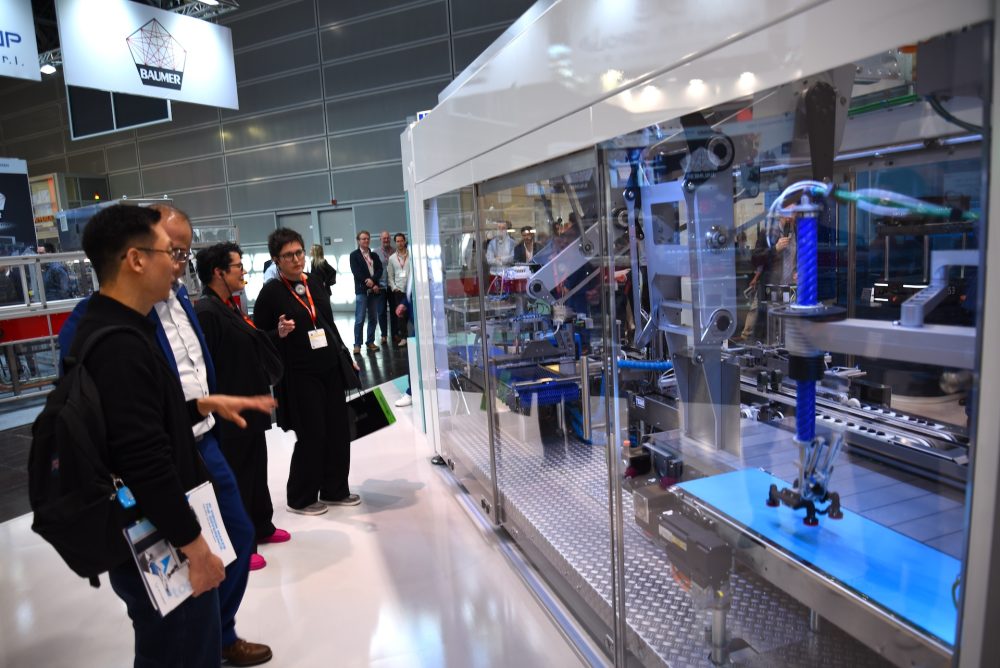
Furthermore, as the company highlighted, the need for guidance, discussion and solutions for more sustainable packaging was demonstrably high – prompting dialogue between the team from Schubert’s Packaging Competence Centre and trade visitors. To its credit, the company is offering a platform that comprehensively addresses technical and regulatory packaging issues.
Its PCC team was available to answer questions, with a wide range of business, from the smallest firms, through to major manufacturers operating across Europe set to be impacted by the incoming regulations.
“The EU regulation calls for close collaboration between many stakeholders, from packaging machine manufacturers to recyclers and material suppliers,” explains Michael Graf, Head of Schubert’s PCC.
“Trade visitors were extremely interested in the contribution we can make as a machinery manufacturer. This highlights that the PCC plays a vital role as a liaison between packaging companies, the machinery sector and other industries.”
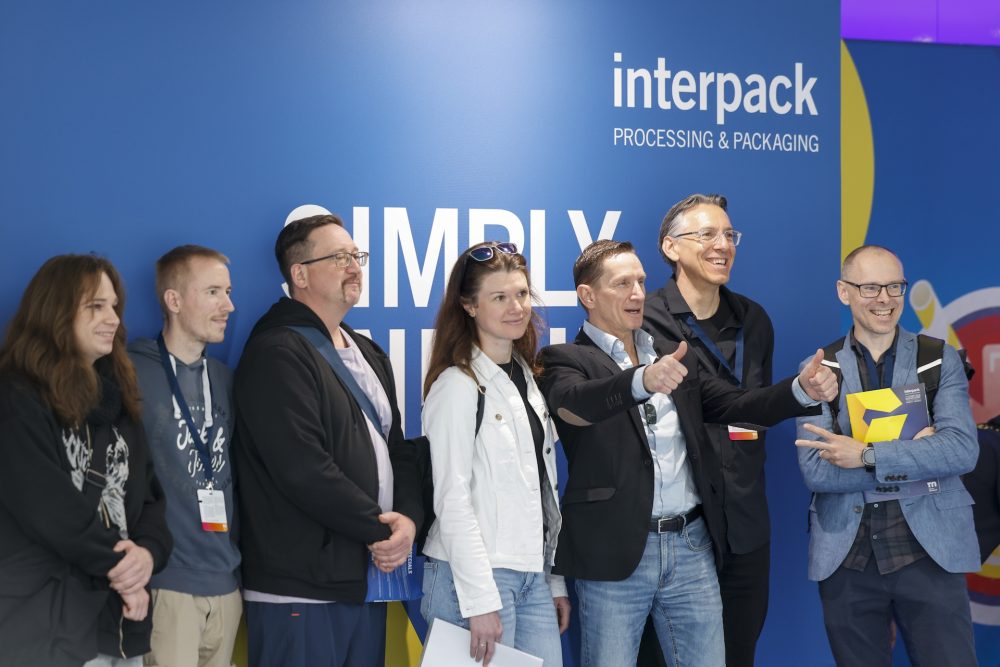
Attendees to this year’s show were treated to an eclectic array of exhibitors focused on machinery and equipment across industries as wide ranging as pharma and cosmetics, through to the confectionery and wider food sector, which was among one of the dominant markets represented.
Significantly, machinery firms within the confectionery space were at the event in force, with a strong presence of native German companies including processing business, WDS.
Its distinctive stand offered solutions across the chocolate production market, as well as gummy production with mogul and starchless machinery, as well as toffee, fondant and hard candy. WDS customers benefit from this broad spectrum and deep technical know-how.
As the company noted, some of its core highlights included the firm’s MogulPRO with its maintenance-friendly pusher system and sophisticated features for tray stacking and filling, product cleaning and depositing.
Furthermore, as the company observed, jelly products benefit notably from how they are handled, and in relation to this a special small-scale post-treatment drum was presented, which stands out due to its hygienic design and CIP capability.
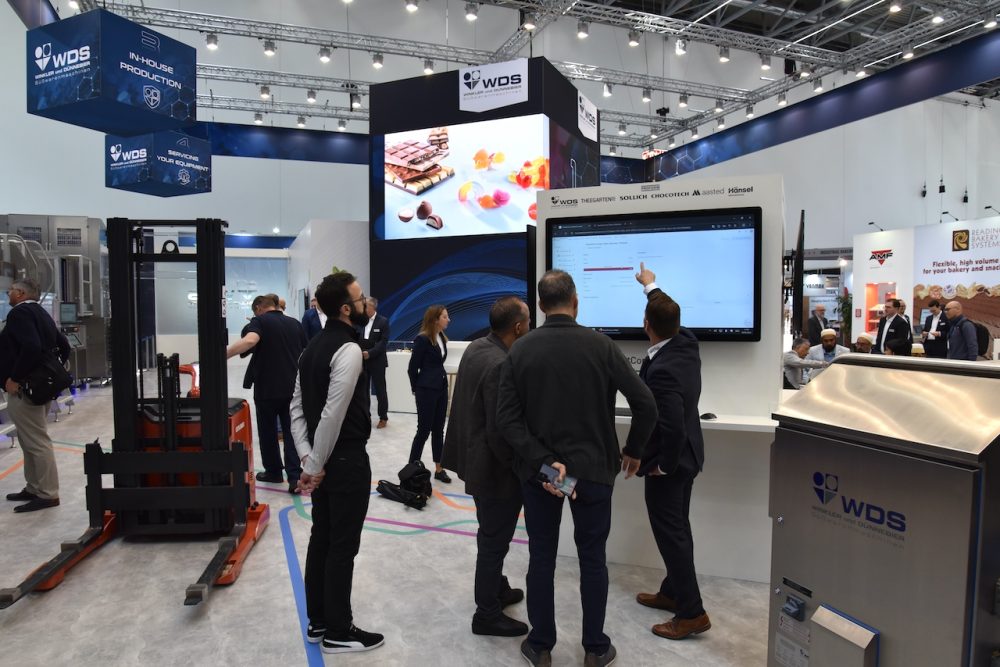
In addition, an EasyClean depositor machine for chocolate exemplifies how easily existing confectionery lines can be upgraded with a new WDS depositor machine – regardless of the manufacturer – to broaden the range of confectionery that can be produced.
Beyond this, the business also showed it laboratory and pilot production capabilities in the form of its ConfecVario-Loop, featuring a universal depositor section and a docked scraper section for chocolate lids, featuring a chainless, flexible drive system.
Machinery innovation
For its part, Bühler also unveiled its ELK S Edition 26 single-shaft conche as a counterpart machine for chocolate processing, which has remained a core area of focus for business – which now spans multiple industries, from grain processing through to advanced automotive components.
As the business reflected, its new Edition 26, Bühler has set out to equip customers for future requirements and reinforcing its leading position in the chocolate industry.
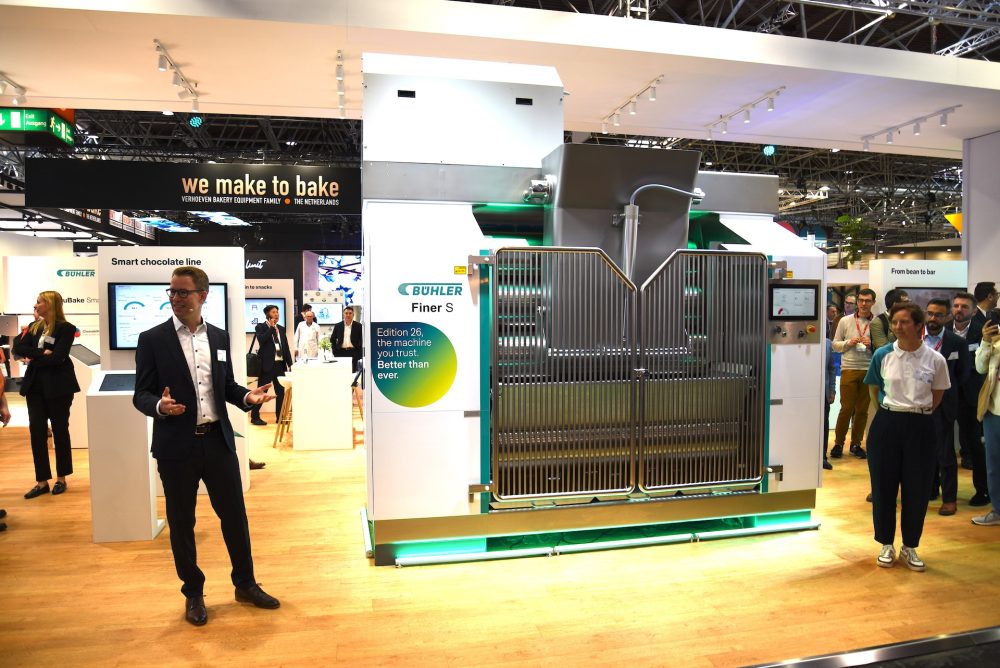
According to the company, its full system upgrade was developed around its Playone automation system, included as a standard component. The Finer S and ELK S Edition 26 automation systems deliver a wide range of benefits, from improved user-friendliness and advanced automation features to remote monitoring and control.
As the company added, its proven technologies, Bühler has won long-standing trust and recognition from customers across the global chocolate industry. For decades, its DoMiReCo process – dosing, mixing, refining, and conching – has set the benchmark.
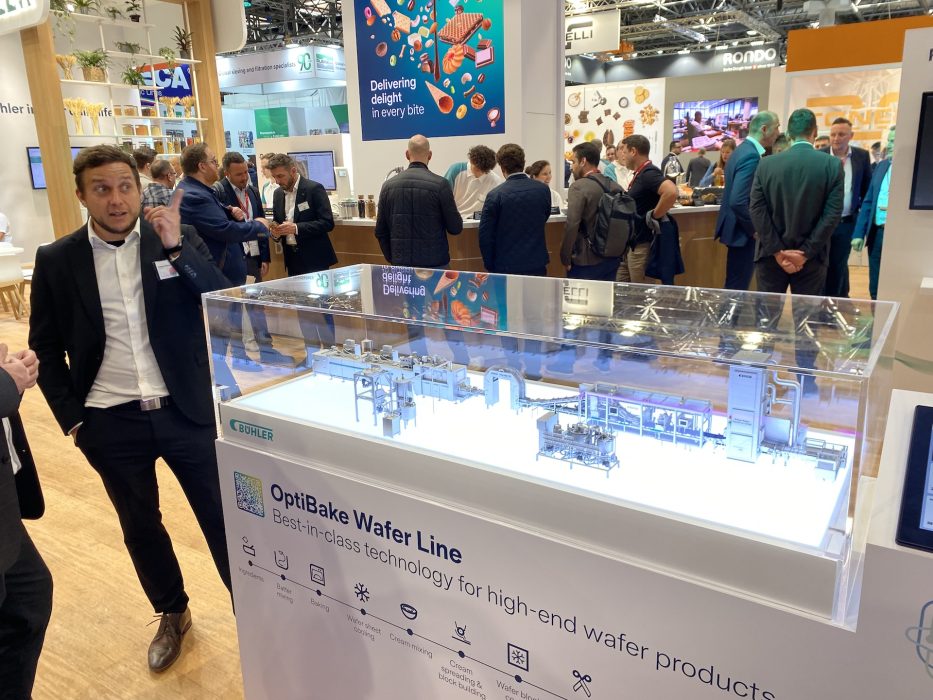
“Our roll refiner has helped shape the chocolate industry for more than a century. Achieving fineness down to 12 micrometers – crucial for the target particle-size distribution that delivers mouthfeel and smoothness – remains unique to Bühler’s five-roll refiner. That is why we built the Edition 26 on the strongest possible foundation, adding value where customers feel it most: easier operation, greater reliability, higher energy efficiency, optimised maintenance, and better hygiene,” says Sikeljzen Nesim, Head of Product Management, Chocolate & Flavor Creation, Bühler.
Celebrating machinery success
One of the most distinctive stands across the event came from Dresden’s Theegarten-Pactec, offering a major release for its latest FPC6 packaging machinery line, developed for markets including chocolate, cereal, protein bar, and wider confectionery and snacks segments.
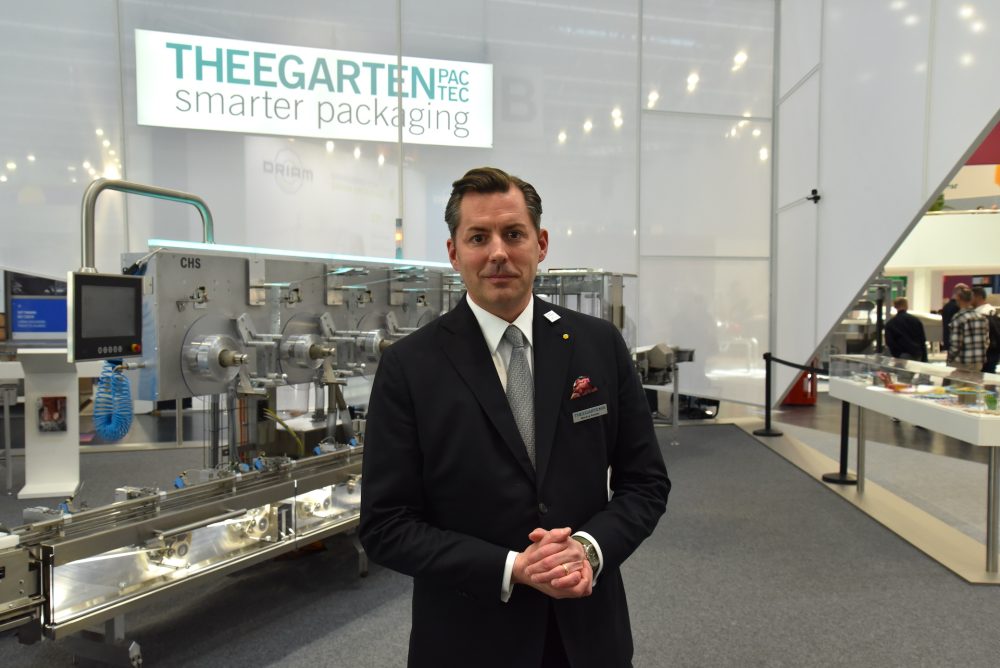
Markus Rustler, CEO and president of Theegarten-Pactec, reported a strong show at interpack.
This next generation machine has moved away from the previous principle of ‘faster, higher, further’, in favour of stable, reliable and sustainable efficiency throughout its lifecycle.
As the company noted, the FPC6 was consistently designed to make machine operation largely independent of the operators’ qualifications and experience level. Significantly, as the company’s president and CEO, Markus Rustler, observes, ‘skilled labour is increasingly hard to find, hence the need for automation,’ resulting in design features that deliver high levels of efficiency with minimal operator input.
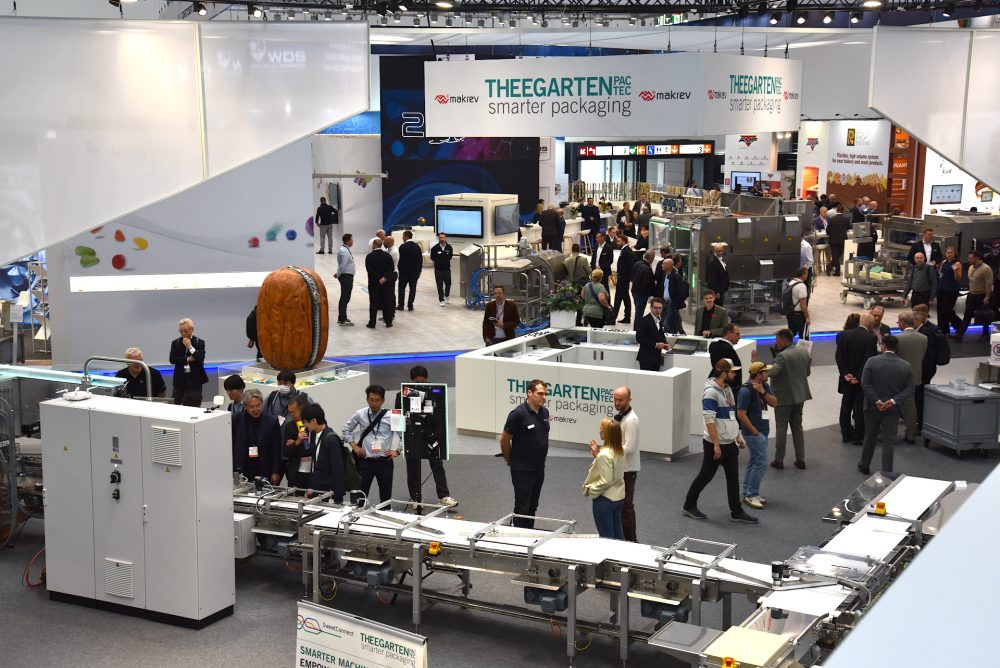
Commenting on the event, Markus said (also see the second part of our review video featuring the CEO below): “interpack 2026 was an outstanding success for our company. Visitor quality was exceptionally high, with attendees coming from all over the world despite ongoing global crises affecting some regions more strongly than others. Several packaging systems from Theegarten-Pactec and Makrev were sold during the event, while many new projects involving confectionery, bouillon cubes and dishwasher tabs were initiated. The digital solutions of our partner SweetConnect, including the integrated AI bot “Mira”, also attracted strong interest for its ability to improve machine efficiency through comprehensive data analysis.”
Mastering the art of confectionery
During this year’s interpack, there were many stand-out moments, but one in particular came for the Dutch-based processing firm, Tanis Confectionery, as it showcased its Guinness World record achievement of the globe’s largest gummy, based upon Rembrandt’s renowned Night Watch painting. Its team pulled together to construct the treat-formed masterpiece with some 81,000 individual sweets.
Catching-up with the company’s chief operating officer, Wouter Tanis, he enthused that this year’s event had been a significant triumph across its operations.
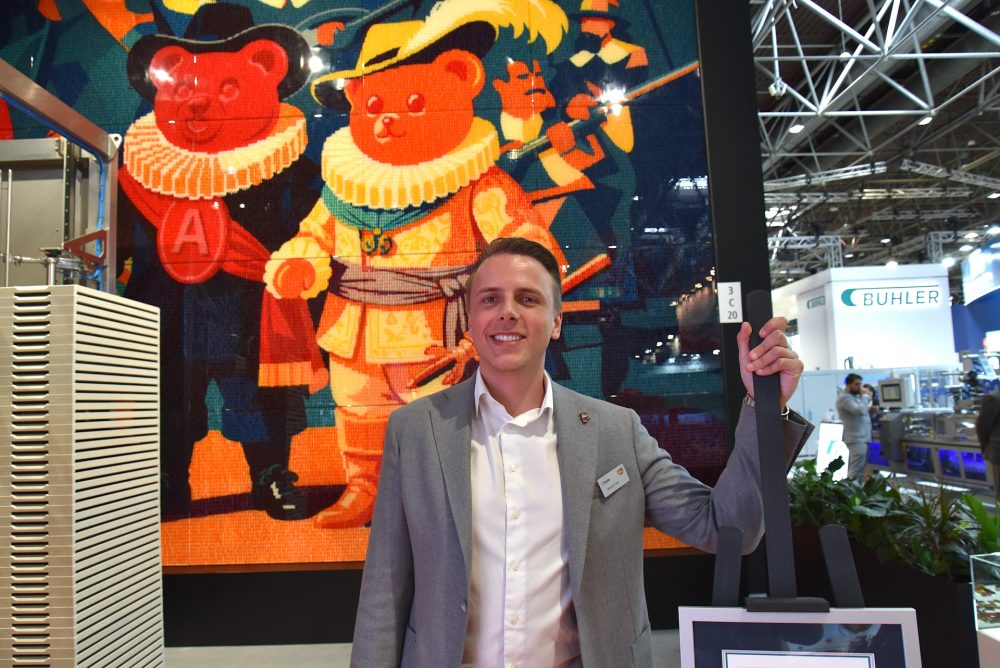
“Our business itself has been going really good, because while there is still a lot of uncertainty in the world, people are still investing, which is always a good thing for us. Last year was really good for Tanis, which we expect to be the case in the coming years as well.
“It’s great to be here with our second world record, the amazing gummy mosaic inspired by Rembrandt, one of our Dutch masters of arts. That is why we themed our booth as Dutch masters of confectionery, which we identify as.
“There were a lot of positives from gaining that world record, as we wanted to show that we are fun, and that we also want to build relationships. The gummy mosaic was an example of how we are as a company.”
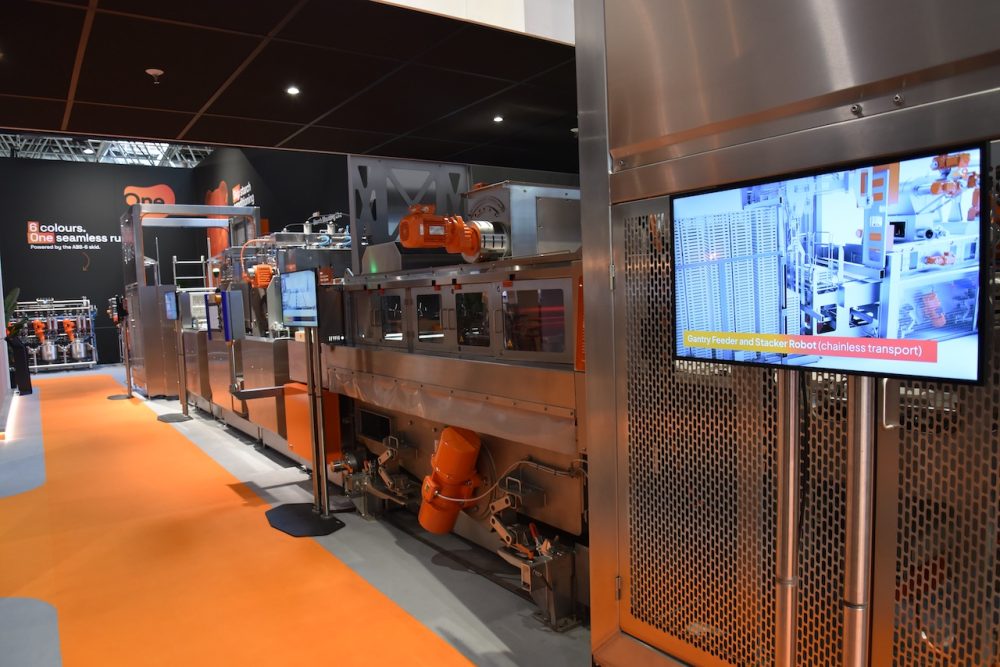
He added that there had been significant interest in its gummy processing line capable of handling 2,000kg an hour, as well as another major initiative alongside Danish-based Aasted, focused on delivering a joint venture premium chocolate bar line.
Notably, Piet Tæstensen, CEO, Aasted ApS, agreed that there had been a strong performance form the business – and while the Danish company has subsequently found itself the subject of an acquisition this summer, it remains committed to its project with Tanis Confectionery.
He said: “We experienced a strong visitor flow throughout interpack 2026, welcoming both long-standing customers and many new faces from all over the world. There was significant interest in our StellaNova with integrated CIP system, our candy bar line, and many engaging conversations about how digitalisation and solutions like Sweet Connect can support our customers’ operations. Aasted has proudly been part of interpack for many years, and the positive energy and strong dialogues this year already make us excited for interpack 2029.”
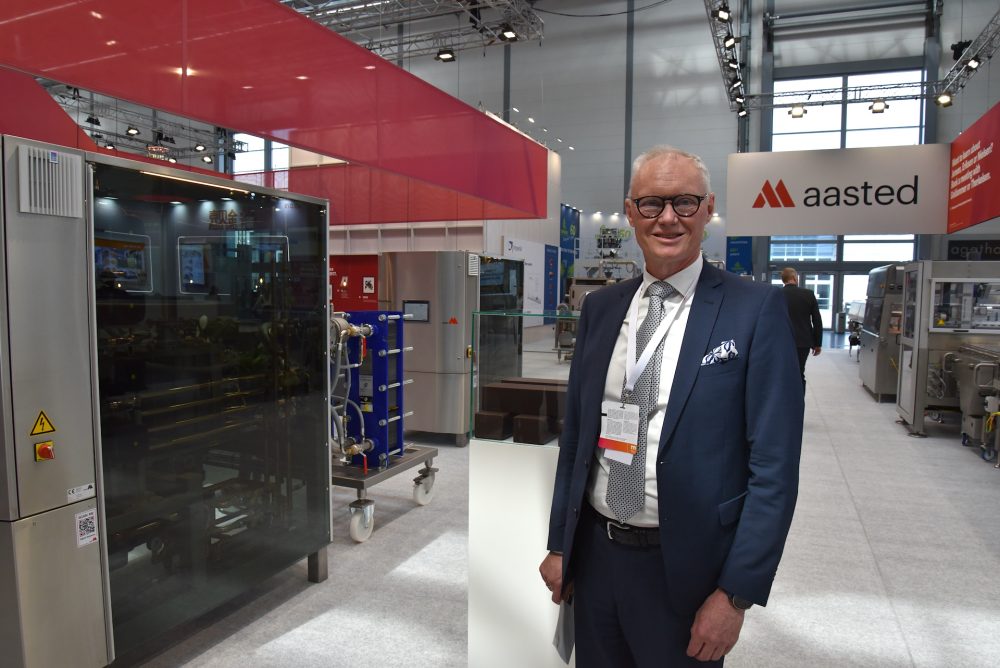
Allan Aasted, partner of Aasted, spoke to our title at this year’s event.
Driving equipment innovation
Another business making the journey to Germany once again as a frequent exhibitor, was British engineering firm, Wymbs. The Stockport-based operation, which has more than 40 years of experience to its name in the depositing sector, has been winning plaudits for its latest robotics platform alongside Siemens, known as Vectrix, assisting companies with an advanced automated solution for repetitive tasks across depositing lines.
The system had yet to be unveiled at interpack itself, but as its sales director Kevin Wymbs explained, there were plenty of innovations for the business to engage with.
He said: “Well what a show! Wymbs have been exhibiting at interpack for decades, and this was by far the most successful. The Market confidence was high with many mature projects and leads to discuss. We had a great mix of new and old customers as well as being actively sought out by OEM’s and business partners.
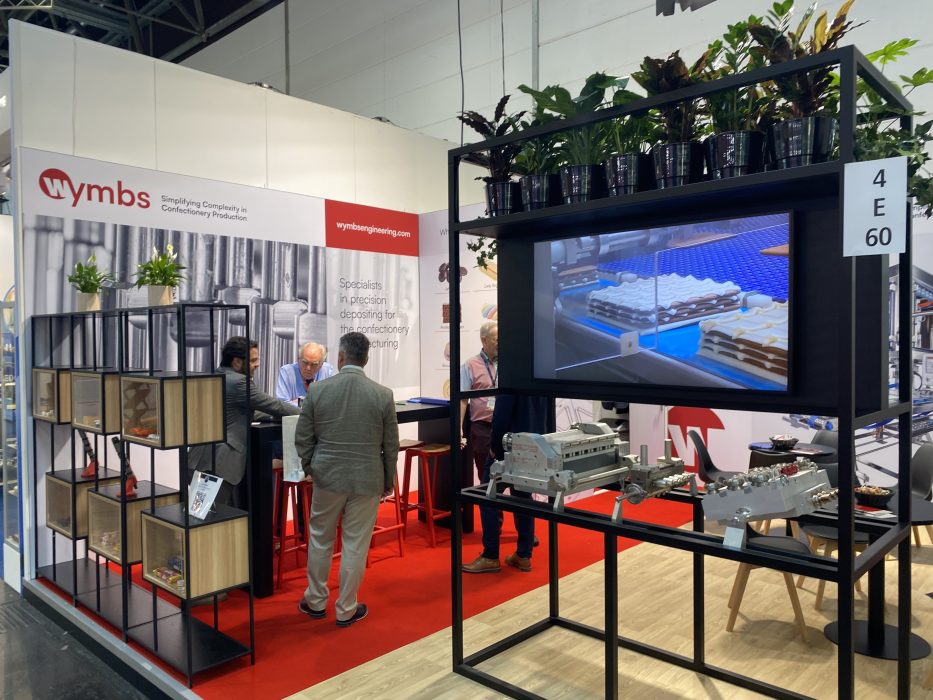
“Being a recognised name in the industry and offering a bespoke product to the market, we found Interpack very collaborative, OEM’s recognising each other’s strengths and working together to make a collaborative offer to a customer. We find that taking the best from each section of industry gives the best approach rather than ‘single sourcing’ a solution. Now we must follow up on our conversations and offers. This will not take long as we have a great agency system across the market.”
Meanwhile, fellow UK company, DT&G Ltd, also ventured to Düsseldorf again with its established chocolate coating and polishing systems that have gained traction in markets around the world.
Lyn Pitt, the Wirral firm’s managing director, who is set to speak about her enterprise’s operations at our upcoming World Confectionery Conference this September, revealed it had been a productive exhibition overall.
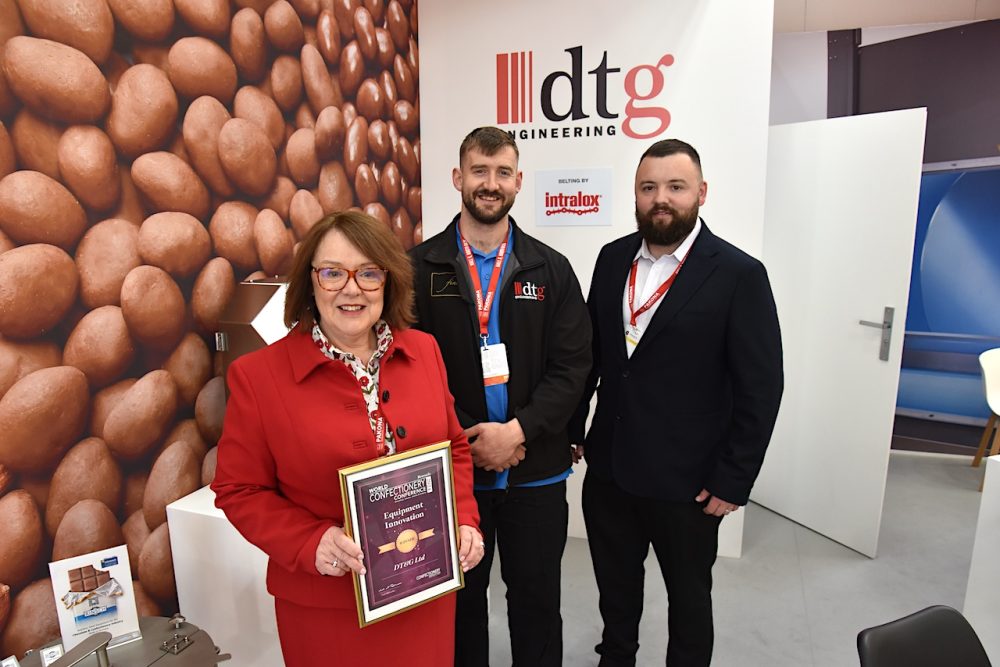
She said: “I think interpack is special because of the companies that attend it and also the people who visit the trade fair. There’s such a fantastic commitment throughout the industry to be here and experience the 18 halls that are part of the event. Everyone puts their greatest effort into it, and it has been wonderful to be part of it.”
As she added, it had been encouraging to speak to a wide range of customers, including some of those who had bought equipment from the company more than 30 years ago.
Bringing the party to Düsseldorf
One of the most visually-impactful stands of the event belonged to Australian-headquartered TNA Solutions, which brought plenty of energy and “Aussie spirit” as it showcased major innovations including the latest iteration of its flagship Robag vertical form, fill and seal system, enhanced with distinctive Aboriginal artwork for good measure.
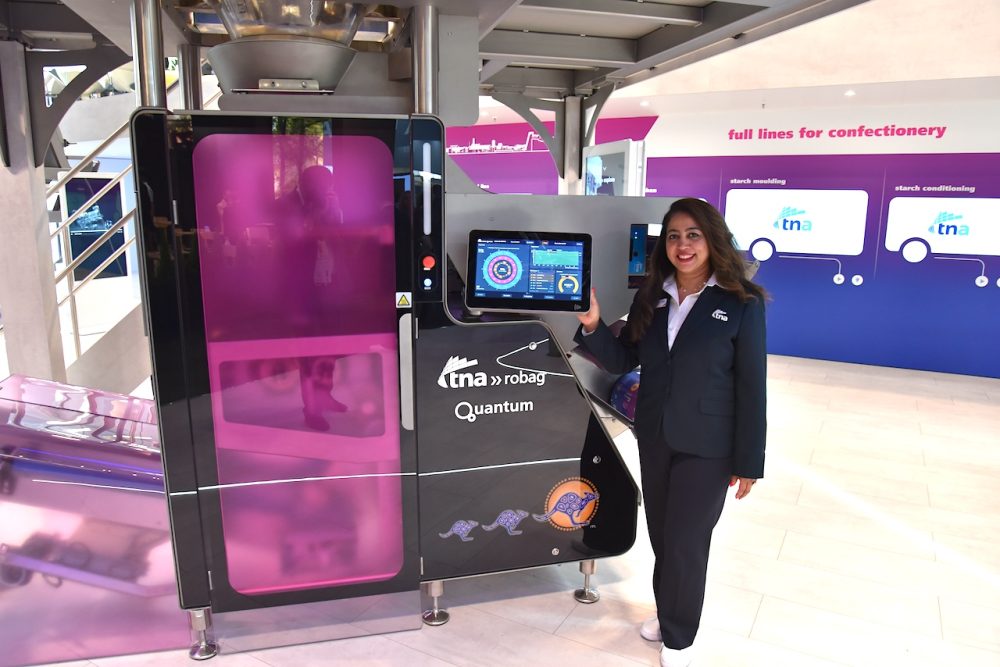
Another memorable moment was offered in gaining the chance to experience upgrades to its virtual reality systems aiding equipment line installation. This had evolved notably from its pilot form demonstrated in Dusseldorf three years ago, and now also offers the ability to serve as a test-bed for the finer management of manufacturing operations in precisely digitally replicating production environments to aid training of staff and customers alike.
Bindu Panicker, communications manager for the group, commented: “This is our most-awaited showcase for our solutions. We’re coming back after three years, and has been incredible for us to see all that is happening at the event, as well as with our stand.
“We’ve shown our TNA Robag Quantum, which is the next generation of our flagship bag maker, and at its core, it delivers equipment efficiency, in being faster and smarter, as well as simpler to use, and we have kept in mind what the challenges are facing our customers today. It’s received a lot of positive comments already.
“As for our VR, I think digitalisation is a way forward for our industry, and our system focuses on both human intervention along with digital systems, which work to explore how we can bring greater efficiency to processes, and that is how we are approaching such technology.”
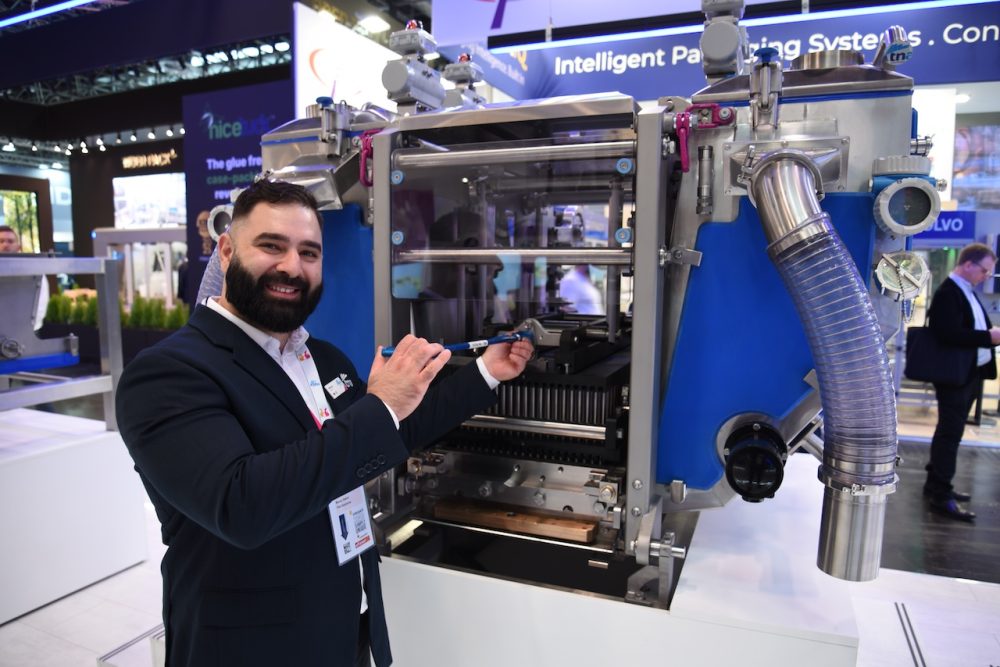
Another business that has gained a strong international footprint in recent years, is Germany’s Krüger & Salecker, which delivered a prominent display among confectionery specialists.
Speaking to our title, the company’s managing director Soren Bettex, enthused that the business has enjoyed the vast majority of trade in terms of global exports, with its machinery lines enjoying notable success in Canada, as well as the US, where the company has recently established a facility in Salt Lake City.
As he explained, having moved to take over the business back in 2020, he felt it had been satisfying seeing its growth from showcasing equipment lines, including for gummy production at prominent events, through to seeing them being fully installed and competing for a share of the market over the past few years in international territories.
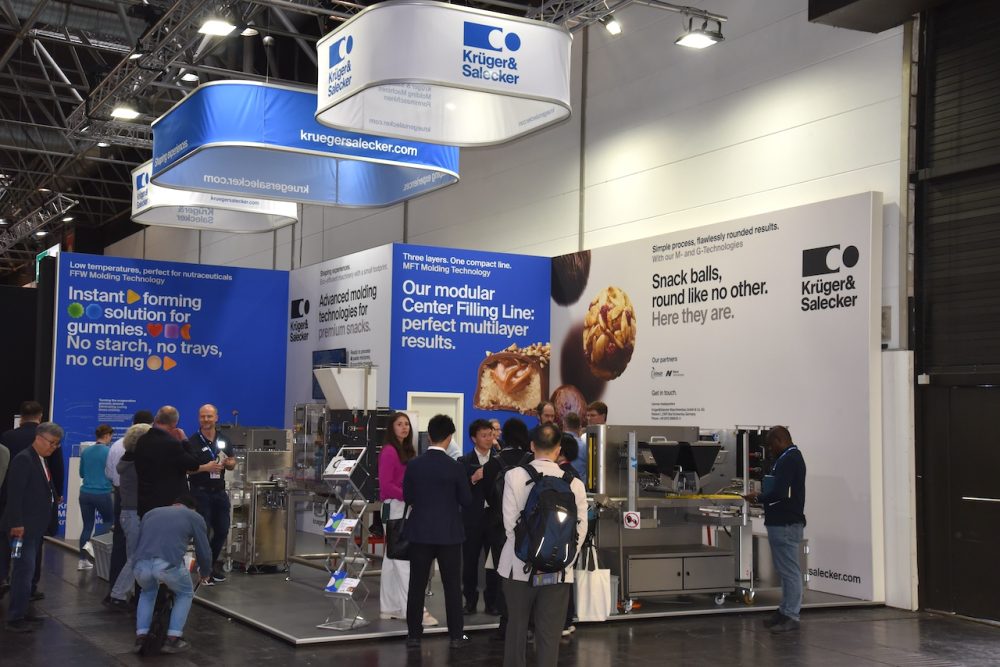
The business will also be represented at our World Confectionery Conference this year, with its recently appointed applications and innovation engineer, Dr Maximilian Anders.
In addition to a range of businesses offering equipment for the gummy and jellies market, other segments were also well represented across both packaging and processing realms.
For its part, Spanish-based Carugil produced an engaging offering based upon its present range of equipment for production of lollipops and hard candies.
Victor Arques, sales director noted: “This show is really important with it being held every three years – it means everyone comes to it. All of our customers are here, as well as our competitors, so you can see the tendencies, both from the market and also from the manufacturers of machinery.
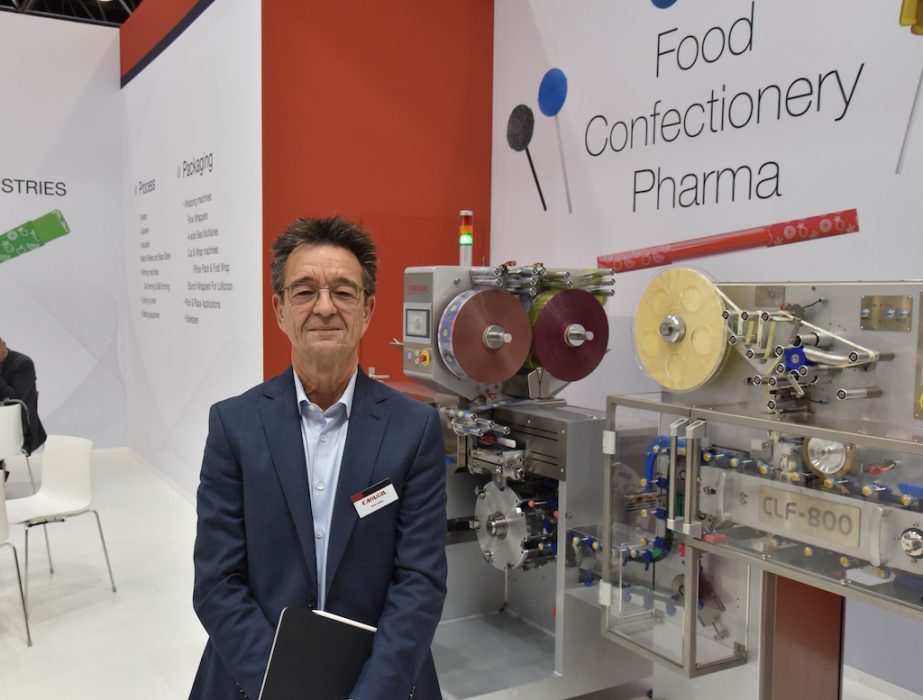
“So, you have everything in the same place at the same time, which is an advantage for us. If you are not here, it’s like you don’t exist,” he explained of the showcase, noting that the company has had strong interest around the world, with markets in India, Japan, as well as in central America, Argentina and Brazil.
In addition, he added that the company had been working on machinery that had honed-in on doubling the speed of lollipop production, with the company keenly aware of the need to maintain innovation.
He concluded: “We are living some difficult times, but it looks like businesses are moving, and I feel like people are just thinking about buying again. I think that this has been a good show, much better than the last edition for us. And as far as I see it, there have been more visitors.”
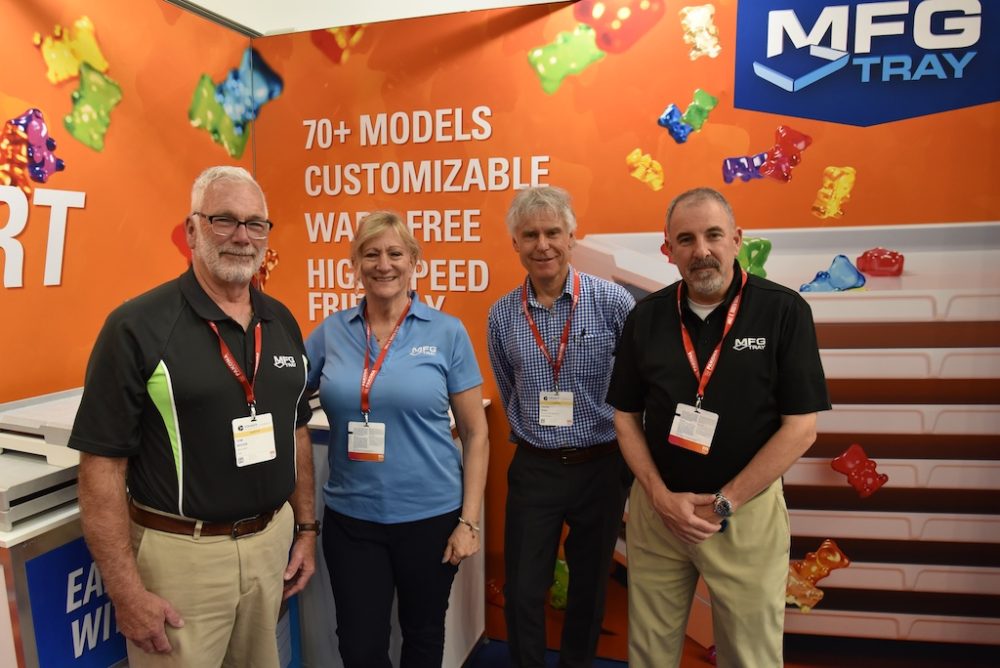
The MFG tray team were among many returning exhibitors at this year’s show.
Keeping with the theme of engaging across industries, the Coesia group presented its latest innovations in packaging automation under the positioning “Powering What’s Next”, showcasing how integrated systems, intelligent automation, and lifecycle support are shaping the future of industrial packaging.
As the company explained, within the Bars, Biscuits & Snacks sector, which is a fast-moving environment characterised by high production volumes, short cycles, and increasing pressure on material efficiency, the group introduced two complementary integrated lines designed to mirror real manufacturing conditions and demonstrate how different technologies can operate as a single coordinated system.
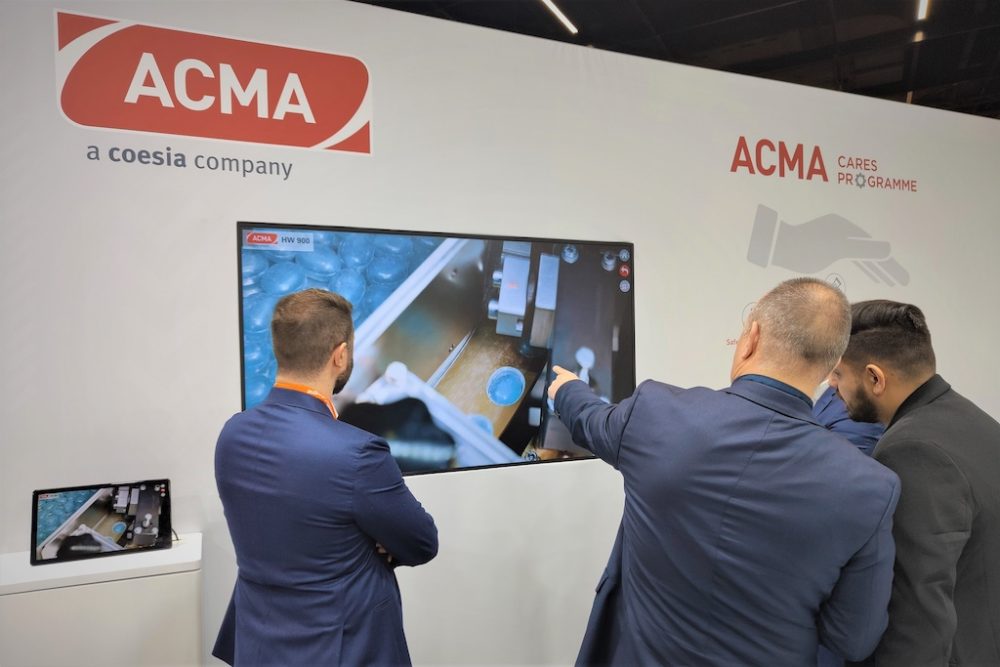
Among the highlights was the Bars-in-Box line, developed for confectionery applications and integrating wrapping, cartoning, case packing, and palletizing into one synchronized workflow.
The line featured Acma’s FP Edge flow wrapper, a high-speed solution capable of processing both plastic and paper-based materials on the same platform, helping manufacturers address evolving sustainability requirements while maintaining high productivity and packaging quality.
Moreover, the integrated line also included R.A. Jones’ Celestion MTX platform for flexible secondary packaging with tool-less changeovers, alongside MGS’ MatriX SL modular case packer, designed to handle multiple case styles within a single platform. End-of-line operations were completed by FlexLink’s RC12 collaborative palletiser, which combines a compact design, ease of use, and safe human-machine interaction.
From Confectionery Production’s observations around the event, there were genuine innovations on display from companies of all sizes, from larger companies, through to smaller and medium-sized enterprises.
As Raf Tuytelaars, sales director at Belgium equipment and systems company, Hacos, remarked, one of the core elements that its customers had been asking for most has been in terms of being able to deliver flexible machinery that can adapt to ever-changing customer requirements
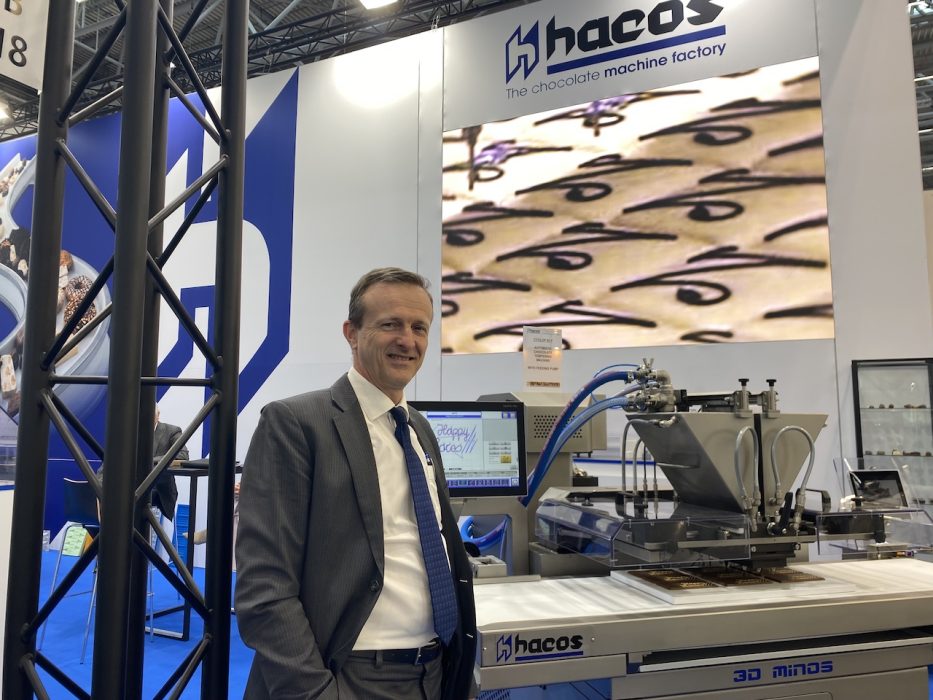
He commented: “This has been a great exhibition, and people that are here are really in the business, which is a good thing. We have been trying to show what we can do through our display screens, as we have a broad range of machinery.
“Among our lines that is here is a one-shot chocolate 3D depositor, which we have had demonstrating how you can decorate on bars. That’s a very technical line, and we have had very positive reactions to that, and it has been attracting a lot of attention,” added Raf, who noted that another of its stand-out series among its present portfolio is a robotic spinning series for creating hollow chocolate series, which he believed would have a notable impact for its automated capabilities.
Furthermore, Alexander Voisine, of French-based IXAPack Global, producing a long-established series of cartoning, case packing and palletising for multiple sectors including confectionery, believed there had been strong demand for its segment area.
He said: “Throughout the years, we developed our ranges of machinery, and through acquisition as well, we developed our portfolio, which now includes check weighing, so nowadays we are proud to say that we can provide one single supplier the complete line.
“We now have customers around the world including companies involved with chocolate bars in Spain, and are able to provide a wide variety of solutions and customer mainly in the food and beverage.
Confectionery excellence
The Coperion Group, which now includes the British-based Baker Perkins equipment brand, was also within companies reporting encouraging results leading on from the event.
Jason Scott (below), commercial lead, confectionery, for Coperion, welcomed the results this year. He commented: “We’ve seen in our first few days that there have been some great opportunities for the business, and from our standpoint, it’s been particularly good to showcase our complete portfolio.
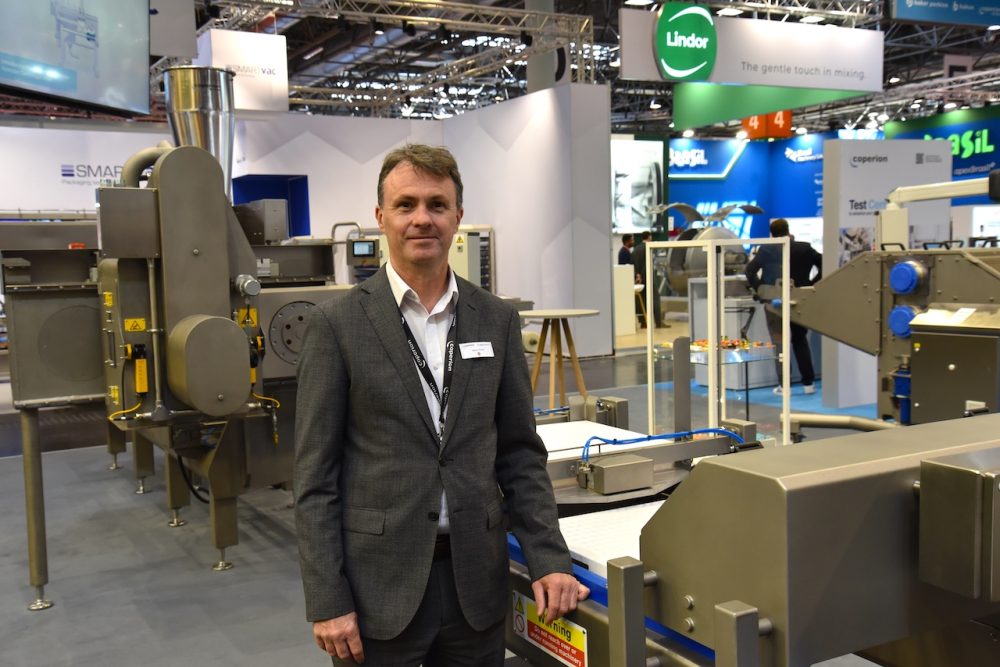
“In the confectionery space, there’s been some really good conversations that we’ve had, around starch free gummies, and jellies that we have worked hard to move into off the back of our history of 75-80 years of history in depositing,” adding there had been a wide array of success stories in terms of installations around the world, from which it has gained significant insights from its customers in further enhancing its ranges.
“We have seen a lot of interest in some of the things that we are capable of with varying shapes including 3D products, and the uniqueness of that using starch-free technology, and we’re delivering assistance now to our customers, where we can take capacities far higher. In addition, we have seen great traction in terms of the health and nutrition side, where there are outputs of 300kilos -400k-500k an hour, but the main feedback we have had that if you are playing in the confectionery sector, you need to really increase those capacities, and we have lines that can respond to that including batch systems,” he enthused, noting that with its cooking equipment, it had enabled processing of up to 1000 kilos an hour.
Espen Mile, VP of product management, at Syntegon, also enthused to Confectionery Production about its latest systems, which included its SVX vertical form, fill and seal.
The company featured at this year’s event with a substantial stand showcasing its full breadth of equipment spanning across industries including confectionery and snacking.
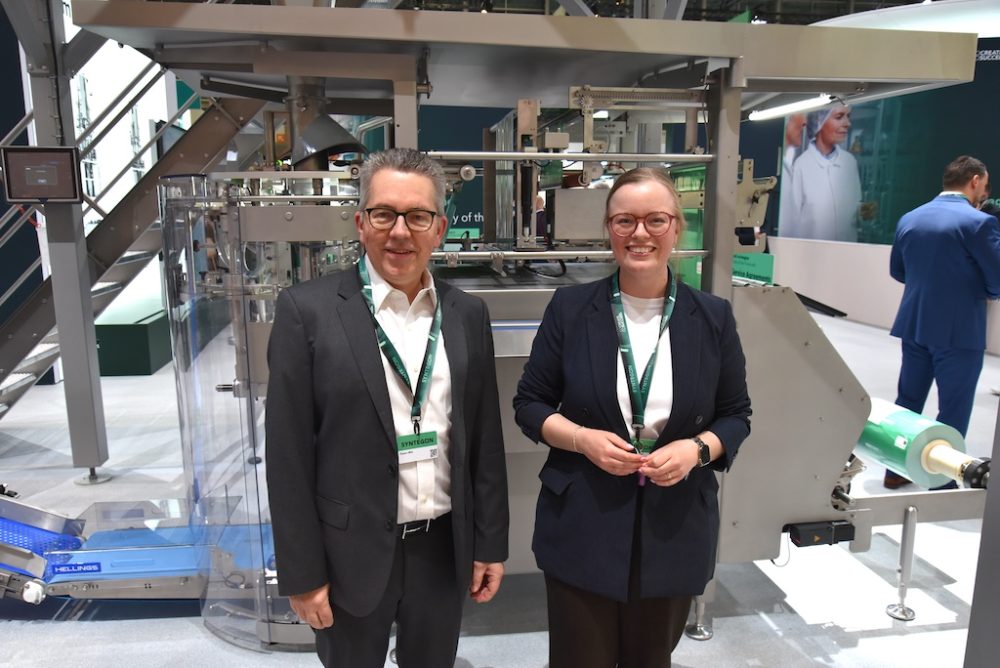
`“We’ve now just launched the advanced bag styles on the popular SVX platform, meaning that you can now do all types of bags on one machine, and this line is the smallest and fastest machine in the market today, operating across several industries globally,” noted Espen, stating that the machinery has had consistently strong feedback from its customers since the first iteration of the line was put out at the last interpack event.
As he revealed, this has taken significant development work to take the system to the next level in working with its clients, but he believed the results spoke for themselves.
“Since the machine is so fast and small, you can put fewer machines into your factory, and by that, optimise the whole production operation. This is very important to have been here to showcase the line as this is the biggest show in the world for the packaging industry,” adding that there had also been notable interest in its other innovations, including a new case packing line for snacks and cookies.
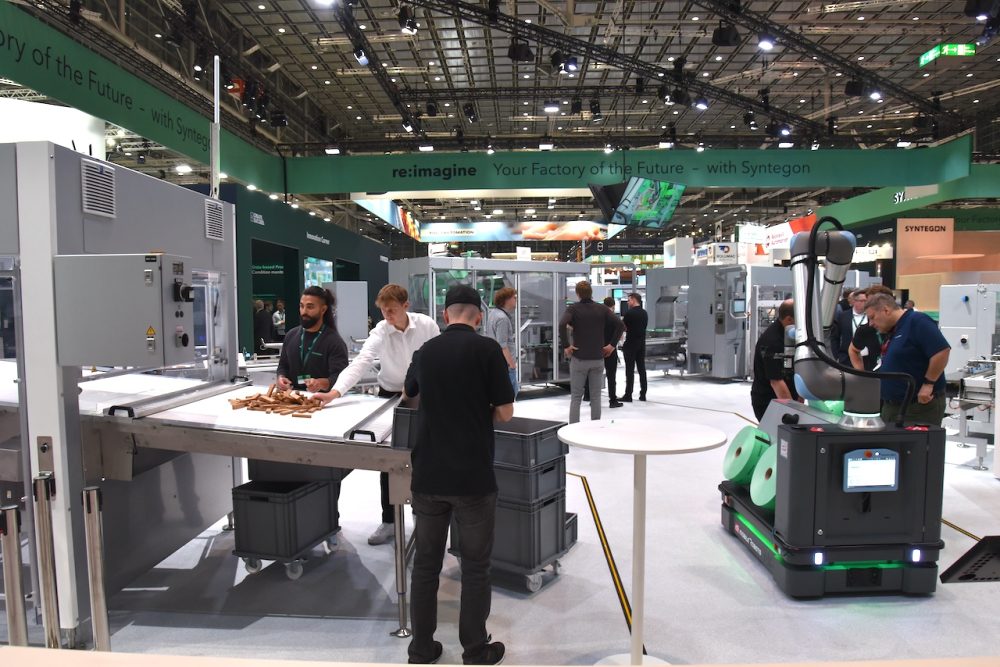
He concluded that he found it greatly energising discussing ‘factories of the future’ with many visitors to the event, and how the company can help them in attaining their manufacturing goals.
Meanwhile, Stuart Grogan, operations manager for the UK’s BCH equipment business, also reported an especially satisfying performance during the week-long exhibition in Dusseldorf.
The business, which specialises in confectionery cooking systems, extruders and kitchen lines, reported brisk business at the 2026 iteration, which drew a truly global audience across the event.
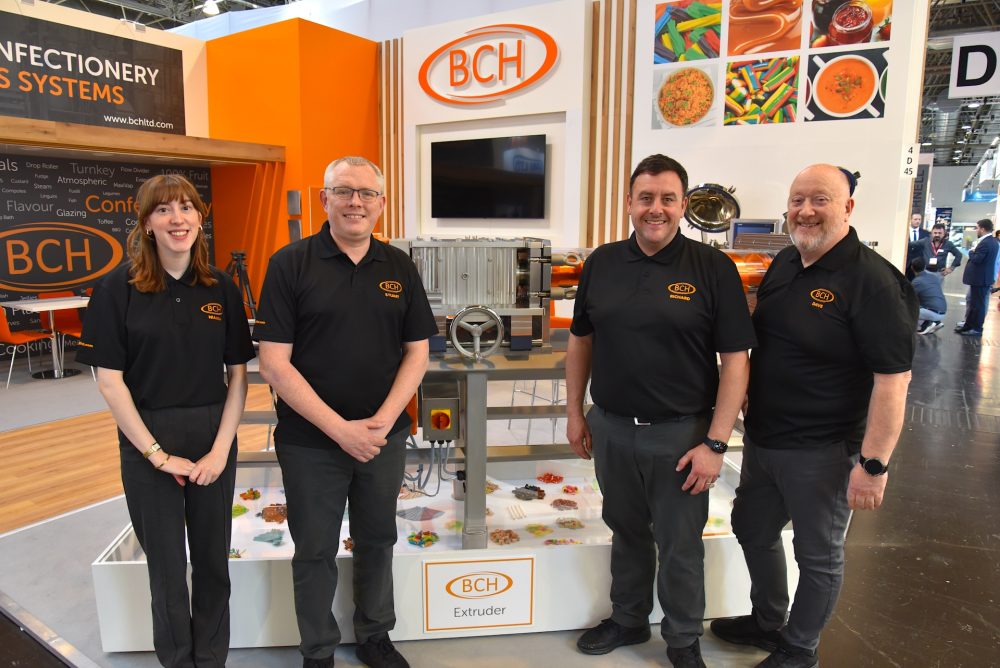
Stuart said: “While the footfall hasn’t been as heavy for us as previously, there are a number of factors behind that, so we are not overly concerned, as we have had the quality of visitors to our stand that we had hoped for, so we’re really happy.
“We’ve been discussing our latest technology, efficiency and product range, so for us it’s been well worth the wait, and we’re looking forward to what falls afterwards, with our extrusion systems being a being focus this year, and also the starch gel extrusion and multi-colour options that people have been looking for, “ adding, as with many other manufacturers, the ability to create equipment that its flexible in its operation is of critical importance.
As he conceded supply chains, and global economies have provided there tests within the past year or so, but he was confident his team could rise to meeting those challenges as much as possible.
Italian flair
Speaking to Confectionery Production, Mark Brooker, UK director for the Cama Group enthused that there had been a genuine buzz about its stand, as the business boldly displayed its latest advancements in packaging systems.
As he stated, the show benefitted from its truly international spirt, with people visiting its booth from Latin America, Middle East, Australia and further afield, that had created an engaging atmosphere.
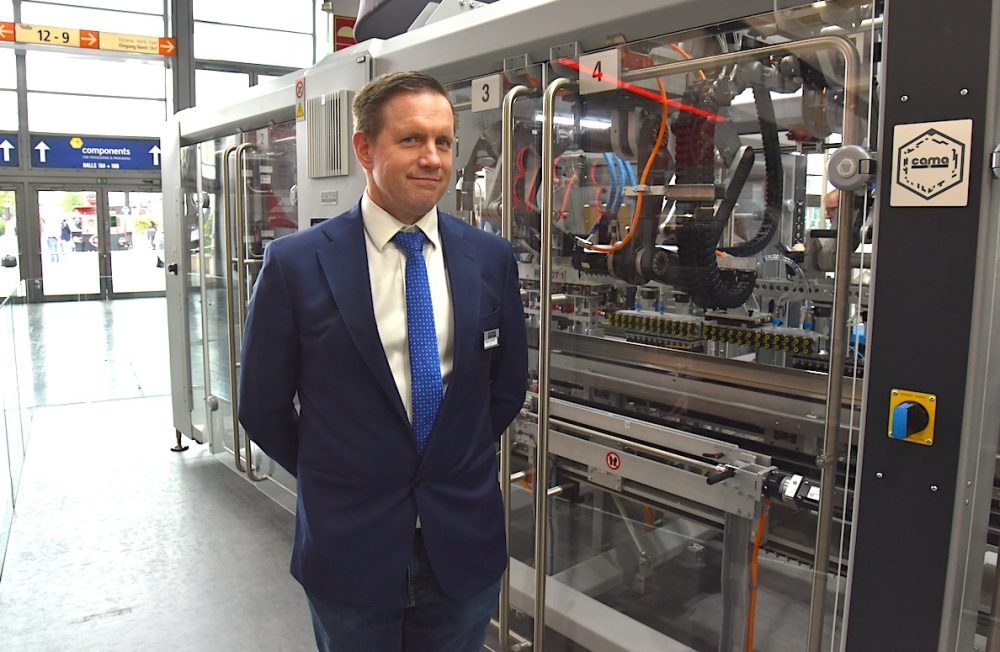
He commented: “It’s been really interesting to get the reaction from people of our latest updates, and we’ve had some fantastic footfall results at the show. We have shown our latest Cobot system, our machine enhancement programme, but also some updates in virtual reality, industry 4.0 effects, and some real hard engineering updates relevant to our machines.
There has been some great feedback, and we have had a lot of confectionery customers see us, both on the chocolate and biscuits side, so it has been really helpful to build our base on that side of the market,” adding that for the 2026 iteration, the company has made a conscious effort to deliver on labour saving potential with its machine lines.
He cited its enhancement programme as being notably instrumental in bringing levels of automation to areas of a manufacturing operation that have previously posed challenges. This included special focuses on palletising, loading and linking in material replacement on lines, and completing smaller tasks can be time-consuming for manual labour.
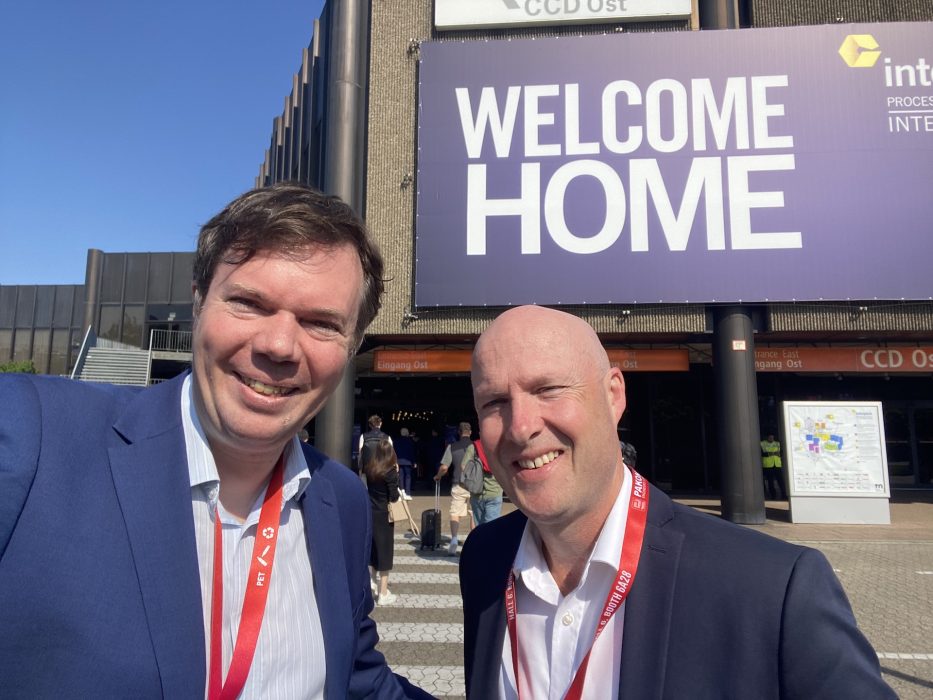
The Confectionery Production team, l-r Neill Barston, editor, and sales manager, Dave Johnson at this year’s interpack in Dusseldorf.
All-in-all, this year’s interpack had a high bar to live up to following 2023’s strong ‘comeback edition’ in the wake of the Covid-19 pandemic, and the latest entry into its packaging and processing hall of fame did not disappoint. With significant equipment and systems launches, there was a genuine buzz around its 18 halls, which delivered some notable touches to engage visitors and elevate this far above the standard trade fair experience.
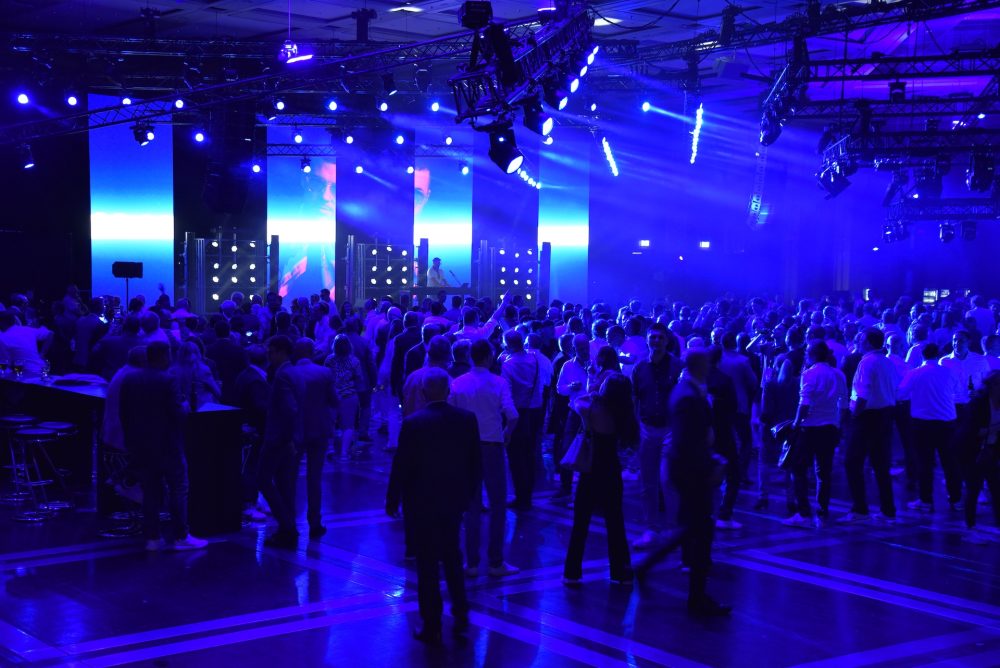
Perhaps the icing on the cake was indeed its exhibitor party finale, which raised the atmosphere of celebration to new heights – and indeed there was plenty to cherish from an especially memorable event.
- Interpack will return to its traditional venue in Germany between 10-15 June, 2029 at Messe Dusseldorf.
Topics
bakery confectionery equipment innovation Snacks systems technology
PeopleBindu Panicker Espen Mile Jason Scott Kevin Wymbs Lyn Pitt Marcel Kiessling Markus Rustler Michael Graf Piet Tæstensen Raf Tuytelaars Sikeljzen Nesim Sören Bettex Thomas Dohse Victor Arques Wouter Tanis
OrganisationsAasted Buhler Coperion DT&G Ltd Hacos Krüger & Salecker Messe Düsseldorf Schubert Syntegon Tanis Confectionery Theegarten Pactec tna wymbs
Regions