Exclusive: Mars offers futuristic vision for the next decade of confectionery retailing
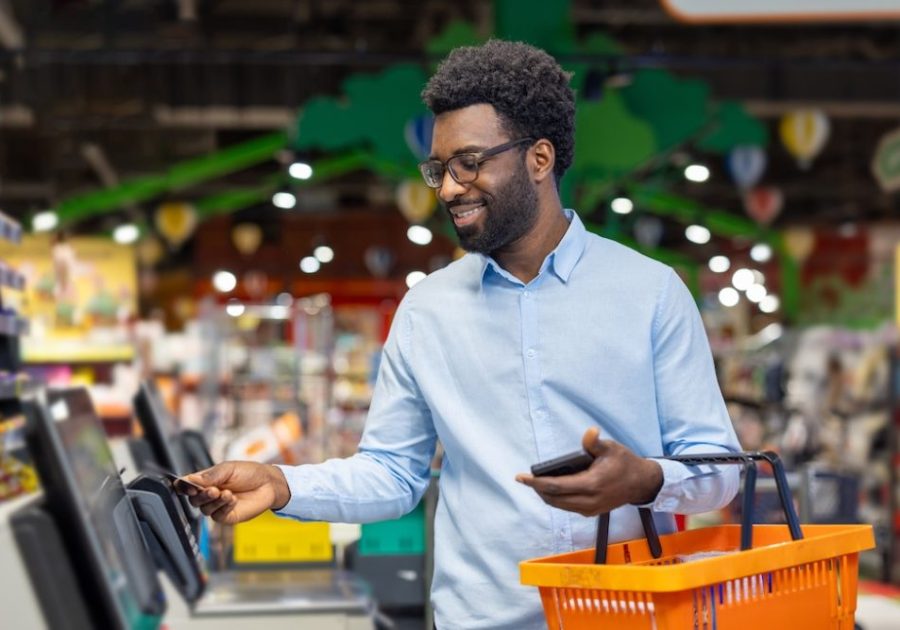
Digital shopping experiences are set to become increasingly more advanced in the next decade. PIc: Adobestock
Though we may not quite be at a point where striking holographic projections greet us in retail high streets in the style of Blade Runner and many other memorable sci-fi movies, present day technology is fast making such leaps a reality, writes Neill Barston.
Indeed, as a new study from Mars has asserted, the future of shopping for confectionery, snacks and many other food range may be on the cusp of a major revolution, with a key shift to visually experiential trips to the supermarket may potentially be around the corner to drive growth in markets around the world.
Underlining this, visitors to ISM show in Cologne in recent years, may well recall colouring food group GNT’s take on this theme, with its virtual shopping experience highlighting modes of traditional retailing seen for the past century and more, may well be about to be transforming.
Clearly, AI-driven technology has meant that there are already companies actively developing the means to achieve holographic, as well as robotics-based shopping experiences, which are likely to set the pace on this.
For its part, Mars has just released its future of shopping and retail study, which sets out its vision for the next decade. This paints a picture of an increasingly automated shopping experience, with bricks-and-mortar stores offering valued added experiences focused on play, discovery and community.
In its analysis, the snacking giant engaged experts from Kantar and Synthesis, to track some 180,000 data sources across four continents, in a bid to form its thinking on how retail is like to evolve in the years ahead.
One thing is clear, that there is indeed a generational shift away from conventional retailing, as younger generations increasingly favour smartphone shopping – meaning that any advances in retail landscapes are likely to have to have a genuine wow factor to encourage shoppers to leave their homes.
According to the Mars study, shopping is set to become ‘a frictionless background service’ managed by agentic technology, freeing consumers to enjoy their time with other tasks – which of course is provided that you live in a relatively urban area with access to stores.
Consequently, retail stores are anticipated to feel less like supermarkets and more akin to ‘immersive playgrounds’ linked to entertainment – for which the technology already exists to create, yet would require significant international investment to accomplish.
One factor that will also definitely play is part is in monitoring overall shopping patterns, that is showing marked generational difference between buying behaviours. This has been underpinned by research showing that social media, and particularly TikTok is now responsible for driving more than 30% of enquiries for product ranges for those under 30, and that figure is only likely to increase significantly.
As regards its own activities Neil Reynolds, Global Chief Customer Officer, Mars Snacking, believed that change is very much on the horizon in terms of how shopping is set to alter.
He commented: “We’re standing on the brink of a retail revolution — one where people may never have to manually shop for household staples again. For a category like snacking, this is both an opportunity and a strategic challenge,” s
“We’ve invested in significant research to understand how the shopper journey will evolve, and this research gives us a clear roadmap. But here’s what’s equally clear: No single company can solve this alone. The only path forward is to work hand-in-hand with retail customers and all partners who are ready to lead this transformation to drive consumer satisfaction and long-term growth across the entire ecosystem.”
Retailer challenges
According to the new study, retailers and brands will face significant challenges through integrating fulfillment systems linked to digital ordering, while enhancing physical stores that provide an advanced 21st century shopping experience.
However, the business insists that gaining an understanding of such a radical transformation ‘is essential for future growth’ – under a banner of three considerations: “Effortless, ‘personal’ and ‘experiential’ are the buzz phrases for the moment in regard to these aspirations of delivering significant change.
For anyone wondering if this sounds a tall order for the global sector, with many markets around the world having wildly differing levels of retail infrastructure, it is perhaps clear that those prime locations that are already considered key shopping destinations and retail hubs will be the early adopters of future shopping models.
Another factor is AI-powered restocking of ranges, with agentic systems anticipated to make fast, informed recommendations based on preferences and inventory, requiring only shopper confirmation.
As Mars noted, according to BrightEdge, artificial intelligence referrals to e-commerce brands jumped 752% during the 2025 holiday season — and this is projected to grow to $788 billion by 2035.
Consequently, retails will also face challenges in engaging with consumers amid a highly competitive marketplace, with ‘hyper curated’ retail experiences anticipated to become the norm, with 39% of shoppers already expecting online retailing to be personalised to them, with health and wellness being a particular area of focus.
This is likely to include individual digitally-led recommendations for protein-rich product options, assembling treats for parties, and finding just the right treat for a moment of indulgence.
According to the study, other factors include the fact that immersive brand spaces are a growing phenomenon, experiencing 15% year-on-year growth, with 22% of US digital buyers noted to be already shopping with livestream.
It is also forecast that other digitally-led initiatives including prominent showcasing of viral trends in stores, and so-called ‘shoppable moments’ being embedded into social media, gaming and streaming platforms that are anticipated to drive further growth.
As has been seen in the UK and many other nations, retail landscapes have already undergone significant changes during the past two decades, as they compete with cheaper online offerings.
So, the rate of adoption into advanced digitally-led retailing environments will indeed be fascinating to see – the tech is already here, but as economies around the globe continue to grapple with major geopolitical and social issues, quite how swiftly the vision of future retailing will become reality for many, remains to be seen.
Topics
AI confectionery innovation shopping shopping of the future Snacks technology
PeopleOrganisationsRegions