
Farmers union backs Ghana’s major Cocobod Cocoa Bill reforms
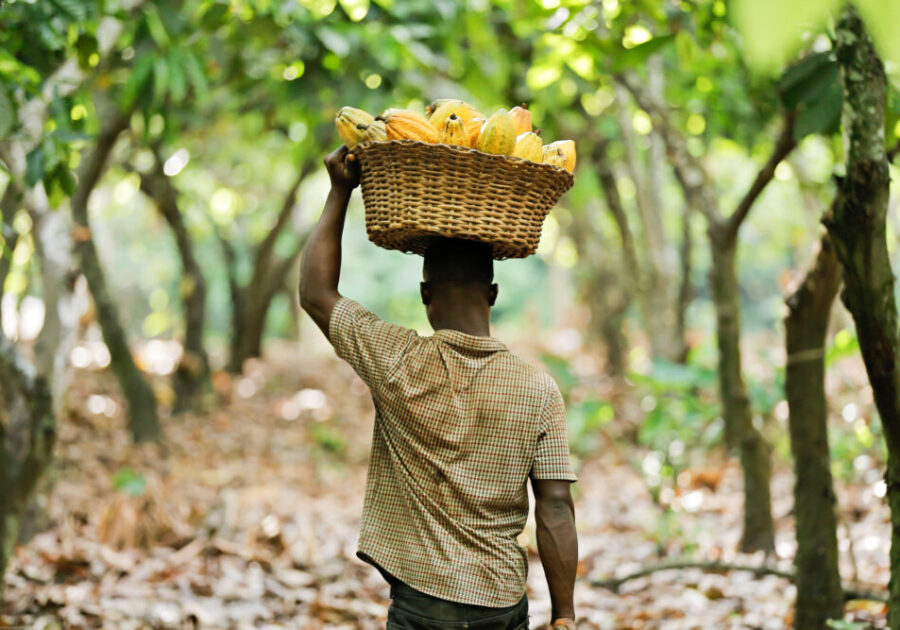
Rainforest Alliance works with a number of cocoa farming operations in Ghana. Pic: Rainforest Alliance
Key farmer organisations are among groups welcoming the adoption of Ghana’s cocoa board (Cocobod) Bill, designed to address major industry concerns over levels of pay and conditions, reports Neill Barston.
The move – which includes pledges to pay agricultural workers a minimum of 70% of gross free on board prices, was passed at the end of last month in a parliamentary session as part of wider government reform decisions, amid an ongoing state of crisis for the cocoa sector in the wider region. It has reportedly yet to be signed by the country’s president to enact it into its formal legal statutes.
As Confectionery Production has previously reported, farmers are cautiously awaiting the implications of the Bill in the region, having faced major pay cuts amounting to at least 30% earlier this year, in Ghana, and around 60% cuts in neighbouring Ivory Coast, as commodities prices on futures markets in London and New York tumbled last year.
This prompted chaotic conditions in West Africa, with farmers remaining unpaid for months in many instances – and it still remains unclear as to whether contracts pledged at higher rates last year will be honoured by the government-linked Cocoa Board, which swiftly moved to place a reduced farm gate price on the market in light of global reductions in value.
Consequently, farmers unions in the region reacted in dismay at the situation, with many market observers noting they have never seen prices drop so dramatically as had been witnessed last year. But a combination of adverse weather prospects, ageing farmers, crop-disease reportedly impacting around a third of cocoa farms in the region, and weakened demand for premium products amid global financial instability, have created ‘the perfect storm’ for the cocoa sector, that has suffered from long-term under investment to its surrounding infrastructure over the past few decades.
However, Cocobod has put forward a series of measures in its Bill, which reportedly includes the move to deliver 70% of gross prices, as well as cocoa farms being designated as protected land. There were also strict penalties being proposed for those who destroy crops for illegal mining purposes and smuggling.
Farmer support
Significantly, according to regional reporting from Sam Poku, of the Cocoa Media Hub, Alhadji Alhassan Bukari, the National Chief Farmer and President of the Ghana Cocoa Coffee and Shea Nut Farmers Association (COCOSHE), has officially offered support for the Cocobod Bill.
He reportedly praised both the Ghana Cocoa Board and the government for their commitment to legislative reforms that prioritise support for agricultural cocoa workers.
Crucially, he noted that by offering more equitable share of the global market price (70%), the Bill aims to alleviate rural poverty and provide farmers with the necessary financial stability.
Topics
agriculture cocoa export farming legislation living wage reform reforms trade
OrganisationsRegions