Ivory Coast resumes mid-crop sales, after dropping premiums

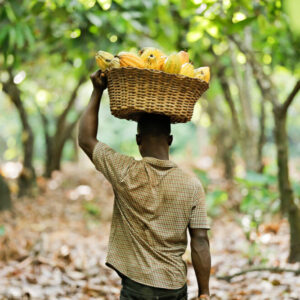
pic: Cocoa Farming in West Africa. Pic: Faritrade
Authorities in Ivory Coast have reportedly moved to bring forward its mid cocoa crop at what is believed to be its earliest point ever, as the nation cuts its additional quality premium in a bid to ease pressure on excesses of supply, writes Neill Barston.
According to local media including GhanaWeb which observed the, noted the major move, which comes as governments in both Ivory Coast and Ghana respectively have altered farm gate prices this month, reducing payment to farmers by around 30%, in light of a key slump in prices on futures commodities platforms.
While additional quality premiums have now reportedly been dropped in Ivory Coast, both the two regional countries have stated that the Living Income Differential, set at $400 a tonne in 2020 in a bid to support farmers, has in fact been retained.
However, the major cut to farmer pay at farm gate level has reportedly caused considerable concern within farming communities in the region, with farmers said to have gone unpaid for many months against the previous higher contract prices, causing significant hardship and calls for the pricing policy to be reviewed.
Industry response
Significantly, in the wake of the cocoa pricing situation, five major companies including Nestle, Mars, Mondelez and Lindt & Sprungli and Hershey, have created the TogetherCocoa Foundation, with a prime aim of supporting the delivery of a living income for farming communities, as well as addressing other key social and environmental issues.
Moreover, Confectionery Production was a media partner at last week’s World Cocoa Foundation Partnership Meeting had been scheduled to feature senior representatives of the Ghana and Ivory Coast cocoa sector, but it was confirmed at the event that they would not be at the week-long industry gathering due to the still-unfolding crisis within the region.
Furthermore, as CocoRadar observed, the premiums, which were believed to be $250-470 a tonne, had seen hundreds of thousands of tonnes of cocoa left unsold in the region, as buyers had refused to pay the previous prices against tumbling values on commodities markets that has seen prices drop from over $12,000 at the start of 2025, to less than $4,000 presently.
In addition, as CocoaRadar added, Ghana’s licensed cocoa buyers are facing acute liquidity stress that is impacting its national operations. This was confirmed as the Licensed Cocoa Buyers Association reports debts of 7–8 billion cedis ($650m–$750m) to banks and an additional 2.2–2.5 billion cedis owed to farmers.