
Mondelēz claims sustainability progress, despite advocating EUDR delay
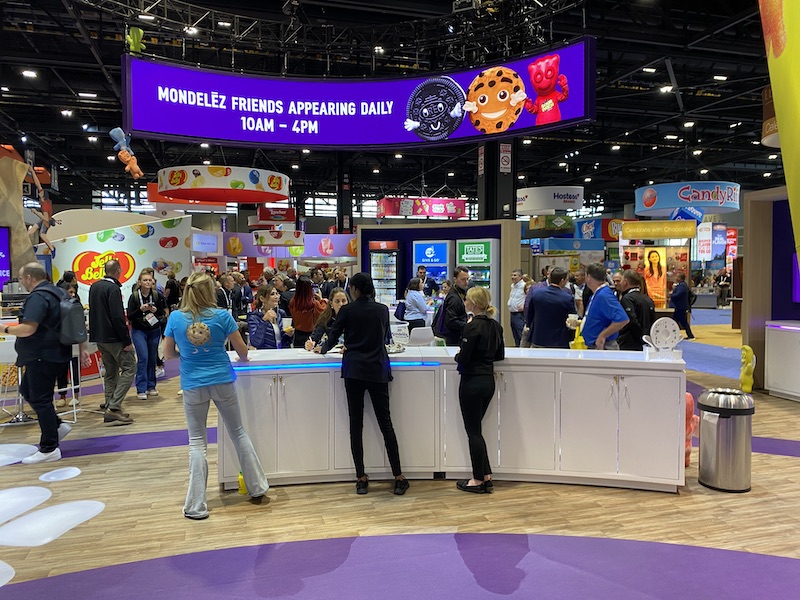
Mondelez at Sweets & Snacks Expo. Pic: Neill Barston
Mondelēz International has unveiled a key sustainability progress report, claiming notable gains including 100% supply chain coverage for its flagship Cocoa Life programme, reports Neill Barston.
The venture was established more than a decade ago, engaging with a total of more than 257,000 farmers working directly with the international chocolate trade, which was unveiled as part of its Snacking Made Right review.
While its Cocoa Life initiative has been widely welcomed within the industry, along with other similar initiatives from major players, Mondelez reportedly actively lobbied for the additional 12 month delay to to the much-anticipated landmark EUDR regulations governing deforestation.
These flagship environmental laws, which compel companies to deliver supply chain transparency for the first time ever, had been intended to be instituted at the end of 2024, which was then rolled-back following political lobbying from some portions of industry and centre-right political groups – who then forced a further year-long delay to the initiative, which will now not start until the end of this year.
Despite the company’s perspective on this key issue – which placed it at odds with the majority of major players who were in favour of proceeding with EUDR on its original timeline, the company asserted other sustainability gains.
Significantly, the company claimed that last year, the business continued to enhance reporting to meet evolving requirements worldwide. Its activities included regularly enhancing of our internal procedures and controls on Sustainability Reporting Standards.
This process aims to provide enhanced clarity for our reporting as we continue to focus on keeping our stakeholders informed of our ongoing journey to make snacking right while planning ahead to prepare for compliance with evolving and pending regulation.
Beyond confirming that it now works with more than 257,000 farmers with its Cocoa Life project, it has committed to protecting rainforests and enhancing its sourcing practices. This included uprating its CLMRS child labour monitoring systems, which are now applied to all of the farming communities in its supply chain, notably within West Africa.
In addition, the group also highlighted the fact it has adopted a position as a founding member of the new TogetherCocoa Foundation, collaborating with governments and other organisations to drive a living wage for farming communities. While the initiative – which emerged amid the ongoing sector criss that has seen a steep drop in agricultural worker wages (cut by 30% in Ghana and 60% in Ivory Coast in the wake of sharp declines in cocoa prices from $12,000 at the beginning of 2025, to around $3,000 a tonne within the past month.
According to the company, it is following a three-pilar strategy for enhancing and modernising the sector. As part of these actions, it is addressing diversification and innovation – securing high-quality cocoa through geographic flexibility, large-scale farming, and partnerships with food-tech start-ups to develop ingredients such as lab-grown cocoa – including a new venture with Israeli start-up Celleste Bio.
It also asserted that the use of predictive technology, through investing in
enhanced crop forecasting processes designed to improve supply accuracy, and modernising farming techniques for smallholders that make up the vast bulk of the cocoa supply chain, will make a key impact in its view.
One of its notable stats for the past year came in delivering 12.7 million shade trees planted in key cocoa growing communities, which are designed to help optimise delivery core crops in the sector.
Wider project objectives
In terms of listing its wider objectives, it has a stated goal of reducing Co2 emissions by 35% (base 2018), as well as reportedly exceeding a target of 10% reduction in absolute water usage in priority sites by 2025, realizing an ~18% reduction vs. 2018 baseline.
It has also moved to deliver improvements for sustainable packaging, with recycled content packaging for Cadbury in Australia as part of its commitment to a more circular economy for plastic. This contributes to progress achieved against the Company’s 2030 recycled plastic content target. According to the firm, some 96% of its packaging is now designed to be recycled.
Furthermore, the business has joined the 100+ Accelerator – an initiative providing access to eco-entrepreneurs to further scale systemic environmental solutions.
Christine Montenegro McGrath, SVP Chief Impact & Sustainability Officer, Mondelēz International, commented that there remained more work to be done, but noted progress was being made.
“Focus, innovation and impact at scale have always been at the heart of our sustainability work.
“Ever humble, but determined, we remain focused on contributing to the future of more sustainable snacking and delivering sustainable business growth.”
For his part, Dirk Van de Put, Chair & Chief Executive Officer, Mondelēz International, stated that the company’s path is grounded in long-term, sustainable business growth, which he said would be done through accelerating and shaping the future of the sector.
He said: “We remain focused on innovating with excellence, implementing long-term structural actions intended to enhance business resilience, embedding sustainability into our everyday work and delivering long-term value for our many stakeholders.”
He added, writing in its Snacking Made Right report, that its sustainability remains a core part of its objectives to help drive growth and wider competitiveness, and are part of its business principles.
The CEO added: “We remain focused on innovating with excellence, implementing long-term structural actions intended to enhance business
resilience as a key growth driver.
“This focus is embedded in our everyday work. The passionate, dedicated colleagues behind the sustainability progress highlighted throughout this report represent much more than a single, standalone team. Indeed, our
sustainability-related reporting lines, resourcing, and governance
processes are structured to empower local prioritization and
execution, aligned with our global ambitions.
“We’re proud of the collaborative efforts where we can engage with governments, NGOs, suppliers, and peer companies to help address some of the most pressing challenges of our time. And we’re proud of Team Mondelēz – for their continued commitment to sharing delicious snacks with people across the globe, while supporting long-term, resilient growth.”
