Guest blog: Marking World Day Against Child Labour

pic: Shutterstock
With Fairtrade Foundation set to play its part in our World Confectionery Conference, Marina El-Hasni, its Senior Sustainable Sourcing Manager for Cocoa reflects on World Day against Child Labour, marked on 12 June.
The past two years have been some of the most turbulent the cocoa sector has ever seen. Cocoa prices soared to historic highs of around $12,000 per metric tonne in late 2024, driven by climate‑related crop failures, global supply chain disruptions, and shifting consumer demand.
Yet even at these record levels, most cocoa farmers in West Africa remained trapped below the poverty line, squeezed by rising production costs and long‑standing structural inequalities.
Today, prices have fallen sharply to around $4,000 per metric tonne. Weaker demand, increased global supply, and geopolitical instability are all contributing to renewed volatility. For cocoa‑growing communities, this instability is not an abstract market trend – it directly affects whether families can afford food, healthcare, or school fees.
“This year’s cocoa season in Ghana, prices have been slashed,” Ghanaian cocoa farmer, Dora Atiiga, told us last week. “Unstable incomes mean farmers are… forced to use their children because they have no other means”.
Consumer behaviour has also shifted during this time. Kantar research commissioned by the Fairtrade Foundation earlier this year found that two thirds (65%) of UK adults have changed their chocolate‑buying habits due to rising prices.
Over a third (35%) say they are buying less chocolate, and 3% have stopped buying it altogether. These changes ripple back through supply chains, compounding the uncertainty farmers face.
Against this backdrop, the challenges for cocoa farmers remain stark. Earning a living income is fundamental to addressing many of the issues that underpin one of the biggest challenges for the sector: child labour – from the inability to pay school fees, to the need for children to contribute to household income, to the lack of community services that support families. When farmers earn enough to live with dignity, children are far more likely to stay in school and thrive.
Fairtrade co-operatives are helping to shift this reality. Thousands of farmers have moved closer to earning a living income, supported by the Fairtrade Minimum Price, the Fairtrade Premium, and long-term partnerships that invest in education, healthcare, and community infrastructure. In Côte d’Ivoire, the proportion of Fairtrade cocoa farmers projected to earn above a living income has more than tripled in two years – from 7% to 24% – with a further 50% now close to achieving it (Impact Institute, September 2025).
But progress is fragile. Many farmers living on extremely low incomes face growing uncertainty, and long-term investment is urgently needed to build resilience. We have seen encouraging commitments from retailers and brands who are working with Fairtrade to close the living income gap.
Their investments – from Living Income Reference Price payments to boosting sustainable production and building resilience (including yield‑boosting training, disease identification, shade tree distribution, and child labour prevention activities) are delivering tangible benefits for farming families.
This year, Fairtrade cocoa farmers and co-operatives will also benefit from increased Premium and a strengthened safety net as they navigate further price drops. With volatility likely to continue, Fairtrade will keep monitoring the situation closely and working with partners to protect farmers’ incomes.
Behind these commitments and price mechanisms are real people whose lives change when farmers are empowered. One of them is Dora Atiiga, a young cocoa farmer from the Kukuom Union co-operative in Ghana. Dora’s leadership journey began when she joined Fairtrade’s Women’s School of Leadership.
“Since then my life has changed… I am now able to advocate on living income and climate action… without fear or panic,” she told us.
Through practical training in financial management, confidence building, and project planning, Dora discovered not only her rights as a woman but her potential as a community leader. Seeing that her community lacked a school for young children, she decided to start one. Today, it is a registered school with around 170 students, eight teachers, and a cook – offering free care and education to local families.
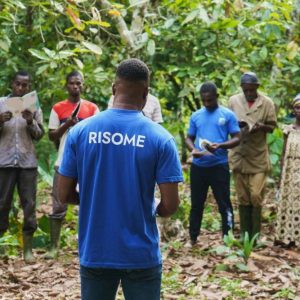
As a Fairtrade Youth Ambassador, Dora also visits farming communities to provide training, identify risks such as child labour, and connect households to co-operative support systems. Her work strengthens the social foundations that make child protection possible.
On World Day Against Child Labour, Dora’s story is a reminder that tackling child labour begins with building strong, resilient communities where farmers earn enough to support their families and plan for the future. Living incomes are not a luxury; they are a prerequisite for ending child labour in cocoa.
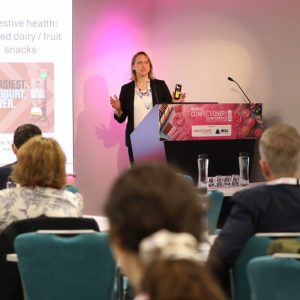
For those wanting to learn more about how Fairtrade is supporting cocoa farmers and how the industry can work together to achieve living incomes, the Fairtrade Foundation’s Sustainable Sourcing Lead for Cocoa and Coffee, Jason Archie‑Acheampong, will be speaking in a sustainability Q&A at the World Confectionery Conference in London on 10 September.
Topics
child labour cocoa community engagement Fairtrade Foundation farmer pay remediation supply chains
PeopleOrganisationsRegions