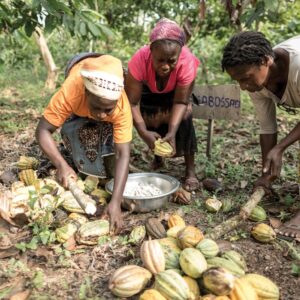
Exclusive: Cocoa communities welcome progress from Nestlé’s income accelerator project
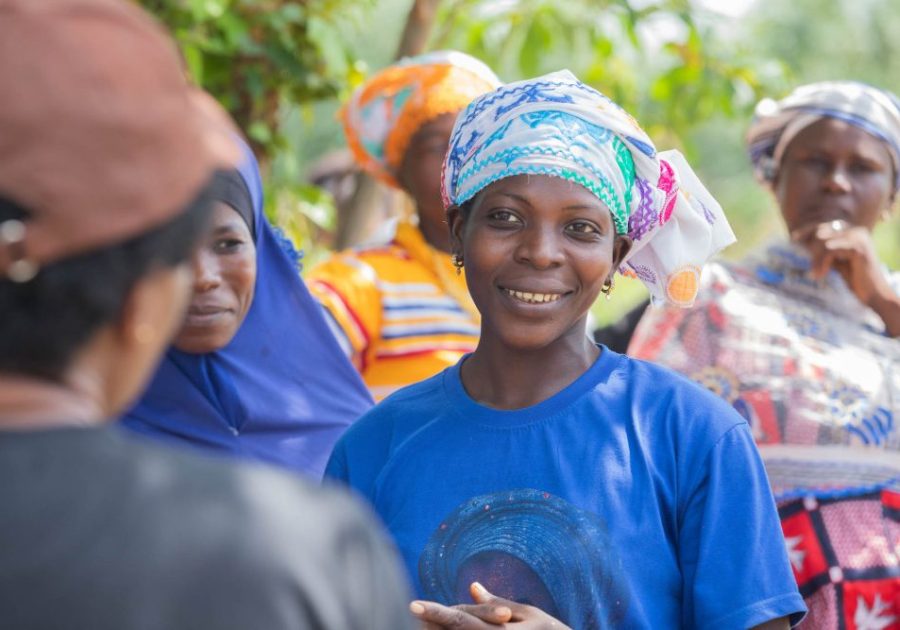
Nestle's cocoa income accelerator programme has made key gains for crop volumes and women's empowerment. Pic: Nestle
Farmers in West Africa have joined community leaders in hailing Nestlé’s Income Accelerator project as a flagship success in supporting agricultural workers amid major ongoing industry pressures within core producing nations, writes Neill Barston.
The major Swiss-headquartered food group staged a webinar yesterday, unveiling a new independent report from the Netherlands-based KIT Institute that highlighted core gains for its flagship West African project in terms of increased productivity, boosted income levels, and enhanced empowerment for women in terms of household financial management.
According to the results of the latest study covering 2,000 farms in Ivory Coast, the KIT Institute found there had been some notable gains made since the pilot scheme began in 2022.
Among core reported improvements were cocoa farmer household yields increasing by 4% in kilograms her hectare.
This improved position was attributed to greater focus on pruning and crop management, against a comparative 16% loss among comparable households that have been hit by major problems of disease impacting harvests, and wider issues of climate change, as well as government-decided pay cuts that have affected the entire industry against a marked decline in commodities prices on futures markets in New York and London.
During the particularly challenging 2024/2025 season, participating households produced an average of 2,116 kilograms of cocoa – around 500 kilograms more than similar households. These results point to stronger performance and greater resilience in the face of adverse weather and volatile cocoa markets.
The report also found that the share of women classified as empowered increased by 114% compared with 2022. This was 66 percentage points higher than in comparable communities. Women’s participation in Village Savings and Loans Associations rose by 23 percentage points. Food insecurity fell by 8 percentage points, while dietary diversity and ownership of productive assets improved.
Key industry webinar
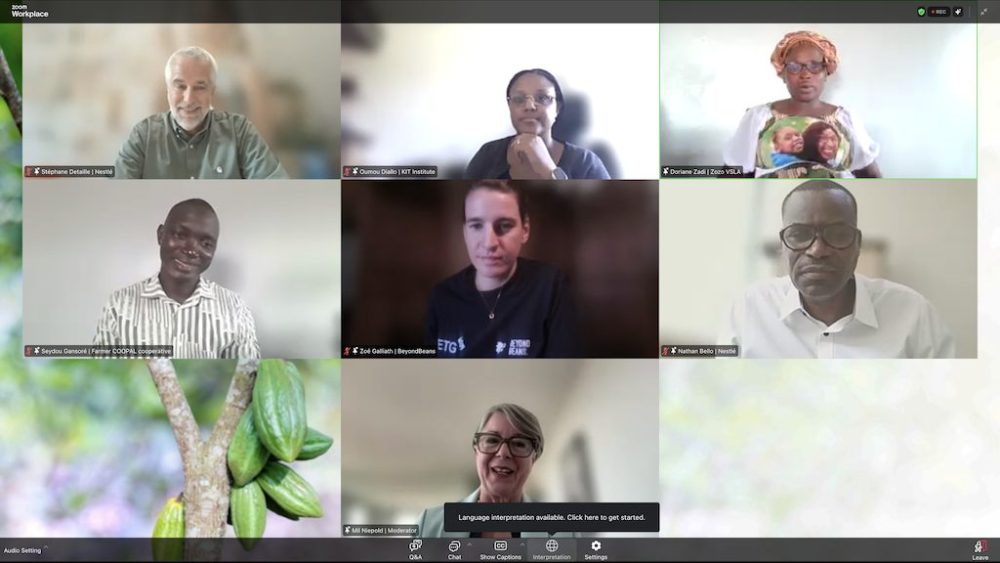
Speaking at the webinar event launching the report, Stephane Detaille, head of ESG for confectionery and snacking strategic business unit noted that while the company remained proud of the project’s progress with the collective efforts made on the venture, he said that its teams ‘remained humble’ in the knowledge there remained notably work to do in terms of scaling-up the project to reach an even greater number of people.
 He noted that there had been considerable prior to the scheme being implemented, but its deliver was born of a need to urgently address core issues in the supply chain.
Detaille said: “The situation there (in Ivory Coast) was changing, but not at the speed we wanted, so we needed to accelerate and innovate to help to close the living income gap, but also to reduce child labour risks, and and the team decided to take a bit that entrepreneurial spirit, and review the what was working, what was not, and to bring innovation,
“One of its pillars is built on how can we do things differently. We wanted to look at the households, so we wanted to start at the beginning with the farmer and his family, and I think that’s the key principle of what we have.
“The second one is about how could we create long-term impact and long-term change,, and I think this is quite qan innovative idea, to come with mobile incentives, delivered directly in the hands of the farming families to incentivise change, creating that combination between the incentives and the enablers, so the training, this is what really moved the needle and allowed us to come to this programme.
“Another thing is in having the household as part of the project. This has women at the centre of the programme. We strongly feel that women are the agents of change, that this will drive long-term gains,” adding that the venture has already grown considerably over the past four years from its initial test phase in 2022, to now assisting some 45,000 households.
As the KIT study found, the integrated approach – linking farm support, household support and conditional cash transfers – has contributed to these outcomes.
This has included greater uptake of good agricultural practices, combined with stronger inclusion of women in household financial management, supported gains in both cocoa productivity and income, while also improving household resilience and well-being. According to the results of the study, participating households also increased their savings by 272 percentage points more than the comparison group.
Gansore Seydou, cocoa farmer and cooperative delegate, joined the webinar discussion panel, asserting that the results of the accelerator programme had been encouraging so far.
He said: “If cocoa trees on a farm are well pruned, you are really set, otherwise there can be sicknesses for crops. This really improved our production, and in fact doubled it.
“We’re getting so many kilos of cocoa now, so, and all of this is thanks to our pruning practices, Furthermore, there’s composting, I and they’re at the compost brigades, so this has really been helpful, so compost acts as a fertiliser, which helps us on the farm, we take all of these different elements and mix them, and so I really would encourage and congratulate those people who work on compost for us, because it’s so helpful, and there are these brigades who help with pruning, and also planting trees is very positive.”
For her part, Oumou Diallo, senior advisor, impact economics at the KIT Institute, noted that the accelerator programme had moved to explore conditions in cocoa farming communities in a holistic manner across family activities.
More specifically, she stated that this involved creating a women’s empowerment index that was built upon several core strands that examined how female participation in cocoa production, and its related activities could drive significant improvements in overall living conditions.
Diallo enthused: “Firstly, we measured women’s access to resources, and whether they are involved in any income generation activities, whether she has access to financial services, and if she owns any productive assets, so that was like the first pillar of the empowerment.
“Then the second we really measure if women are participating in the decision making of the household, so it’s both about accessing the revenues, but also making the decision of the different activities, whether agricultural or non-agricultural, if she’s involved in the expenditure of the household, but also if she can, she have a word to say about the children, for example with their healthcare,” adding that the third element related to access to wider social networks, and also evaluating whether women have access to the VSLA community loans schemes that drive their engagement with diversifying income within family units.
As Nestle noted, the results of the study were particularly revealing on this latter point, and while it acknowledged that the programme had yet to make significant breakthroughs in delivering alternative revenue opportunities, it assessed that foundations were in place for this to happen over time – which as our title has reported, will be much needed given the recent major reduction in farm gate cocoa prices in light of a considerable drop in global values on commodities markets during the past twelve months.
According to the KIT report, participating households saw a 190% increase in cocoa income as a result of strong gains in cocoa revenues. The report further found that the reliability of cash transfer deliveries improved.
“These findings validate our pioneering approach to helping cocoa-farming families in West Africa close the gap to a living income,” concluded Stéphane Detaille, Head of ESG for Confectionery & Snacking Strategic Business Unit at Nestlé. “They show that rewarding effective farm practices, strengthening women’s empowerment and building household resilience deliver encouraging results and must go hand-in-hand to deliver lasting impact. They also help us identify where to focus next – particularly on income diversification and protection against future shocks – as we further scale the program to more cocoa-farming families.”
Extended programme
Over the next 12 months, the KIT Institute will examine in greater detail the drivers of yield improvement, the adoption of regenerative agriculture practices, income diversification and school attendance. These insights are expected to inform the program’s next phase and help refine where support can deliver the strongest long-term impact.
The evaluation covers the program’s test-at-scale phase in Côte d’Ivoire and is based on four rounds of household survey data collected between 2022 and 2025. It compares participating households with similar households in comparable cooperatives that are benefiting from other sustainability support. The analysis is contextualized against ongoing climate volatility, disease pressure, rising production costs and broader changes in the cocoa sector.
Topics
agriculture child labour cocoa cocoa communities confectionery farming supply chains sustainability women's empowermen
PeopleOumou Diallo Stephane Detaille
OrganisationsRegions