Will Lindt & Sprungli’s court case on child labour be the tip of the iceberg?
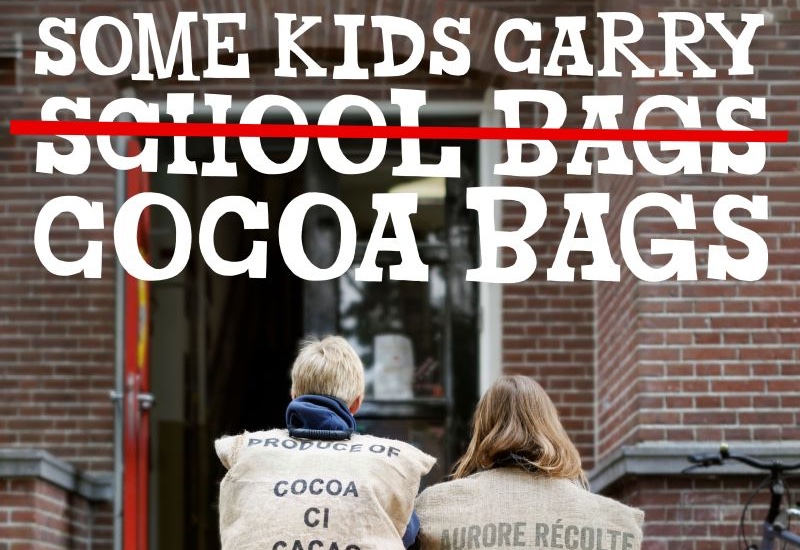
Tony's Chocolonely has expressed concern at the ongoing presence of child labour in cocoa supply chains, as 12 June marks World Day Against Child Labour. Pic: Tony's Chocolonely/Janus van den Eijnden
The lawsuit that has been filed in Washington against Lindt & Sprüngli in the past week has stood out for a number of reasons that will give the wider industry much cause for concern.
While the Swiss premium chocolate bar maker has strongly refuted the charges against it that it mislead consumers in the extent to which it is tackling child labour in its supply chains, the timing of such allegations is particularly challenging ahead of the introduction of EUDR deforestation laws, and anticipated corporate due diligence legislation that will be coming into force in the EU within the very near future.
From a brand perspective alone, the company has invested heavily in slick television advertising at key seasonal moments including Easter and Christmas for its core Lindor and other premium brands that have seen its fortunes continue to rise, as well as expand into the US and far further afield. So, the emergence of a legal case questioning its actual sustainability achievements in regard to progress against child labour specifically could cause notable reputational impact.
This is not the first time that the company has encountered such charges, with Swiss TV viewers in 2024 witnessing a documentary that made similar allegations against the business – which it also moved to deny at the time, noting that it took the issue seriously, and had put in place CLMRS remediation measures for any such cases it found within the 80,000 or so farmers that the company reportedly presently works with in West Africa.
However, the underlying major question remains, and has done for some time, just why are we still in this situation? More than two decades on from the Harkin-Engel protocols laid down to eradicate child labour issues, when tangible positive gains on the issue at scale seem if anything, further away than ever.
According to NORC studies, there are still some 1.5 million children exposed to the worst forms of child labour in Ghana and Ivory Coast, which was now done several years ago, and no evidence has been presented that in the post-pandemic world that figure has meaningfully come down any further.
This leaves a major dilemma for chocolate and cocoa companies that have sustainability hard-wired into their policies now – these strategies, including those from Lindt, are well-meaning in their views, but in terms of actually translating words into deeds, the levels of collective progress have not been anywhere near what the wider industry, and indeed the world really ever hoped would be the case.
So, the challenge that Lindt now faces is in just how it can demonstrate in court just how effective it has been at tackling child labour. They will have the stats on this, and it will be very interesting to see how this case is determined, as its implications are indeed far-ranging.
As the very market that the company is seeking to influence – younger generations with notable levels of disposable income to afford its ranges, are increasingly aware, and care considerably about the nature of the products that they are buying.
Lindt of course is not alone in this issue by far, and other major companies have found themselves foul of similar serious related allegations in recent years. This includes Mars (along with Nestle and Hershey), in relation to their cocoa production operations in West Africa, and similarly Mondelez was the subject of a Channel 4 television documentary that uncovered not only instances of child labour, but also forced labour in which it identified instances of workers were being trafficked across West Africa to work on cocoa plantations. In Brazil, Cargill has in recent years also faced allegations relating to child labour within supply chains.
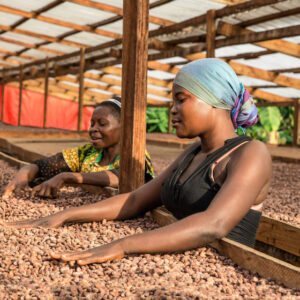
Companies such as Tony’s Chocolonely (main image) have made it their mission to try and tackle child labour head on, acknowledging that it’s a major task, and that it still remains an issue for the broader sector in which it closely documents and cases within its own supply chain and takes steps to move them out of child labour into encouraging them into schools, and through paying premiums to benefit their families to help pay towards the cost of hiring adult labourers to do work that should entirely be done by those over 18.
Whether sector major players choose to acknowledge this or otherwise, the facts are that the cocoa trade remains in a state of crisis in core producing nations of Ghana and Ivory Coast. They have been deeply affected by decades of under investment in infrastructure, as well as hit by factors of a ageing workforce (with farmers on average now in their late 50s and older), disease-impacted cocoa stock delivering reduced quality yields, and the prospect of major El Nino weather disruption later this year.
These factors, coupled with endemic poverty that has seen farmers work for sub poverty wages of less than $1 a day have meant the industry is no longer viable for many younger generations – so unless those major players in the sector are willing to radically reshape how it is conducted through working with governments in Ghana, Ivory Coast, Nigeria and Cameroon that account for 75% of the industry, then its future will no longer be viable in the eyes of many senior sector observers without systemic change, and fast.
The moves from Ivory Coast and Ghana governments, along with authorities in Nigeria these past few weeks to work in closer collaboration to increase processing of cocoa in West Africa, may well be one of the keys to solving this situation – along with businesses, and consumers all paying more than we already presently are, to ensure the future of this significant industry.
It will certainly be among key topics to emerge at our World Confectionery Conference in London on 10th September, with this being such an integral topic to the future of the industry. You can register for our event via our dedicated website, here.
So, will the latest Lindt court case be the first of others to follow in the US? Only time will tell on this, yet time is not a commodity that the industry, or those working at the sharp end of the sector, in the fields of Ghana and Ivory Coast have on their side.
Neill Barston, editor, Confectionery Production
- keep in touch at [email protected] and via social media @confectionprod and our Linkedin channels