Cargill highlights growth potential at 9th Indonesian Cocoa Conference

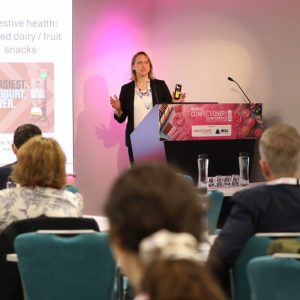
The 9th Indonesian Cocoa Conference concluded with key discussions for the region. Pic: Cargill
Increasing productivity, responsible sourcing, and innovation were highlighted Cargill as core areas of focus at the 9th Indonesia International Cocoa Conference (IICC), writes Neill Barston.
The event shone a light on supply chains in the region – which continues to play its part in the global market, yet largely remains prevalent in the fine flavour chocolate sector, as bespoke manufacturers seek to capitalise on its distinctive regional flavours.
As Cargill noted, the event, from 22–24 July 2026 in Yogyakarta, IICC brought together stakeholders from across Indonesia’s cocoa value chain to discuss the opportunities and challenges facing the sector in the wider Asia Pacific area, which continues to show notable promise.
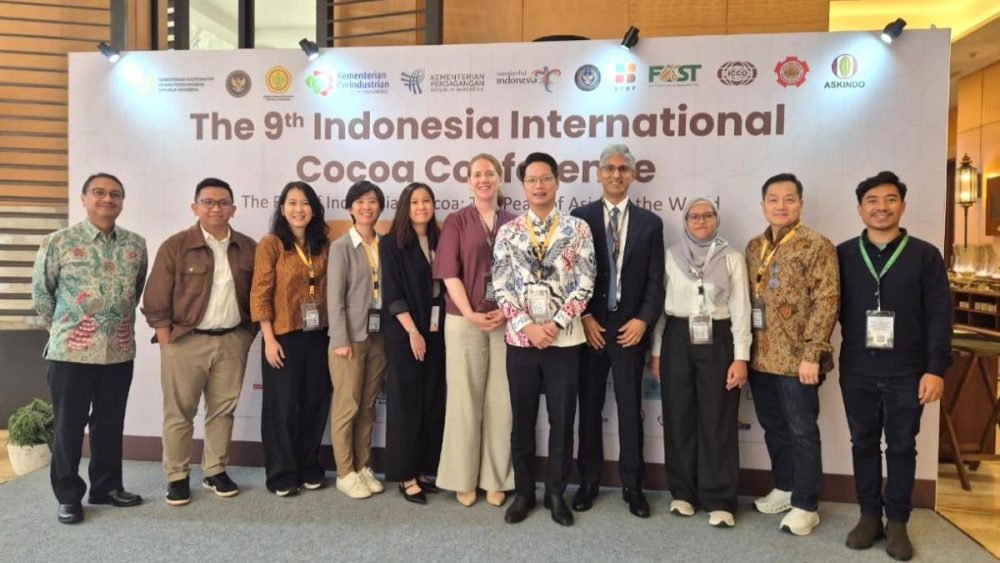
Cargill participated as a keynote and panellist, emphasising that sustained collaboration among farmers, government and industry players will be important to supporting the sector’s long-term development, much as it is on on a global scale.
Intriguingly, the company acknowledged that consumer preferences in Asia show promising opportunities for the development of chocolate and cocoa products.
Linked to this, the company’s latest APAC IngredienTracker points that Asian consumers show strong familiarity with chocolate and cocoa ingredients across confectionery, desserts, bakery, and dairy.
In Indonesia, 76% of consumers prefer to buy locally grown food all or most of the time and 91% prefer food and beverages produced in a socially and environmentally responsible manner. Together, these trends support closer links between local cocoa production, processing, a focus on responsible sourcing, and product innovation tailored to Indonesian and wider Asian preferences.
Speaking at IICC 2026, Kashan Rashid, Vice President & Managing Director, Cargill Food Southeast Asia, Australia and New Zealand, said, “Indonesia has a powerful cocoa story and an even stronger opportunity ahead. For Cargill, the country is central to our cocoa growth strategy in Asia Pacific. We remain focused on supporting Indonesia’s next chapter through farmer partnerships, investment in more responsible sourcing, local processing and customer-led innovation.”

“The future of Indonesia’s cocoa industry will be shaped by collaboration across the value chain to support farmers, strengthen responsible sourcing practices and connect Indonesian cocoa with regional and global markets,” Kashan added.
As an important cocoa origin located close to growing Asian consumer markets, Indonesia is well positioned to connect local supply with responsible sourcing insights and practices, processing and innovation for regional and global customers.
To translate this potential into sustained growth, the Indonesian cocoa sector needs to align around a focused set of priorities: improve farm productivity, expand reliable farm-level traceability and responsible sourcing practices, increase local value creation through processing and innovation, and maintain access to key export markets.
Furthermore, as the company noted, Indonesian cocoa farmers are central to building a more resilient and responsible cocoa supply chain from farm to market. Through the Cargill Cocoa Promise, Cargill works with farmers, customers, and local partners to support Indonesian farmer capability and community wellbeing.
In 2026, more than 7,800 participating farmers in the Rainforest Alliance certification program received approximately Rp38.8 billion in premium payments.
Over the past five years, Cargill has also supported the establishment of eight community nurseries, provided 96,000 cocoa seedlings, distributed 44,000 shade trees, and supported 52 Village Savings and Loan Association groups. Across the program’s covered supply base, Cargill also applies first-mile traceability, farm mapping, and deforestation-risk assessments, alongside farmer training and coaching on good agricultural practices.