Major global treating trends revealed by Mondelēz’s State of Snacking report
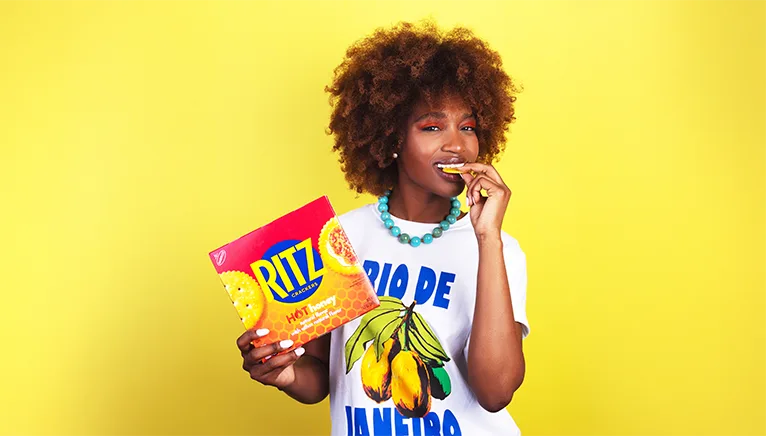
As Mondelez notes, snacking remains big business around the world in 2026. Pic: Mondelez
As a fresh report from Mondelēz International has found, the global thirst for an array of snacking has continued apace, with a huge variety of offerings meaning consumers have more choice than ever, writes Neill Barston.
Notably, the US industry giant made a significant return to this year’s Sweets & Snacks Expo with a strong presence offering limited edition versions of its flagship Oreo cookie series, as well as Chips Ahoy!, Grenade, Ritz and Sour Patch brands strongly represented at the event.
Confectionery Production was on hand to experience these respective launches, and the company clearly recognised the value of continue a vital pipeline of innovation within the segment. Its immense value has been gauged by many sector analysts, including Euromonitor International, which noted sales for the category had expanded to a global worth of some $679 million in 2024, and subsequent research has found that figure smashed through the $700 million barrier last year.
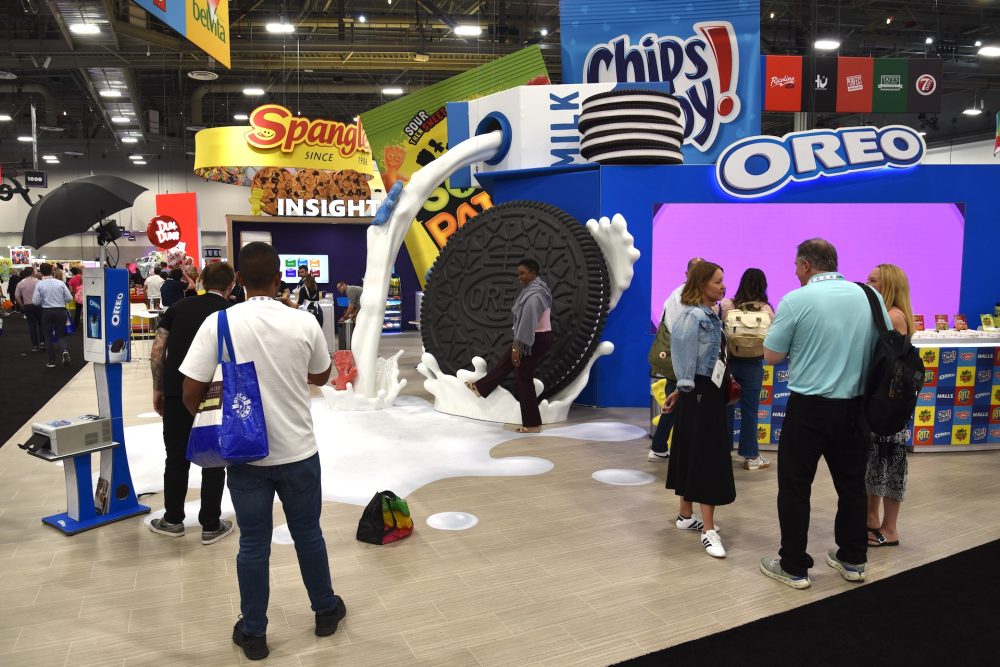
The Mondelez stand at this year’s Sweets & Snacks Expo in Las Vegas. Pic: Neill Barston
The confectionery and snacking market will come closely under the microscope at our next World Confectionery Conference on 10th September in London, with Euromonitor offering plenty of gems as to what the remainder of 2026 is likely to hold for the market. Make the most of our special extended early bird visitor rates that will remain open until 14 July with the following direct link to our website.
This was despite considerable economic pressures on key markets around the world, in which consumers tightened their collective belts amid household budget constraints that saw many shoppers seek out cheaper alternatives, including private label ‘own brand’ options – which have seen a marked increase in prominence in recent times.
As Mondelēz has noted, “Snacking isn’t just a habit, it’s a lifestyle,” which is reflected in its 2026 State of Snacking report, complied between itself, Mintel, and Black Swan Data, which it noted that consumers have evolved their eating habits beyond simply two meals a day.
The report covers key motivations for snacking – which research has been found is largely dominated by increased pressure on time, in which ‘on-the-go’ eating patterns have become a more regular feature in the lives of many aged under 40 with their working patterns. The issue of health and wellness remains hugely on the agenda – though this has, as our title has reported, produced conflicting results in that while shoppers may state that they are seeking healthy products – they’re also equally interested in the most indulgent ones that they can find. Consequently, ranges that can potentially cater to both those propositions stand to do extremely well, as its top six areas of trends, below, reveal.
1. Snacking is a daily ritual for most of the world
Around sixty percent of consumers across key global markets snack at least once a day. In Australia, 70% of adults who snack have a snack daily. In the U.S., 66% snack daily, with 17% reaching for snacks three or more times per day. Germany isn’t far behind at 61%, with a third of Germans snacking twice a day or more. In Brazil, 43% snack between lunch and dinner every day. In Thailand, 55% of adults snack daily, with 11% reaching for snacks four or more times per day. What’s more, younger consumers are accelerating the trend: 38% of U.S. snack consumers aged 18–44 say they’re snacking more than they were a year ago, compared to just 18% of those over age 45. In Germany, an impressive 54% of Gen Z adults who snack eat snacks twice a day or more. Snacking is becoming the dominant way younger generations eat.
2. Snacks are replacing meals, and younger generations lead the way Perhaps the most striking shift is the prevalence of snacks as meal replacements. 41% of U.S. snack consumers now eat snacks in place of a regular meal. In Australia, 44% of snack consumers replace a proper meal with snacks at least once a week. Even in India, 22% of snack consumers use snacks to replace breakfast, lunch or dinner.
Why? For younger consumers, snacking is simply easier. 38% of U.S. snack consumers aged 18–24 say snacking is less stressful than preparing meals, while 57% of snack consumers aged 25–34 see snacks as a better value than a full meal. This is a deliberate lifestyle choice that is reshaping how an entire generation approaches food.
3. Snacking is a social act
Forget the image of solo snacking on the couch. More than two-thirds of global consumers say snacks are necessary when socializing. In Thailand, 86% of adults see snacking as a great way to enhance social moments. In India, 79% find it fun to try new snacks with friends just to see their reactions. In the UK, 69% of adults hosted at-home social gatherings in 2025, with 60% buying savory snacks and 57% buying sweet snacks for the occasion. In France, 62% of crisp, nut or savory snack consumers are more likely to eat savory snacks when they’re with other people.
Social media is amplifying this further. In Brazil, 31% of snack consumers try snacks they discover on social media — rising to 36% among those under 34. Viral chocolate trends drove 52% of German chocolate consumers aged 25–34 to become more interested in globally inspired confectionery. In the UK, 77% of adult Gen Z hosts turn to social media for snack and menu inspiration when entertaining.
4. Comfort is king across every generation
In the U.S., “comforting” is the #1 word consumers of every generation use to describe their relationship with snacking. This isn’t just a young-person phenomenon, as adult Gen Zs, Millennials, Gen X, and Boomers all rank comfort highly. “To treat myself” ranks as the second-highest snacking motivation in the U.S. at 61%, just behind hunger.
This resonates globally, too: 73% of Indian adults agree snacking helps provide a break from daily stress. In Brazil, 40% of snack consumers reach for indulgent snacks specifically to treat themselves after a long day, while 30% snack when feeling stressed or upset. Across Europe, the pattern holds in specific categories – 43% of UK chocolate consumers eat chocolate to reward themselves, 42% to relax or unwind, and 40% of German confectionery consumers do the same.
The evening is where this plays out most, as consumers consistently crave something that “feels like a treat” in the afternoon and evening hours, making that post-dinner snack less of a guilty pleasure and more of a universal ritual.

Mondelez recently launched its summer of soccer campaign, recruiting stars from across football and music ahead of the World Cup. Pic: Mondelez
5. Texture is the new flavor
Flavor innovation has dominated snacking since 2020, but the next frontier is texture. In Germany, 67% of snack consumers are drawn to snacks that combine different textures. In the U.S., 38% of cracker buyers say texture influences which products they choose. In India, 35% of teen snackers specifically want snacks that are crunchy on the outside and soft on the inside.
Meanwhile, 77% of UK adults say they actively try to savour their eating experiences. This figure is consistent across generations, from 74% of Gen X to 80% of Gen Z. In the UK, 43% of salty snack consumers want flavors they enjoy in other foods applied to their snacks. Snacking is no longer just about what something tastes like; it’s about how it feels.
6. Nostalgia is a surprisingly universal pull
In a world obsessed with novelty, nostalgia remains a powerhouse. 52% of U.S. salty snack consumers prefer snacks with nostalgic marketing or packaging. At least two-thirds of European consumers across France, Germany, Italy, Poland, and Spain still prefer the crisp brands they enjoyed as children – and this spans all age groups, not just older demographics.
Meanwhile, in India, 78% of adults see snacking as a way to explore different cultures and cuisines, and 62% of UK consumers are interested in breakfast biscuit flavors inspired by world cuisines. It turns out we want both: the comfort of something familiar and the excitement of something new. The snacks that resonate most tend to blend the two, such as a childhood favorite reimagined or a classic format with an unexpected twist.
The Bottom Line
The snacking landscape in 2026 is defined by a series of productive tensions: health and indulgence, nostalgia and novelty, solo convenience and social connection. We don’t want to choose – we want it all. And increasingly, that’s exactly what we’re getting.