Exclusive: Becoming the brand

Through premiumisation and innovation, private label confectionery is evolving from a value proposition into a booming industry, allowing retailer ranges to compete with established brands, reports Daisy Phillipson
Private label sector has undergone a huge transformation in recent years. While affordability is a significant factor as inflation continues to impact spending habits, there’s also been a big change in perception.
Particularly among younger audiences and social media users, many
store-owned ranges are considered to match or even surpass certain branded products.
Demonstrating this shift is market intelligence firm NielsenIQ, with its 2025
global report finding more than half (53 per cent) of consumers are increasingly buying more private label products. Additionally, 68 per cent of respondents view them as good alternatives to name brands, 69 per cent consider them to offer good value, and 60 per cent said they would buy more private label products if a larger variety were available.
But while the private label sector continues to expand its reach, NIQ does
note that major branded manufacturers have also enjoyed renewed momentum. As asserted by Marta Cyhan-Bowles, NIQ’s chief communications officer and head of global marketing COE: “Our report underscores the critical need for collaboration between manufacturers and retailers to drive the next wave of CPG growth and effectively capture consumers’ shifting attention.”
In the world of confectionery, the business has traditionally been dominated
by household names and impulse purchases.

But in recent years there’s been rising investment from retailers in premium
chocolate, innovative candy and sustainable sourcing initiatives in a bid to differentiate their own brand portfolios.
Market research and technology company Circana’s latest analysis demonstrates how these efforts are paying off. Tracking sales of
millions of SKUs over more than 230 FMCG categories, the firm found that
private label has now reached a record 50 per cent unit share across Europe’s six largest grocery markets. Key drivers of this shift include retailers’ targeting of social media content toward younger shoppers, as well as health and lifestyle trends and more premium own label offerings.
As Ananda Roy, senior vice president of strategic growth insights, Circana,
explained: “Supermarket private label brands have spent the last decade becoming powerful brands in their own right.”
She added that retailer ranges now span everything from value products to premium treats and trend-led launches.
“The cost of living crisis is expected to intensify in the second half of the year as the war in Iran increases the prices of fertilisers, transport, distribution and
ingredients,” remarked Roy.
“This is likely to give retailers another boost, with private labels growing quickly again as households look for ways to save money.”
This rise has also enjoyed a boost online. According to Europanel’s latest Global E-Commerce Report, private label now accounts for 38 per cent of online FMCG value sales in Europe. This is significantly higher than in most other regions, as online shopping trips continue to rise and AI-driven shopping tools make product comparisons easier than ever.
Private label goes premium
With offerings such as vegan, sugar-free and single-origin no longer exclusive to premium brands, one sector that is witnessing significant growth is private
label chocolate.
According to HTF Market Intelligence, it’s expected to expand at a
CAGR of 18 per cent between now and 2031. A number of innovations represent this growth, as manufacturers and retailers cater to rising demand.
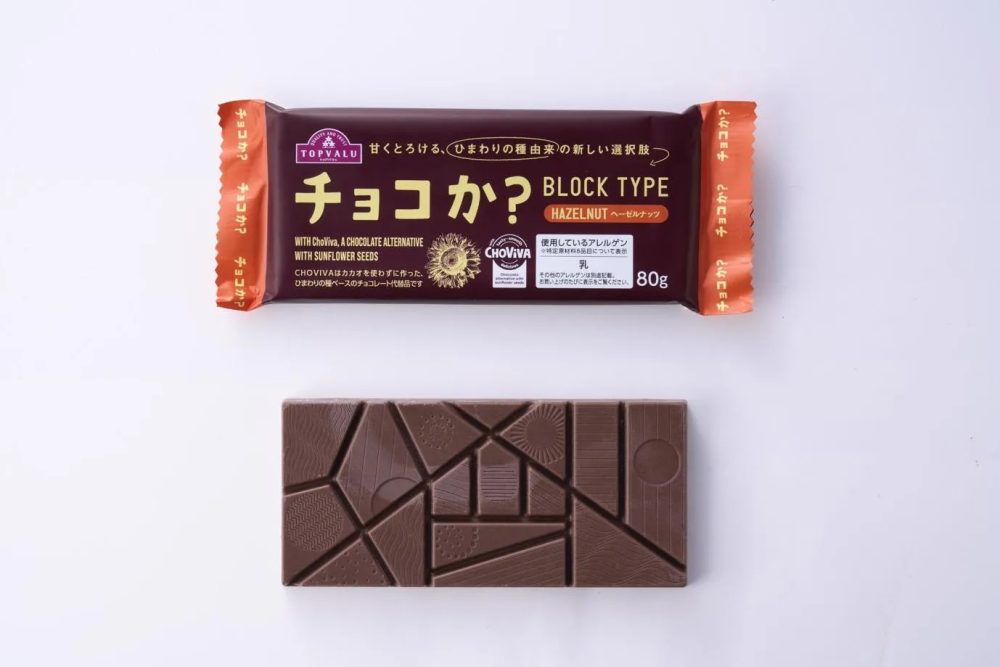
Amid uncertainty surrounding cocoa prices, ChoViva cacao-free serves as an ideal chocolate alternative made using sunflower
seeds.
In 2024, German supermarket chain REWE became the first European retailer
to use the brand in its private label products. As stated by the company at the time, the ingredient is more ecological and socially sustainable than conventional chocolate production, requires fewer resources and is
not reliant on world markets.
More recently, Japanese retail giant Aeon became the first retailer to bring ChoViva to Asia through its Topvalu private label range. Following a successful limited- edition biscuit launch, the company introduced three cocoa-free chocolate bars in Japan, available in cereal puff, plain and
hazelnut varieties.
The move highlights how etailers are increasingly using private label
products to introduce alternative ingredients and sustainability-focused
innovations to new markets.
For those producing premium chocolates with cocoa ingredients, retailers are ramping up efforts to demonstrate responsible sourcing and transparency. Supermarket chain Lidl is addressing the imbalance between record high cocoa prices and low cocoa farmer wages by transitioning its
private label chocolate bar range to Fairtrade’s Living Income Programme.
From mid-2026, the firm has been paying the initiative for all of its permanently listed chocolate bars in five countries, with the rollout beginning in Germany, the Netherlands, Belgium, Luxembourg and Austria.
Its commitment is set for a minimum of five years, regardless of market
fluctuations, and has promised to absorb the additional costs without passing them to the consumer.
Similar ventures are gaining traction elsewhere in Europe. In the Netherlands,
Albert Heijn, Superunie and Jumbo have all committed to fair cocoa sourcing across their private label chocolate portfolios. The commitments are designed to help address the long-standing gap between cocoa prices andfarmer incomes through improved sourcing practices and long-term partnerships.
Albert Heijn was the first major retailer to announce a living income-based sourcing model for all cocoa used in its private label products, working closely with Tony’s Open Chain, while Jumbo and Superunie have since made their own commitments.
Together, the initiatives signal a broader shift towards making responsibly sourced cocoa a standard feature of everyday confectionery products, rather than a niche premium offering.
When it comes to the products themselves, the trend towards premiumisation is also evident among retailer-owned confectionery brands. In Switzerland, Migros Group’s Delica AG subsidiary Chocolat Frey recently expanded its Big Chunks range, with new launches such as the Popcorn Style bar
reflecting growing demand for larger inclusions, novel textures and indulgent
flavour combinations.
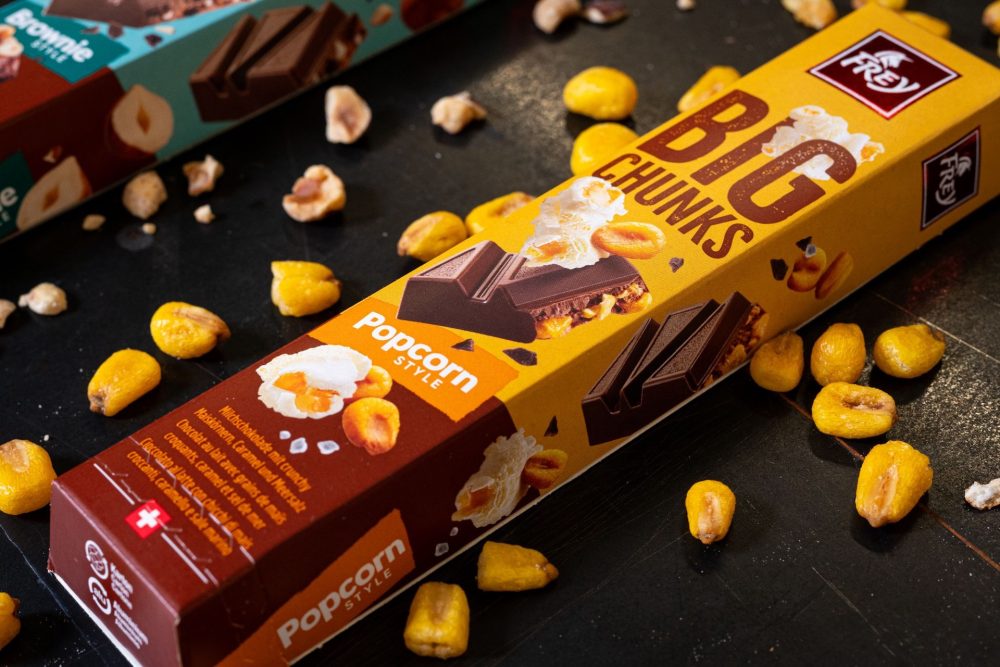
According to project manager Dominic Meier, the product was years in development and designed to capitalise on consumer interest in more adventurous chocolate experiences. “The development took longer than originally planned, but every step was necessary to create the perfect product,” he said.
Responding to changing tastes
Both chocolate and non-chocolate private label confectionery and snack segments are gaining momentum. This was evident at this year’s PLMA World of Private Label International Trade Show, where confectionery ingredients company OV Group illustrated the many new ways brands are experimenting with flavour, texture, packaging and format innovation.
Frida Bergfors, sales manager Benelux at OV Group, emphasised that consumers are seeking indulgence, but they’re also looking for more texture and surprise.
“From filled chocolate bars and bite-size desserts to nostalgic flavours and standout packaging, the products gaining attention are the ones that combine familiarity with a fresh experience” she said.
“At the same time, price pressure continues to shape the private label market,
which increasingly seems split between two extremes: highly accessible everyday products focused on value, and premium concepts with elevated flavours, textures and packaging designed to justify a more indulgent positioning.”
One of the strongest trends is the growing balance between health and indulgence, with OV highlighting its sugar-free and no added sugar products. When it comes to rising interest in “newstalgia” (nostalgic classics with a modern twist), the firm recently launched its new Nostalgic Dessert Collection – Classics, Reimagined.
Developed in close collaboration with its NPD teams, the new inclusion range comprises flavours and textures such as Red Velvet Crisp, Banoffee Fudge, and Espresso Hazelnut Nougat, and is designed to help create new opportunities across bakery, ice cream and chocolate applications.
For its part, hot cocoa specialist Cocoa Bombs LLC has expanded its offerings with a range of non-chocolate treats for the private label sector. Tapping into rising trends, one new item is traditional, organic, and naturally flavoured cotton candy, with options to enhance the product through gold
glitter, candy inclusions, or popping candy.
In response to preference for higher transparency, healthier options, and
high-quality ingredients, Cocoa Bombs (first image in the feature) is also offering a variety of organic, non-GMO, and clean-label confectionery.
These include naturally flavoured chocolates, real spice Birria Bombs, herbal bombs, tea bombs and artisanal marshmallow-based treats, alongside sugar-free and reduced-sugar confectionery.
As well as the products, Cocoa Bombs takes a turnkey approach in supporting brands launching new lines, assisting with product development, manufacturing and sourcing, custom packaging, and industry
expertise to achieve business objectives.
Another company catering to demand for more imaginative, indulgent snack options is delivery firm GoPuff, which recently announced the launch of its new private label business Crave Shoppe. With small-batch production and premium ingredients, the company introduced a variety of confections, baked goods, and sweet treats created specifically for Gopuff
customers.
Its offerings promise unique formats and unexpected flavours, such as Dill Pickle Cotton Candy, S’mores Marshmallow-Filled Donuts and Ice Cream Bubbles. Brett Fene, Director of Private Label Merchandising at
Gopuff, said, “Customer demand for bakery-quality and sweet treats has spiked
over the past year. So, we saw an opportunity to create a line of indulgent, high-quality items that feel exciting and bakery-worthy, without the premium pricing.”
Customising ranges
As demonstrated, rather than simply offering lower-cost alternatives to branded products, private label confectionery presents opportunities for businesses to create custom sweet treats with a faster turnaround and full
creative control, thereby responding quickly to emerging consumer trends.
This is evident within the mints, gum and candy sector too. A leader in this context is Back to Basics, which assists brands in creating private label chews, mints, gum, lozenges and candy.
The firm manages every step, from sales and project management to
graphic design, research and development, quality assurance and compliance, and supply chain requirements, while also providing a variety of product and packaging formats.
Similarly, Gumlink Confectionery Company offers a full range of private label chewing gum, mints and candy in a variety of formats, alongside R&D facilities to help create new products customised to individual requirements. Gumlink appeared at this year’s PLMA, where it presented a series of new products including freeze dried candy, paper stick lollipops, functional mints, refreshers
gum and sour jellies.
Meeting retailer expectations Beyond NPD, the continued growth of private label confectionery is creating demand for new approaches to sourcing and
quality assurance.
One example is Natra’s ecent acquisition of peanut butter specialist
Bredabest, which combines the former’s expertise in chocolate products and
hazelnut spreads with the latter’s experience in peanut-based ingredients.
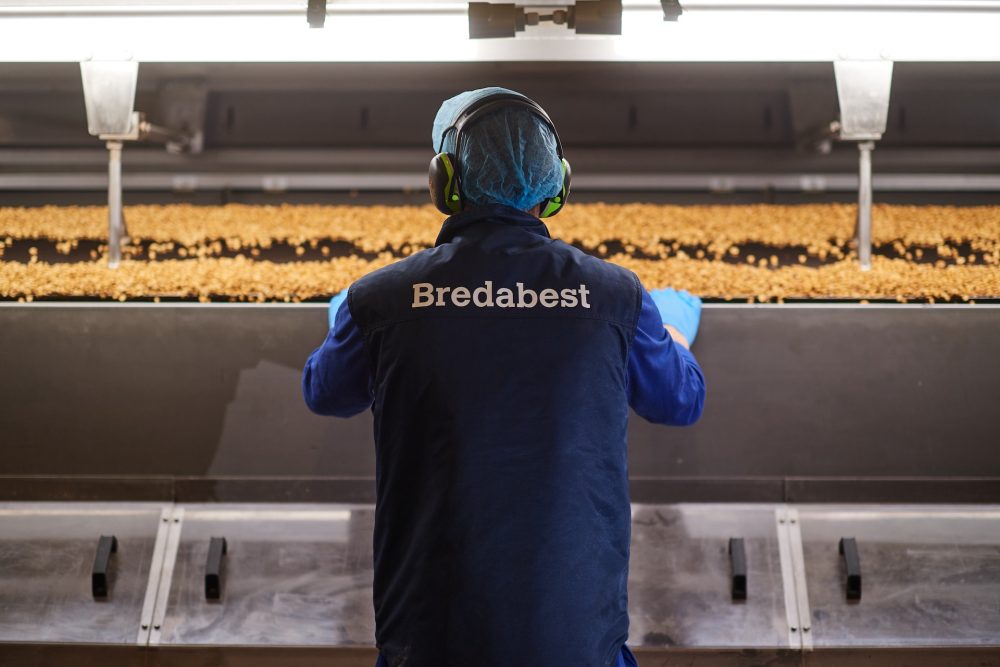
The partnership aims to create new opportunities for retailers seeking more
comprehensive own brand offerings. Commenting on the acquisition, Natra CEO Armando Santacesaria said, “This exciting acquisition strengthens our ability to enhance our customer offering and accelerates our journey to becoming the preferred private label partner in snacking and indulgence.”
Of course, delivering successful private label products requires stringent quality assurance. As retailer expectations continue to rise, investing in advanced inspection technologies is vital to protect product quality and brand reputation.
“Retailers in particular are very mindful of their reputations and for that reason are imposing ever stricter quality standards on their suppliers,” explains Glen Oxborough, business manager – X-ray Inspection, Ishida Europe.
“Indeed, the drive for quality is inextricably linked to the need to protect and maintain brand reputation – of the manufacturer and also its retail customers,
particularly when supplying private label products.
Consumers are becoming more demanding and less brand-loyal while social
media means they have much greater power to affect a brand’s positioning.”
While metal detection remains a standard requirement, manufacturers are
increasingly adopting X-ray inspection systems such as those within Ishida’s
technology portfolio to identify a wider range of contaminants, including glass,
dense plastics, rubber and stones.
These systems can also detect missing products,damaged packaging and other defects before items reach consumers. The increasing complexity of the private label sector is also creating opportunities for specialist sourcing and development partners.
This is particularly evident within the rapidly growing free from
category, where retailers are seeking products that meet a broad range of dietary, lifestyle and wellness requirements while maintaining quality, affordability and regulatory compliance.
Sourcing and private label specialist Atlante Srl has spent more than a decade
connecting retailers with manufacturers in the free from sector. The company notes that while demand continues to grow, the category presents unique challenges, including segregated production lines, specialist manufacturing processes, extensive testing requirements and evolving legislation.
Concurrently, consumer expectations are expanding. Today’s shoppers are looking for products that deliver flavour, convenience and value alongside dietary benefits, while retailers view free from consumers as a highly engaged audience capable of driving loyalty across multiple categories.
As the private label sector continues to evolve, Atlante believes success will
increasingly depend on strong collaboration throughout the value chain.
“Our ambition is simple: to connect great retailers with great producers,” said Philip Durham, UK business unit director at Atlante. “In a category where risk is high and complexity is real, making that connection is more valuable than ever.”
Topics
confectionery investment private label retail Snacks strategy
OrganisationsAlbert Heijn Bredabest Chocolate Frey NielsenIQ Planet A REWE
Regions