
Agroforestry initiatives from ‘big chocolate’ offer industry hope
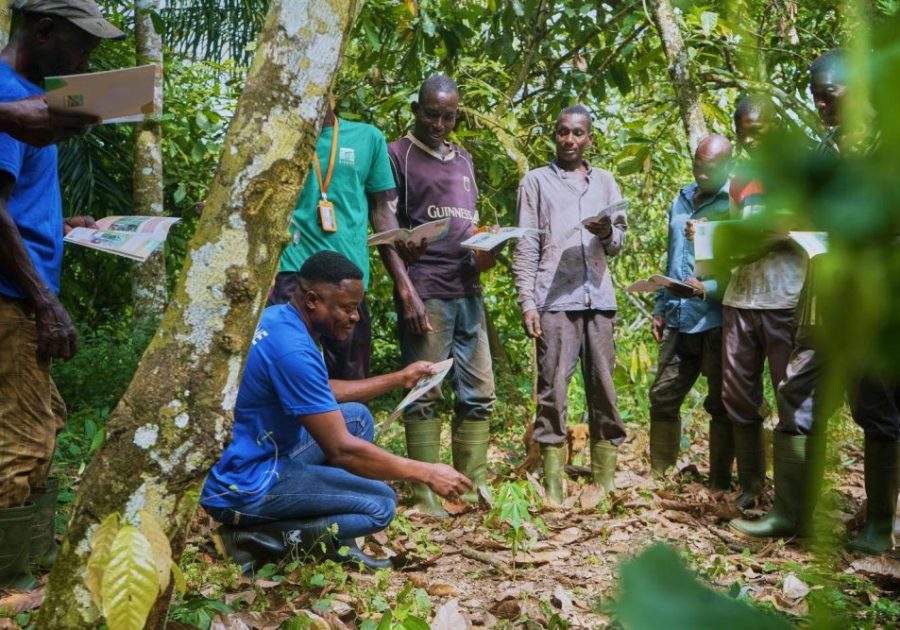
pic: Barry Callebaut's agroforestry initiatives, along with those of other firms, could prove vital for the sector. PIc: Barry Callebaut
The decision by Barry Callebaut to explore extended agroforestry techniques in its Ivory Coast cocoa operations comes as little surprise, given the company – and the wider industry’s focus on such techniques in recent years.
Indeed, the issue has been discussed by the Swiss business for many years as being critical to helping ensure the survival of the sector amid mounting environmental and social challenges that have deepened an unwelcome crisis for the industry in West Africa.
Looking back, some seven years ago at the major ISM Cologne event in Germany, Barry Callebaut first began to showcase its activities with regards to agroforestry – including the advanced use of shade planting to protect cocoa that is vulnerable to extreme heat experienced near the equator.
So it is good to see the company – and others including Mars, Cargill and Nestle – which also spoke on this topic at the last World Cocoa Foundation meeting in Amsterdam, addressing a fundamental issue that will ultimately help make or break whether the sector as we know it can survive in its present form. The stakes really are that high.
Underlining this, as we have recently reported, industry observations have shown that a frightening level of primary forest – up to 80% in Ivory Coast and neighbouring Ghana have already been lost over the past six decades through a combination of commercial activity including cocoa farming, huge levels of logging, as well as a still concerning level of illegal gold mining operations – in which farmers, many of whom are still earning under $1 a day, feel compelled to sell their land to illicit mining operations.
It’s a key problem that governments in the region have attempted to crack down on, but a very real issue that sadly still persists, remaining a thorn in the side of the industry. Its very existence sums up the very worst aspects of the sector – indeed, were cocoa farming the comparatively profitable enterprise that it once was in the 1970s and 1980s, then the pressure on land for other activities would likely, though not guaranteed to be far less.
But as for the kinds of agroforestry being actively pursued by the likes of Barry Callebaut and Nestle, it revolves around the notion that allowing a strong degree of organic regrowth of native plant species offers the greatest long-term hope of forest restoration. This in combination with carefully-selected planting projects is now envisaged as the potential model for addressing deforestation issues surrounding the cocoa and wider agricultural sector.
Clearly, science and research most definitely has its part to play within the cocoa business, and that is only stepping up at a far more rapid degree with the arrival of EUDR regulations due at the end of this year following a two-year delay surrounding their implementation.
Let us hope that wider adoption of agroforestry techniques, along with the kinds of major infrastructure investment are made in West Africa to ensure that its core cocoa industry, which remains the region’s biggest export segment, can in fact thrive for future generations in spite of present environmental challenges from climate change, crop disease, and poor payment of farmers that has continued to have a significantly damaging impact on immediate and long-term viability of the industry.
Neill Barston, editor, Confectionery Production
- Keep in touch at [email protected] and via our social media channels @confectionprod and Linkedin pages