Ferrero welcomes key progress from sector-wide cocoa initiative tackling child labour
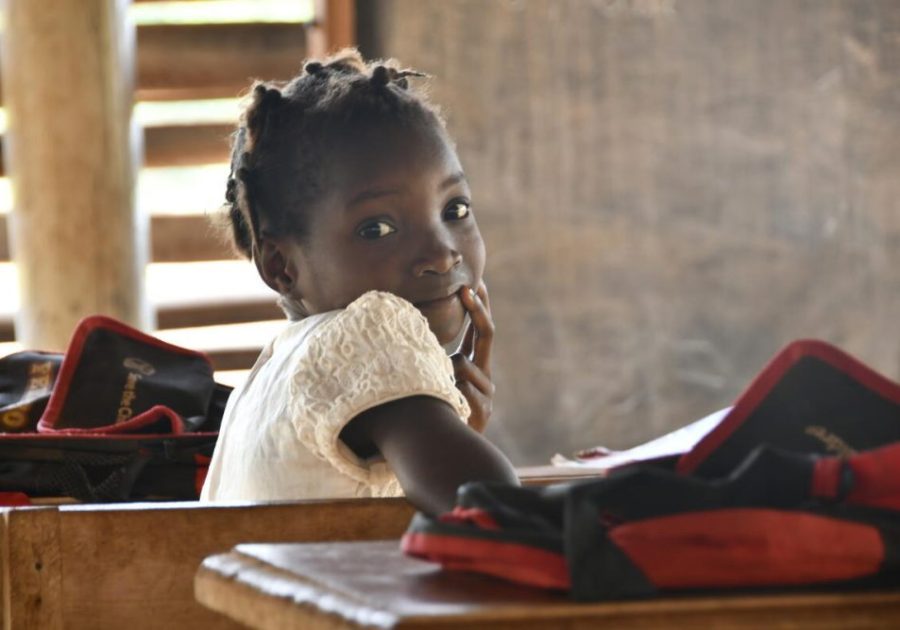
Ferrero has welcomed five year results of an initiative tackling child labour in cocoa supply chains. Pic: Ferrero
A major ongoing project between Ferrero and Save the Children has revealed notable gains in tackling child labour in Ivory Coast cocoa communities through key focuses on assisting access to education and encouraging awareness of social rights, reports Neill Barston.
Five-year results from the Cacao Connect joint initiative, which began in 2020, have also seen the number of households living below the poverty line drop from 60% to 43% within its study, as the initiative focused on bringing holistic support to the heart of rural communities.
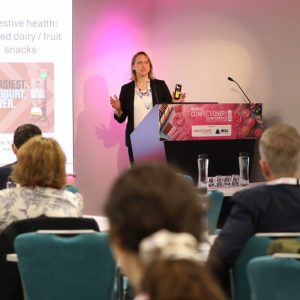
The initiative, which is supported by the Italian Foreign Ministry of Foreign Affairs, comes as Ferrero prepares to play a significant role in this year’s World Confectionery Conference, with a keynote presentation from Fabio Mora on how the company is engaging with external businesses for shared industry solutions, as well as his colleague Francesco Tramontin, vice president global Public Affairs for the business, who will be discussing wider market challenges of sustainability in cocoa supply chains and the confectionery sector as a whole, as part of our centrepiece Q&A. (Register for our event at confectioneryconference.com)
As Ferrero noted alongside its fellow partners in the venture – which also include the ICAM confectionery group and Biodiversity International, incidence of child labour represents a systemic challenge for the industry – with International Labour Organisation studies in recent years finding a notably concerning total of 1.5 million minors are exposed to the worse forms of child labour within Ghana and Ivory Coast’s cocoa growing sector.
The underlying core issue being the considerable poverty that pervades the region, which has seen many smallholder cocoa plantations resort to using young family members for their workforces, after lacking the funds to employ adult workers on the farms for hard manual tasks.
As Ferrero observed of the venture, which is formally known as ‘Cacao Connect – The Italian pathway to cocoa in Africa’ addressing child labour requires not only identifying and preventing individual cases but also tackling its underlying causes so that children can grow up protected, stay in school and have better opportunities for the future.
The company noted that the joint programme uses an integrated approach combining child protection, education and community economic development, while engaging families, schools, institutions, civil society organisations and actors across the cocoa supply chain. Strengthening families’ economic resilience is a central part of this model and an important factor in addressing the conditions that can contribute to child labour.
Initiative results
Between 2020 and 2025, the proportion of households with diversified sources of income rose from 24% to 65%, while the proportion of families living below the poverty line fell from 60% to 43%.
Moreover education is another fundamental pillar of the programme. During the same period, primary school enrolment increased from 78% to 84%, while regular school attendance rose from 75% to 97%. In addition, 89% of children who attended bridging classes, designed to recover missed years of schooling, were subsequently enrolled in the formal education system to complete primary school.
More than half of the children involved in the programme (53%) improved their reading, writing and numeracy skills, while the proportion of children aged 0 to 5 showing regular body growth increased from 54% to 79%.
At the same time, 88% of families reported increased awareness of children’s rights and 94% reported being better able to recognise, prevent and tackle child labour within their communities.
Particular attention was also given to adolescents and young people, who were supported through vocational training and pathways into employment. By the end of the programme, 64% of the young participants were in paid employment, helping to create tangible opportunities for economic independence and development.
Francesco Tramontin, Vice President Global Public Affairs at Ferrero, commented: “These strong results demonstrate the value of long-term investment in cocoa-growing communities and are an important part of Ferrero’s responsible sourcing approach, combining carefully managed sourcing models with interventions that strengthen children, families and communities.
“But structural challenges such as child labor cannot be addressed by any single actor. We need to build on what works and bring it to scale by combining expertise and resources and, critically, by working not only with governments but through governments, strengthening local systems and capacities.
This is the ambition of Cacao Connect: an open model bringing together public institutions, the private sector, civil society and research to drive broader, lasting change in cocoa-growing communities.”
Furthermore, as the company added, the results highlight the value of a model based on collaboration among all those involved, from local communities to institutions. It brings together expertise, resources and shared responsibilities, encourages knowledge-sharing across the public, private and social sectors, increases the impact of investment and helps turn good practice into sustainable, replicable solutions. The model’s effectiveness has been measured from the outset through an impact monitoring and evaluation system .
New phase
Building on the results achieved over the 2020–2025 period, the partnership is now entering a new phase that will continue until 2030 and has been further strengthened through the support of Italian Development Cooperation.
Daniela Fatarella, Director General of Save the Children Italy, said: “The results achieved confirm that concrete, lasting change in the lives of children, adolescents and their families is possible when the root causes of child labour are addressed through an integrated, system-wide approach. Strengthening child protection, expanding access to education and investing in community development means creating the conditions for children’s rights to be fully upheld and for communities to become more resilient and prosperous over time.
“This is the value of long-term investment, made possible by our partnership with Ferrero and further strengthened by the support of Italian Development Cooperation. Collaboration between public institutions, the private sector and civil society can create models that deliver measurable, sustainable and replicable impact, while also contributing to an increasingly responsible cocoa supply chain that respects children’s rights,”
Topics
business diversity child labour cocoa communities community engagement farming strategy
PeopleOrganisationsFerrero ICAM Save The Children
Regions