Breakthrough in chocolate processing
Thirty years after developing Guanaja 70% and creating blonde chocolate, Dulcey, Valrhona has paved the way for a new generation of aromatic profiles with Double Fermentation, a process that has taken some 10 years to develop and hone in partnership with specific growers.
In conventional chocolate production, cocoa pods are harvested when ripe, then split and opened by hand in order to extricate the beans inside, which are embedded in a sweet, white pulp called mucilage. The next stage is fermentation of the white pulp surrounding the beans.
Fermentation is a natural process, specific to each type of cocoa beans, which instigates the development of aromas and flavours. The beans are placed into wood, rattan, or concrete boxes, then covered and stirred regularly throughout the four to six day fermentation period.
In conventional chocolate production, after this fermentation, cocoa beans are dried and bagged, ready for the final processes of roasting, winnowing, grinding and conching. However with Double Fermentation, when the first fermentation period is complete and the initial aromas unveiled, a new ingredient is introduced into the boxes of cocoa beans to initiate a second phase of fermentation before drying the cocoa beans.
Valrhona experts came up with the idea of adding fruit pulp, naturally high in sugar, which triggers a second fermentation phase that imparts new distinctive aromatic qualities to the chocolate created.
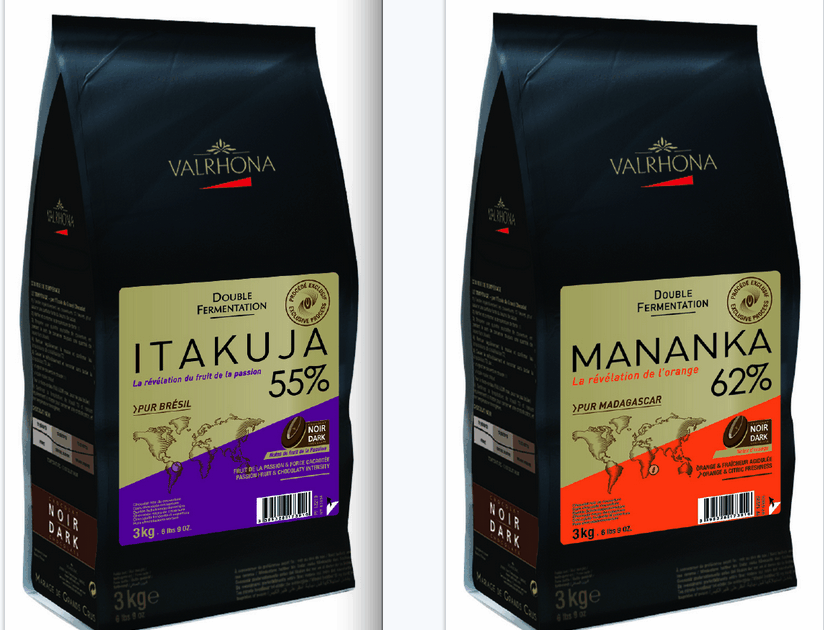
Initially, Valrhona has worked with two plantations yielding two distinctive Double Fermented products: Itakuja 55%, a Pure Brazilian couverture fermented with passion fruit and Mananka 62%, a Pure Madagascan couverture fermented with citrus.
The first production of both couvertures have been made available in very limited quantities. In the UK this will be available via Classic Fine Foods.