
Nestlé’s income accelerator offers hope, yet urgent major scale-up is required
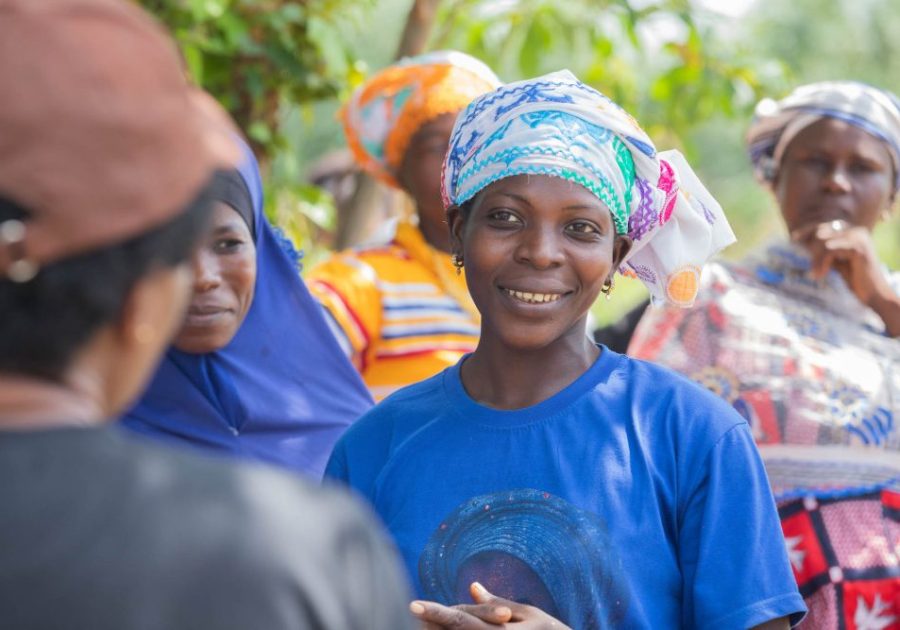
Nestle's cocoa income accelerator programme has made key gains for crop volumes and women's empowerment. Pic: Nestle
This week’s report from the non-profit KIT Institute examining how Nestlé’ has performed with its income accelerator programme targeting the critical cocoa sector in Ivory Coast made for interesting reading.
As the analysis asserted, the scheme, which was a small pilot in 2022, has grown notably in the past four years of its operation, to a point where it is now engaged with around 45,000 farmers, attempting to make a genuine difference in the levels of pay they receive, as well as direct, meaningful support for the wider community in terms of access to training, education and skills development.
This all sounds extremely valuable – and indeed it is, so it is encouraging to hear from the study of some 2,000 households that formed part of the study, that the scheme was having a positive impact, in terms of small, but valuable boosts to yield levels for cocoa crops (4% increases) achieved through effective pruning, as well as other agroforestry techniques including planting a greater range of shade trees that have proved invaluable.
There was also praised directed towards the food giant for its plan of engaging households and women in particular as part of the research, and seeking to help offer more access to community networks, as well as opportunities to be part of the savings and loans schemes that have become a feature of sustainability programmes that encourage financial planning and encouraging individuals to explore income diversification where possible.
It was perhaps telling that the study acknowledged that there had yet to be a serious breakthrough in terms of delivering on such potential alternative means of earning – which is clearly an area that the company, along with other NGOs and the governments of Ivory Coast and neighbouring Ghana need to apply considerable urgent action if a greater level of crisis in the sector is to be averted.
As we’ve covered here recently, the sheer scale of the issue is the biggest challenge here, as there are thought to be in the region of at least a couple of million farmers in West Africa within the cocoa trade, so reaching 45,000 of them is a strong start, but accessing the other 80-85% or so is the real major problem that faces the sector at large.
Is it realistic to image that this can indeed happen? Well, let us sincerely hope that this is the case, as without schemes such as that being pursued by Nestle being rolled-out on a far grander scale in the the very short term, there’s a realistic prospect that the industry as we know it just will no longer be functioning as a global sector. That is the raw reality of it, with the average age of farmers well into their 50s and younger generations largely turning away from farming due to its uncertainties, low pay, environmental challenges and sheer time-sapping labour required.
As we have covered at Chocoa, there may well be some bright sparks of hope, as a hardy group of younger potential entrepreneurial farmers are reportedly starting to in fact challenge that position that younger folk are simply not interested in the trade – but they will need far more support from civil society, NGO’s and national authorities if they are to succeed in a sector that is facing multiple challenges that are threatening its very viability.
While sustainability ventures such as this are not truly an entirely new thing, as every single major player in the sector has periodically proposed its own sustainability plans aiming to back farming communities – but this is one that really is grounded in support at origin, which is the critical thing. If the farming communities at its heart believe it can work, then it just might do so. For the entire industry’s sake, and all those communities which have become largely dependent on the fortunes of the cocoa market, that a rapid scaling-up of these kinds of worthy enterprises can be swiftly put into place to make a significant, and urgent difference across the region.
Neill Barston, editor, Confectionery Production
- keep in touch at [email protected] or via social media @confectionprod or our linkedin pages