Helping farmers adapt to climate change
Nestlé’s work to help cocoa and coffee farmers adapt to environmental challenges has been recognised as an example of best practice by the United Nation’s Framework Convention on Climate Change (UNFCCC).
The company believes one of the best ways it can support farmers in preserving crops vulnerable to the effects of climate change is by training them to alter their production methods while improving the impacts of their activities.
Nestlé has been invited to share details of the agricultural assistance it is providing as part of the UNFCCC Private Sector Initiative, a long-term project that aims to encourage businesses to contribute in a sustainable and profitable way to an effective response to climate change. “Reducing our greenhouse gas emissions is a top priority for Nestlé, but increasingly we recognise we have a role to play in helping our suppliers adapt to the impacts of climate change too,” says Claus Conzelmann, Nestlé’s global head of Safety, Health and Environmental Sustainability.
“Since 2001, we have more than halved the amount of greenhouse gas emissions from our factories per tonne of product. At the same time we are helping farmers become more resilient to environmental change.
“This not only enables them to continue to grow crops and reduces the risks to our long term supply of raw materials, but also helps to ensure food security,” he adds.
According to a recent study by the International Center for Tropical Agriculture, cocoa farmers in west Africa will be greatly affected by climate change, as areas of land suitable for growing the crop are predicted to shrink considerably in certain parts of Cote d’Ivoire and Ghana by 2050.
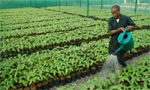
One of the ways Nestlé is supporting cocoa farmers through its Cocoa Plan is by distributing higher yielding, disease- esistant plantlets to improve productivity and minimise the amount of land required for farming.
Between January and October this year, the company distributed more than one million of these plants – which typically produce 50% to 200% more cocoa – to farmers worldwide.
During the same period, Nestlé also trained more than 21,000 cocoa farmers, including 9,900 in Côte d’Ivoire, in more efficient and sustainable growing techniques such as how to prune trees and ferment and dry beans more effectively.