
Exclusive: Shaping Colombia’s cocoa future

Natalie Quintero Zuluaga, marketing director at Cordillera Chocolate collected the company's sustainability award at the World Confectionery Conference in Brussels recently. Pic: Neill Barston
Devising an ambitious agricultural programme for women cocoa farmers in Colombia has earned Cordillera Chocolate an accolade at this year’s World Confectionery Conference. Editor Neill Barston meets Natalie Quintero Zuluaga, its marketing director, to discuss its aspirations for the region, as it continues to make its mark on the global industry.
Empowering women in Colombia to develop and thrive in leading cocoa farming operations lies at the centre of Cordillera’s mission with
its Atenea engagement programme.
Its development stems from a realisation that around a third of the nation’s industry is in fact female-led, inspiring its core mission of providing greater skills training and agricultural best practice initiatives that are delivering a transformative impact.
Notably, Cordillera Chocolate, B2B brand of Compañía Nacional de Chocolates, and its parent company Grupo Nutresa, traces its origins back to 1920 as an agricultural group, operating right across the food sector. (see our exclusive video interview with Natalie Quintero Zuluaga below).
Amid an age of heightened global challenges facing the industry, including elevated crop prices, as well as major tests of climate change and concerns over whether younger generations will want to continue cocoa farming, it’s encouraging to encounter such bold projects that offer long-term hope for the international market.
Significantly, Cordillera’s specialism in chocolate has evolved to an impressive degree, with the company now accounting for almost half of the nation’s cocoa, supporting 13,458 cocoa families.
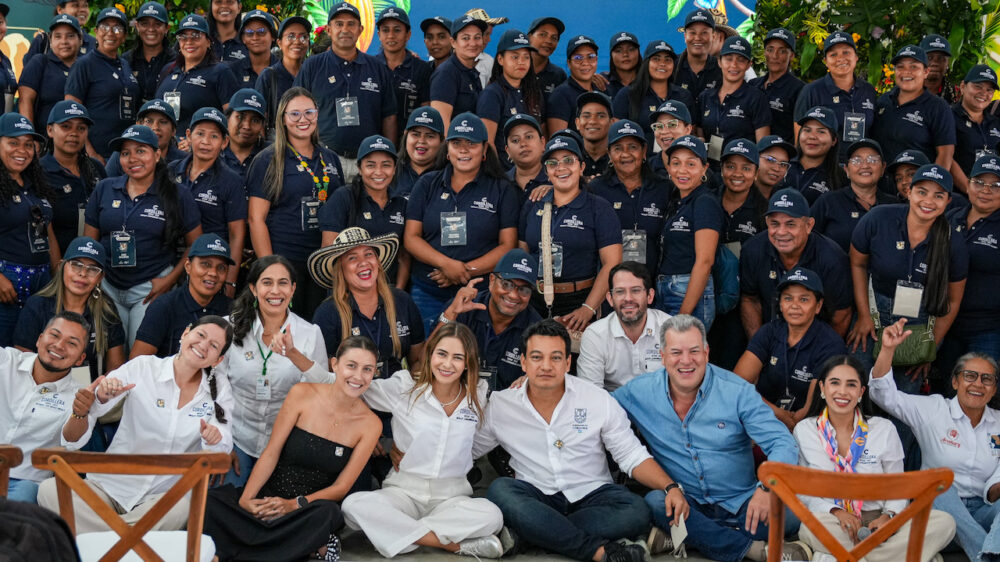 Moreover, its roots run especially deep on a regional level, with the location retaining a huge association with cacao farming that is culturally embedded within its people.
Historically, native populations valued cacao’s properties for thousands of years, with South America, and Colombia in particular, becoming a sizeable focal point for the development of cocoa trade that would fuel drinking chocolate demand from the 17th century, following the arrival of Spanish conquistadors in the region.
Today, along with its neighbour Ecuador, the nations are widely recognised as among the most sought-after premium origin chocolate from South America, which has seen its star rise considerably in export markets around the world.
For its part, Cordillera has embraced the opportunities that this potential market has offered, with its brands featuring prominently at events around the world, including Sweets & Snacks Expo in the US, as it seeks to expand within the sector.
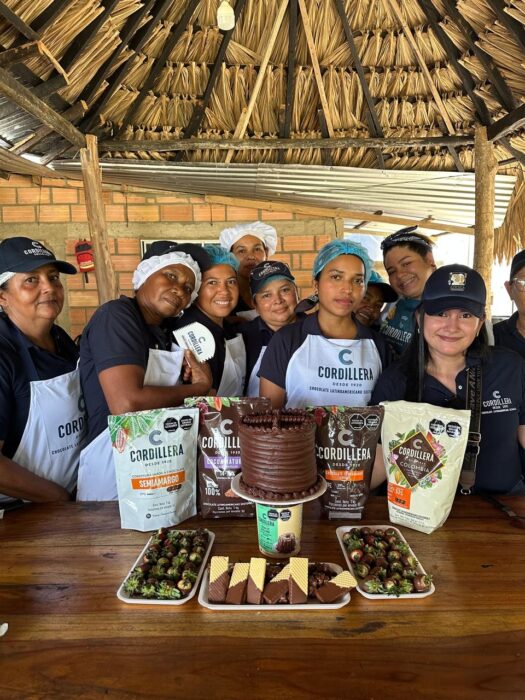
This has been underlined by the fact that 80 per cent of its cocoa production is destined for global markets, with the company now being responsible for around 50 per cent of national cocoa crops in its native Colombia.
Notably, its Atenea programme has emerged as a pioneering scheme, which attained sustainability initiative honours at this year’s World Confectionery Conference in Brussels.
The ambitious venture, translating as ‘Women who Transcend’ has stood out for seeking to offer hope and opportunity to a range of regional communities around Colombia.
Speaking to our title in Belgium following the awards presentation, Natalie Quintero Zuluaga, marketing director for the company, welcomed the collective recognition.
“This has been a recognition for the job we have been doing for the long-haul, not for a programme, but the true sense of conviction that our company has.
“I’m really excited on behalf of all of the team that all those who have touched our chocolate – that award primarily belongs to our cocoa farmers, as we are devoted to them,” explained Natalie, who has worked for the business for the past five years, and seen its operations continue to evolve considerably.
On the event itself, she enthused that it had given her the chance to catch up in person with existing contacts, as well as meeting a diverse range of representatives from across the industry.
This year’s show was no exception in that respect, with companies attending from across ingredients, equipment, systems and key policy areas spanning the confectionery and snacks sector.
“It’s has been really worthwhile us being here at the World Confectionery Conference, as it has re-united stakeholders within the whole cocoa value chain, it’s an event where you can network and learn about new trends and sustainability and certifications, and vendors from different backgrounds, it’s been really well structured, and senior leaders are attending the show,” reflected Natalie on this year’s conference in Brussels, which was our fourth live event, and fifth in total for our publication.

Award recognition
As for the sustainability accolade itself, judges had been impressed by the entry’s scope, which seeks to enhance the role of women within an industry that has traditionally been led by men, as part of wider agricultural systems in the region. But as Natalie explained of her own experiences meeting with a wide array of cocoa farms across its organisation, there has been a marked shift in recent years that has witnessed a growing number of women taking up positions of influence across the broader industry.
Moreover, as the firm revealed, its Atenea programme has formed a rallying point for this new movement, with an extensive educational programme that is linked to four core areas.
This includes entrepreneurship, financial literacy, women’s Leadership, and Sustainable agronomic management (MACC), developed working alongside artners including SENA, the country’s national training service for technical services.
Crucially, its first cohort saw 105 women graduate, delivering a total of seven new rural ventures put in motion, and witnessed the creation of a new president of a local cocoa-growing association.
As Cordillera has stressed, its initiative is far from being purely a one-off project, underlined by the fact its second intake of women farmers has now embarked on their journey within the sector, this time located in Cordoba.
The company has bold plans to further expand the scheme out to cover the remainder of the country, and across into other Latin American nations including Peru and Ecuador.
Moreover, the firm has hit upon what it describes as “the Atenea Multiplier,” which in effect means that for every woman positively influenced by its scheme will result in a five-fold impact on her community as an ambassador.
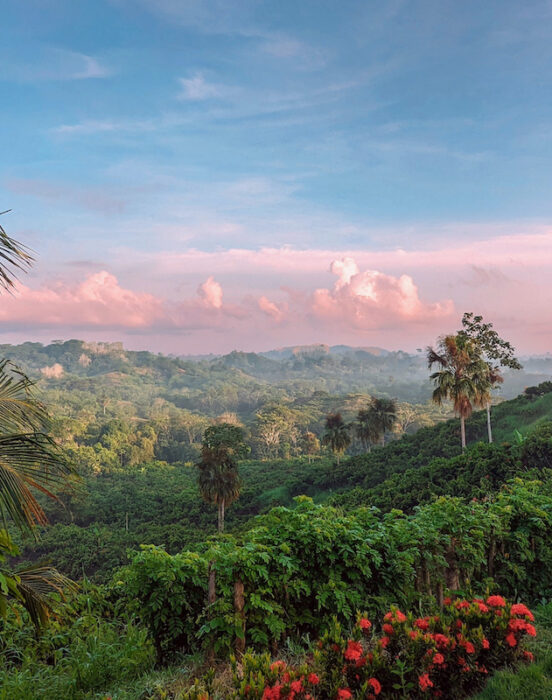
Through their training they can impart knowledge to those around them in their immediate locations including daughters, sisters, neighbours and wider community. This is the powerful proposition the venture holds.
As Natalie noted, its model of operating is based on several core principles of sustainable production and a delivering an equitable and inspiring production chain built on fostering a high degree of care for all those that it is involved with.
This extends to its policy on farmer pay – with 90 per cent of cocoa prices paid directly reaching agricultural works, which makes a pivotal difference. It is made possible by having one of the shortest supply chains in the world, with the business enjoying a key direct relationship with its farming co-operatives.
“Cordillera Chocolate has now been working hand-in-hand with cocoa farmers for more than 67 years, training them in capabilities that allows them to have more productive crops, and also to build agroforestry systems as well.
“As part of our work, we’re giving away around four million cocoa seedlings a year, and we just invested in a project with the government that is intended to plant ten million trees that aims to increase productivity in Colombia for the next three years, which could raise internal production by 7,000 tonnes,” stated Natalie, who asserted that this reflected the company’s keen commitment to developing the region’s cocoa production for the long-term.
Significantly, she notes that its accolade is testament to the power of collaboration amid all those involved in its operations, long with farming communities, their respective associations and other NGOs and governmental organisations.
Turning her focus to its overall approach, she explained that several core principles have underpinned its dealing with international and domestic partners.
This includes a devotion to ensuring social and human rights within its supply chains in taking a strong stance against child labour, tackling issues surrounding deforestation, and finally, through supporting wider biodiversity of core landscapes that its farmers operate within. Adhering to these pillars has been fundamental to its success to date.
As for the Atenea scheme, one of its most striking aspects has been its central pilar of providing high quality education, which its graduates have particularly valued.
“My life has been in education, so I think that education is enabler for people to gain more income, and skills in their lives and social mobility, and after success of the first cohort, we’re now taking our second intake,” explained Natalie, who is based in Medellin, Colombia, known as the ‘city of eternal spring’ for its year-round pleasant climate, which has thrived as the country’s second largest, multicultural urban location.
Reflecting on her own experiences in the sector, she explained she has now spent a total of 15 years building knowledge of its often complex, yet engaging nuances.
It’s certainly proved a fascinating experience working across the foodservice segment, before taking up her present role with Compañía Nacional de Chocolates over the past eight years. She has played her part in helping build global awareness of the brand beyond its home region.
“All my life, I’ve enjoyed chocolate, and marketing. Since I was young, I enjoyed trying different chocolates and I enjoying the indulgence and the joy that it can bring to your life. Chocolate brings people together and creates tribes as well,” she enthused, with her work for the Nutresa group offering the chance to engage in a personal passion for gastronomy and innovation within the food sector.
Delivering impact
As Natalie expanded further on its flagship training scheme, it has been personally inspiring for her to encounter a number of women who have undertaken the programme during the past year, which has provided a great platform for their development.
While she revealed that the programme had not been without its challenges, including overcoming cultural bias within a farming sector that had been led by men for many generations, yet, with some positive reinforcement, it has yielded notably strong results on the ground.
This has included a notable development in helping drive greater entrepreneurial instincts within those who attended the course. This was achieved through showing the initial graduates on the scheme some of the potential avenues for creating value added products relating to cocoa harvests, which she believed had made a real difference.
“Those women who have been on the course are now more empowered, confident and definitely they are gaining more income for their households and their families,” noting that such sustainability-linked initiatives on the ground should prove a core catalyst for wider growth within the industry.
Significantly, she explained one of the women on its course has gone on to enjoy leading a regional cocoa association, which further underlined the potential of the project to offer inspiration and training to those from rural communities with traditionally limited access to higher educational opportunities.
Indeed, as one female farmer who has been through the process, Maria Idaly Gallego, explained, its benefits have proved to be exceptionally tangible and decisive.
She enthused: “We accepted Atenea’s invitation with Cordillera, and 115 women came to Apartado. That day we arrived as women who perhaps did not trust in our own potential, and left there feeling transformed, and empowered.
“That day, they made us feel like we could do anything, they made us feel valuable, and have helped us see the potential we have. Many of us were thinking that we only had a small cocoa crop, and might just have five cocoa sticks in my house.
“What am I going to do? But during the programme they told us, you have more than that, you are big, you don’t have a small house, you have a house, you have a farm, and you contribute so much to the community,” noted the female farmer, who felt they had ‘renewed spirit” and left the programme with a genuine sense of purpose.
This had been enabled through access to the SENA government institute for vocational training programmes that enabled them to forge their own business, known as Aroma Ancestral, with 21 women. “We have a lot of dreams, and a great desire to get ahead,” adding that the greatest achievement with their cocoa farming is that in purchasing its products, people know they have a little ‘piece of our region and essence of our family, because chocolate evokes love, tradition and family.
As she detailed, her new venture has grown in confidence through appearing at regional trade shows, which has helped develop awareness of their products. She believed that the project has been hugely transformative, and hoped that it would also serve as inspiration to others within the region.
Market tests
Moreover, as Natalie added, while the recent Atenea course has clearly demonstrated the power of investing in communities, key tests still remain in the region’s cocoa market.
As she noted, from sector estimates, it appears the country is on track to have delivered a total of around 70,000 tonnes of cocoa for the year, though it has a way to go before attaining the same level of some of its neighbouring countries.
For its part, Cordillera is also helping break new technical ground, including developing two new strains of cocoa (CNCH12 and CNCH13, named after the business), which are especially productive, and reportedly exhibit strong signs of disease resistance. Consequently, it is the view of Cordillera that production volumes and productivity levels could be enhanced even further with greater and even more efficient use of agricultural land.
“Definitely what I think has been one of the biggest challenges is in continuing to build a resilient cocoa crop. In Colombia, we have been growing cocoa under agroforestry systems, so that guarantees that we are not deforesting our soils, so we should continue walking that path to ensure that remains the case.
“That’s an important challenge, and with that comes the need for all the information that they have to gather in relation to regulations that are coming up in the form of EUDR, which has included mapping a lot of farms that requires training for farmers to upload data,” she adds, noting that engagement with such technology has major potential to deliver even further benefits to this hugely-fascinating industry.
As Atenea is continuing to prove, Colombia has plenty to offer the sector, and Cordillera itself is playing a significant role in helping drive innovation, as well as empowering new generations of sustainably focused farmers.
Topics
agriculture Atenea chocolate cocoa Colombia community engagement confectionery confectionery production education farming South America