World Cocoa Foundation welcomes Framework of Action tackling cocoa and chocolate sector child labour
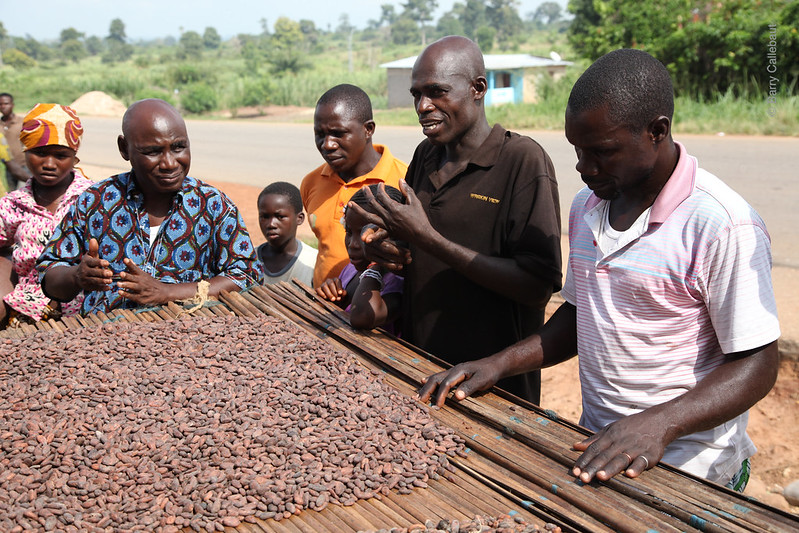
Cocoa Farming in Ivory Coast. Pic: Barry Callebaut
The World Cocoa Foundation (WCF) has welcomed a new Framework of Action initiative tackling child labour within the cocoa and chocolate sectors, which it has engaged with in partnership with governments in Ivory Coast and Ghana, and US States Department of Labour, reports Neill Barston.
According to the key industry organisation, the newly signed agreement, has been designed to address the ongoing issue within the sector, amid a backdrop of more than 2 million children still remaining vulnerable to being employed within supply chains, despite the continued efforts of major companies, civil society groups and governments to address the situation.
But with the combined impact of the pandemic, inflated prices, and crop diseases worsened by farmers’ lack of funds to afford agricultural inputs, their ability to employ adult labourers on what remains a sector largely dominated by smallholder farming, remains extremely challenging.
In response, as the WCF noted, the 2024 Framework of Action recognises that contributing to addressing the root causes of child labor requires immediate and comprehensive multi-stakeholder action and effective coordination. The Framework has been developed to help define roles and responsibilities, ensure greater coordination and collective action, and to mobilize further support, in addition to ensuring actions are in line with the priorities of the cocoa-producing countries.
Furthermore, signatories have reaffirmed their commitment to work together to contribute to the prevention and progressive elimination of child labor in cocoa growing communities of Ivory Coast and Ghana, by working to: Improve the well-being and development of children and their families in cocoa-growing communities;, Improve the coverage of effective private Child Labour Monitoring and Remediation Systems (CLMRS), and their alignment and interoperability with the Système d’Observation et de Suivi du Travail des Enfants in Côte d’Ivoire (SOSTECI) and the Ghana Child Labor Monitoring Systems (GCLMS), as well as national cocoa traceability systems and child protection case management systems; Improve access to quality education as well as technical and vocational training.
Under the initiative, it also seeks to strengthen social services and social protection; and Increase household income, which has been at the heart of the issue, with farmers earning in many instances under $2 a day, markedly below UN defined poverty levels, and women’s and youth empowerment in cocoa-growing communities with West Africa. It also aims to engage with social dialogue to address child labor and its root causes, including through efforts to engage farmers and workers at the community level.
Notably, its development comes amid a raft of EU-based legislation including the EUDR deforestation law that also seek to underline human rights protections, which will potentially further enhance protections for communities in West Africa.
Following on from the signature of the Framework, an Action Plan will be developed within six months and will specify the activities each signatory plans to support. It will identify areas of action for which collaborative programs are to be developed, in addition to progress indicators for each thematic area.
Dominique Ouattara, First Lady of Côte d’Ivoire, President of the National Oversight Committee for actions against trafficking, exploitation and child labor in Côte d’Ivoire (CNS) welcomed the agreement.
She said: “This new partnership agreement between Ivory Coast, Ghana, the United States and the cocoa and chocolate industry is a new hope for better results in the fight against child labor, thanks to our combined efforts and the pooling of our resources. As far as our country, Côte d’Ivoire, is concerned, and in particular the CNS and CIM (the Inter-ministerial Committee against child trafficking, exploitation and child labor), we encourage this multipartite and holistic approach.
“We will continue to coordinate and monitor the implementation of all the initiatives and actions of this new 2024-2029 Framework of Action, in line with our mission. I sincerely hope that all national players and our international partners will contribute in order to promote the well-being of our children”.
Chris Vincent, President of The World Cocoa Foundation, also believed the scheme would have a strong positive impact. He said: “The 2024 CLCCG Framework of Action represents a significant step forward in our shared mission to combat child labour in cocoa-growing communities. It underscores the cocoa and chocolate industry’s steadfast commitment to help foster sustainable livelihoods and helping children have the opportunity to thrive. The World Cocoa Foundation greatly values the collaboration of our CLCCG partners—the Governments of Côte d’Ivoire and Ghana, the United States Department of Labor, and other key stakeholders—whose dedication and expertise have been crucial to advancing this mission.”