Ferrero marks a decade working with Starling satellite crop mapping

Ferrero has used the Starling satellite network for the past decade to monitor key crops including cocoa. Pic: Adobestock
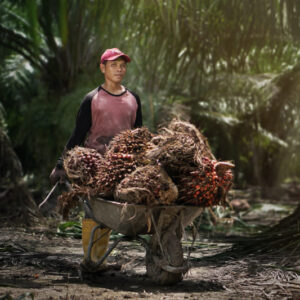
Ferrero has marked a decade of working with the Starling satellite platform, which continues to deliver monitoring of its core supply chain crops including cocoa and palm oil, writes Neill Barston.
As the company has previously explained to Confectionery Production, it has instituted such programmes some way in advance of requirements for the EUDR deforestation legislation, which requires an enhanced level of transparency across industries.
The Italian founded business celebrates its 80th anniversary this year, and will be playing a full part in our World Confectionery Conference on 10th September, with a keynote presentation from Fabio Mora, senior vice president of open innovation.
Furthermore the event will also see a return for Francesco Tramontin, vice president of global public affairs, who joins our Q&A on sustainability across the sector, including its cocoa supply chains. You can register for this year’s event at the following direct link.
As for its satellite system engagement, the company explained that its approach to using it has stemmed from its philosophy of “Sacco Conosciuto” which translates as “known bag”.
Moreover, as the company asserted, knowing precisely where ingredients come from, and how they’re produced has been fundamental to its origins since founding in 1946. However, as the company noted, its supply chain is far more complex in 2026, spanning thousands of kilometres across some of the world’s most important ecosystems.
Notably, the company’s use of the Starling system, which was established by Airbus Defense and the Earthworm Foundation to gain a bird’s-eye view of the landscapes where our key ingredients are grown, has proved a considerable gamechanger in terms of data and landscape monitoring.
As the company added, such plantations are part of vital natural habitats that must be protected: forests teeming with wildlife, trees that absorb carbon from the atmosphere, and communities whose livelihoods depend on healthy, productive land.
Using satellite imagery and geospatial data, Ferrero works closely with technology experts, analysts and local partners to turn insights into concrete actions.
In addition, as the company noted, tropical forests are home to more than half of the world’s terrestrial species, despite covering less than 10% of the Earth’s land surface. They are also vital in absorb around 7.6 billion metric tonnes of carbon dioxide each year, helping to slow the pace of climate change, with one
hectare of rainforest can contain more than 300 species of trees.
Nicola Somenzi, Head of Responsible Sourcing at Ferrero, believed it had made a major difference in the past decade.
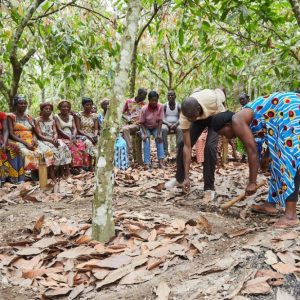
“Thanks to this technology, we are able to deploy monitoring across farms and plantations in our supply chains, at scale. Today, Starling allows us to map and monitor around 230,000 plantations across three commodities – cocoa, palm oil and coffee – in line with EU Deforestation Regulation (EUDR) requirements.”
As the company added, it has worked both directly with suppliers and partners in carrying out field visits to better understand local conditions and agricultural practices, in order to adapt its own policies.