Healthier confectionery shouldn’t be a compromise
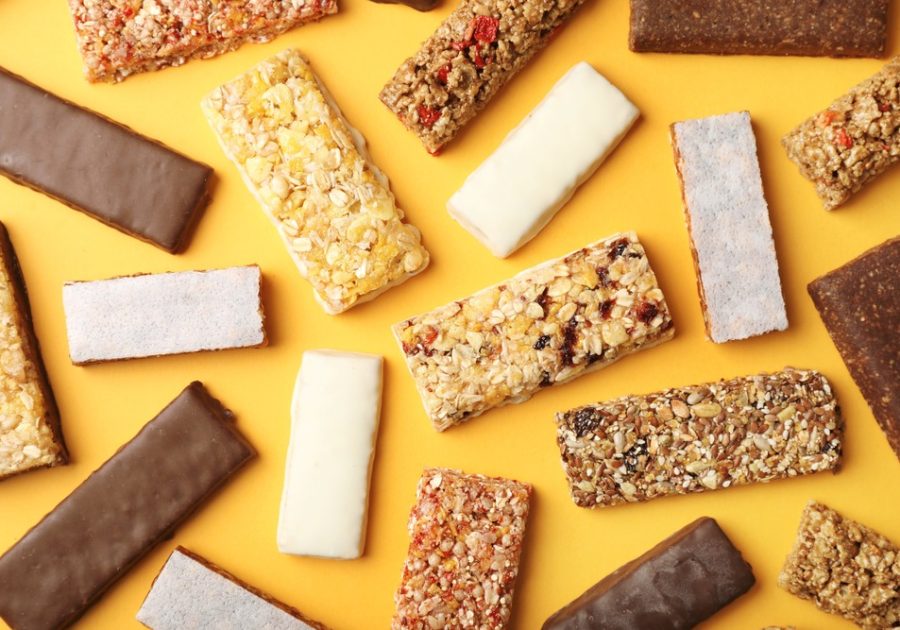
Pic: Gelita
From fruit gummies to protein bars, confectionery manufacturers are navigating a dual challenge: reducing sugar without sacrificing texture, and enriching protein without impacting sensory appeal. With Soluform for gummies and Optibar for bars, Gelita offers ingredient solutions that make both objectives achievable, the company says.
Market driven by healthier indulgence
Fuelled by increasingly health-conscious consumers, the confectionery and snack bar categories are undergoing a structural shift. As a result, manufacturers are under growing pressure to reformulate long-established products – and create innovative new ones – to meet demands for less sugar and more protein. While both promise genuine commercial opportunity, the technical challenge is in delivering such products without compromising on taste and texture, and thus consumer appeal.
Sugar reduction is a defining consumer priority across Europe, as revealed by 2024 Mintel research which found that more than half of German consumers actively limit or reduce sugar in their diet, while nearly two thirds of Brits are taking steps to moderate sugar intake. Furthermore, more than half of UK consumers say they want their favourite confectionery brands to explore new sugar reduction technologies – a clear for both niche and mainstream categories.
Mintel data published in 2025 shows that 21 per cent of European consumers consider protein one of the most important factors when defining a healthy food – a figure that soars to 39 per cent among consumers under 35. More than half of European consumers recognise that protein requirements increase with age, and 53 per cent believe protein-rich foods help them feel fuller for longer. The proliferation of ‘high protein’ claims across categories from dairy beverages and breakfast cereals to confectionery reflects a mainstream shift that manufacturers can no longer ignore.
Together, these trends converge to represent a significant commercial opportunity for the confectionery and snack bar market. The European healthy snacks segment – which includes better-for-you confectionery and functional bars – was valued at 23.64 billion USD in 2025 and is projected to reach 36.27 billion USD by 2033, growing at a CAGR of 5.49 per cent. This trajectory reflects a fundamental rethink of snacking – from occasional indulgence to long-term wellness support.
Gummy challenge: sugar does more than sweeten
Fruit gummies perfectly illustrate the technical challenges of sugar reduction. Sugar in confectionery is not only a sweetener, but also a bulking agent that provides the taste and texture associated with quality. Therefore, reducing sugar without replacing its function results in thinner, stickier products with poor texture.
Protein enrichment in gummies adds a second layer of difficulty. Many protein sources cause turbidity, flocculation and textural changes when incorporated into gummy matrices, interacting poorly with the product’s water content and requiring significant reformulation of production processes. Conventional gummies typically contain around nine per cent protein – largely from the gelatine matrix itself – and this ceiling has hitherto been difficult to exceed without obvious quality compromise.
However, Gelita’s Soluform addresses both challenges within a single product family. Soluform SR is a special gelatine designed to replace sugar’s functional role as a bulking and texture-building agent. In fruit gummy formulations, it allows manufacturers to reduce sugar content by up to 40 per cent – a threshold that satisfies the EU regulatory definition of a ‘reduced sugar’ claim – without compromising bite, consistency or appearance. In many formulations, the residual sugar content alone provides sufficient sweetness – however, if additional sweetening is desirable, minimal quantities of sweeteners can be added.
Soluform PE addresses protein enrichment without impacting end-product quality or the manufacturing process. In practice, this boosts the protein content of fruit gummies from approximately nine per cent to 35 per cent with no change to the characteristic gelatine-like bite and texture that consumers expect.
Bar challenge: texture under pressure
In protein and cereal bars, technical obstacles differ but the underlying consumer drivers are consistent. The global sports nutrition market – of which protein bars are a significant and fast-growing segment – was valued at 71.55 billion USD in 2025 and is projected to reach 138.48 billion USD by 2033, growing at a CAGR of 8.7 per cent.
Sports bars have moved well beyond the gym and can now be found on supermarket shelves for consumers of all ages. Yet the category continues to face a persistent texture problem. As protein content increases through the use of conventional ingredients such as soy or whey, bar texture deteriorates accordingly. Products become hard, dry and difficult to chew – a well-documented barrier to consumer loyalty and repeat sales. Plant proteins and milk proteins are often only partially soluble, producing grainy textures and unpleasant mouthfeel at higher inclusion rates. For cereal bars, a separate but equally pressing issue exists; conventional formulations rely on sugar-rich syrups as binders, adding significant sugar content at a time when consumers are actively seeking ‘no added sugar’ claims.
The global cereal bars market is projected to reach 28.12 billion USD by 2030, growing at a CAGR of 7.9 per cent from 2025. As health and wellness positionings – including low-sugar and high-protein claims – are among the primary drivers of this growth, the ability of manufacturers to effectively communicate their product formulations is vital for commercial success in this category.
Gelita’s Optibar ingredient addresses both texture and binder challenges. Thanks to high solubility of collagen peptides Optibar integrates smoothly into bar matrices at levels far exceeding those of conventional proteins. In bars with up to 40 per cent protein, it acts as a texture softener; while between 40 and 60 per cent-plus protein, it ensures long-lasting softness throughout the product’s shelf life, thus making it possible to create palatable, genuinely indulgent bars – a threshold that would be commercially unviable using soy or whey protein alone.
Gelita recommends the use of Optibar in combination with whey or plant-based protein rather than as the sole protein source. Conventional proteins add structure, while collagen peptides ensure homogeneity, a pleasant bite and long-lasting softness. The result is bars that are both nutritionally robust and texturally appealing throughout shelf life.
As a binder for cereal bars, Optibar eliminates the need for sugar-rich syrups. Traditional binder preparation involves cooking sugar and syrup with water and fat before dry cereals are incorporated, and the mass shaped. With Optibar, no cooking is required: the ingredient is warmed to 70°C with water and fat, dry ingredients are incorporated and the mass moulded. No additional equipment is needed. As a consequence, the simplified thermal profile reduces energy consumption and lowers thermal stress on heat-sensitive ingredients.
Claims, compliance and commercial differentiation
Both Soluform and Optibar are formulated to support the full spectrum of regulatory claims under EU Regulation 1924/2006. ‘Reduced sugar’ claims are permitted when total sugar content is at least 30 per cent lower than a comparable product; ‘source of protein’ claims require protein to provide at least 12 per cent of total energy, and ‘high protein’ claims require at least 20 per cent. Both ingredients are also GMO-free, contain no E numbers and are suitable for clean-label positioning – thus meeting growing consumer demand for products with easily recognisable ingredients.
Processing advantages that extend beyond the recipe
Beyond their nutritional and sensory benefits, both ingredients deliver tangible advantages in terms of production. Soluform generates less dust during handling, transport and storage than conventional gelatine, reducing cleaning time and improving process hygiene. Its optimised particle size, higher bulk density and improved wettability profile make it easier to produce high-concentration solutions, with less clumping and reduced foaming during dissolution.
Optibar dissolves rapidly and requires no modification to existing bar production lines – therefore, no capital investment is required. Its neutral taste profile makes it equally suited to sweet and savoury bar concepts, broadening its application potential across product portfolios. Both ingredients integrate effortlessly into established manufacturing environments, enabling reformulation without the operational disruption that new ingredient categories often entail.
Full-journey support, from concept to shelf
As a long-established pioneer in collagen and collagen peptides, Gelita supports customers across the complete product development journey, from initial concept and recipe formulation to pilot production, industrial upscaling and commercial launch. Technical application specialists work directly with customers to optimise formulations, while marketing experts advise on label claims and market positioning across the globe.
The company’s portfolio of functional ingredients continues to evolve in line with emerging market demands, ensuring manufacturers have access to future-proof solutions that can adapt to changing consumer expectations and regulatory environments. For manufacturers ready to invest in reduced-sugar and protein-enriched formats, Soluform and Optibar offer a technically sound, commercially validated pathway – from gummies to bars and beyond.