Exclusive: Cooking and depositing systems remain vital for global confectionery markets

TNA has continued to produce a broad range of machinery including depositing systems. Pic Neill Barston
As confectionery demands continue to evolve, advances in cooking and depositing technologies are helping manufacturers deliver greater precision, flexibility and efficiency across increasingly complex formulations. Daisy Phillipson reports
Confectionery remains one of the segments in the food and
beverage industry, with Innova Market Insights data revealing that new
global product launches grew by seven per cent between 2020 and 2025.
Product variety is only increasing, with the research group noting that brands are positioning themselves with passive and active health, seasonal or limited edition, and ethical claims.
Alongside rising palm oil-free, plant- based and sugar-free options, the market
research firm notes how emerging claims include prebiotic, probiotic, vitamin and mineral fortified. Running in parallel with healthier options is the demand for enticing and exciting confectionery products, with 43 per cent of global consumers seeking unique, indulgent creations and wildly inventive flavours.
Similar trends continue to evolve within the chocolate, snack and sweet bakery
segments, demonstrating the need for cooking and depositing technologies that deliver flexibility, speed and precision.
This sentiment was expressed by Luca Menassi, general manager, Asia at TNA Solutions. He noted: “As consumer expectations shift, production teams are incorporating plant-based gels, functional ingredients, reduced-sugar formulations and exotic flavour pairings all without compromising
texture or repeatability,” he says.
“Seasonal micro-batches, personalised shapes and premium finishes are becoming standard.”
Concurrently, manufacturers are grappling with industry-wide issues such as
increasingly stringent sustainability regulations, labour shortages and volatile
ingredient costs, which is why Menassi emphasises the importance of flexible
automation and advanced, modular equipment, with Australia’s TNA Solutions
continuing to update its offerings in line with modern demands.
Achieving precision through intelligent design
As part of its broader end-to-end confectionery processing capabilities, TNA
has focused on enhancing performance at the depositing stage. A recent development is an in-line tray weighing system that measures product weight in real time, both before and after depositing. This allows the mogul to self-adjust the pump stroke during production, ensuring consistent weight
control and therefore reducing product giveaway and waste.
Additional developments include a modular pump design that’s said to simplify
maintenance and reduce downtime, with a revised piston drive system ensuring consistent stroke across the line. TNA has also addressed the need for precise temperature control for maintaining consistent viscosity and depositing performance, particularly in more complex formulations.
The company’s water jacket insulation pads are said to improve thermal efficiency by reducing heat loss within the hopper system of the top-driven pump. This helps maintain stable product flow and depositing accuracy while lowering overall energy consumption.
“Our focus is on simplifying operations through intelligent design, automation and integration,” says Menassi. “By reducing manual intervention, enabling faster changeovers and providing real-time control over critical processes such as weight accuracy, we help producers improve performance across the entire line while maintaining the highest quality standards.”
When it comes to the efficiency of confectionery kitchen equipment,
machinery specialist BCH highlights the importance of exceptional heat transfer.
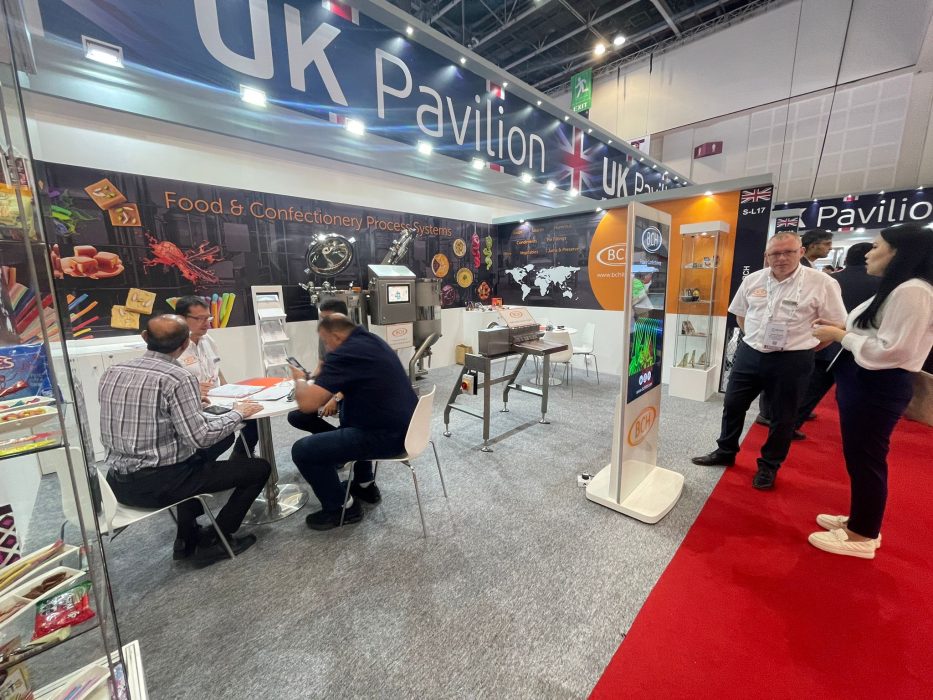
Its industrial cooking kettles use jacketed surfaces that cover the vessel with steam, providing uniform heat distribution, faster heat-up times and stable temperature.
To overcome the issue of viscous products like caramel and fruit fillings sticking and scorching, BCH’s scraped-surface agitators continuously clean the heating surface, therefore improving energy efficiency and reducing maintenance. It also offers multiple agitation systems depending on the product, while the firm’s cooking kettles are scalable, ranging from pilot testing to full production.
In addition to the machinery itself, BCH has continued to update and incorporate smart technologies into its confectionery equipment range to better meet demands, including its kitchen equipment. Integrated advanced controls, for instance, allow operators to automate temperature stages
and profiles, agitation sequences, vacuum and pressure levels, timing and recipe steps, and CIP cycles.
Within its wider confectionery portfolio, the firm places focus on being able to
provide greater flexibility with its systems.
“There is also a growing trend towards manufacturers being able to include
healthier snacks to their portfolio,” says BCH operations director Stuart Grogan.
“To meet these trends, BCH has continued to develop their independent cooking, extrusion and forming equipment, which provides a more controlled process at much lower pressures and temperatures than alternative methods. Thus, this allows greater flexibility in processing more sensitive products.”
Meeting demands of functional products
The functional confectionery market is another rising area, driven by consumer
interest in health and wellness.
According to Data Bridge, the global functional confectionery sector has been valued at $2.55 billion, and is expected to hit $4.69 billion by 2032, growing at a CAGR of 9.10 per cent.
Producing formulations with more sensitive ingredients places greater demands on cooking and depositing processes, particularly in terms of precision and hygiene.
It’s why confectionery and fruit product brand Mala’s chose Baker Perkins, a
Coperion technology brand, to provide it with the machinery required to enter what is a competitive market.
Consequently, the firm upgraded its production set-up as demand grew for both novelty jellies and fortified products. Its existing low-output depositors limited scale, prompting a shift to a starch-free system better suited to higher volumes and more controlled, hygienic production.
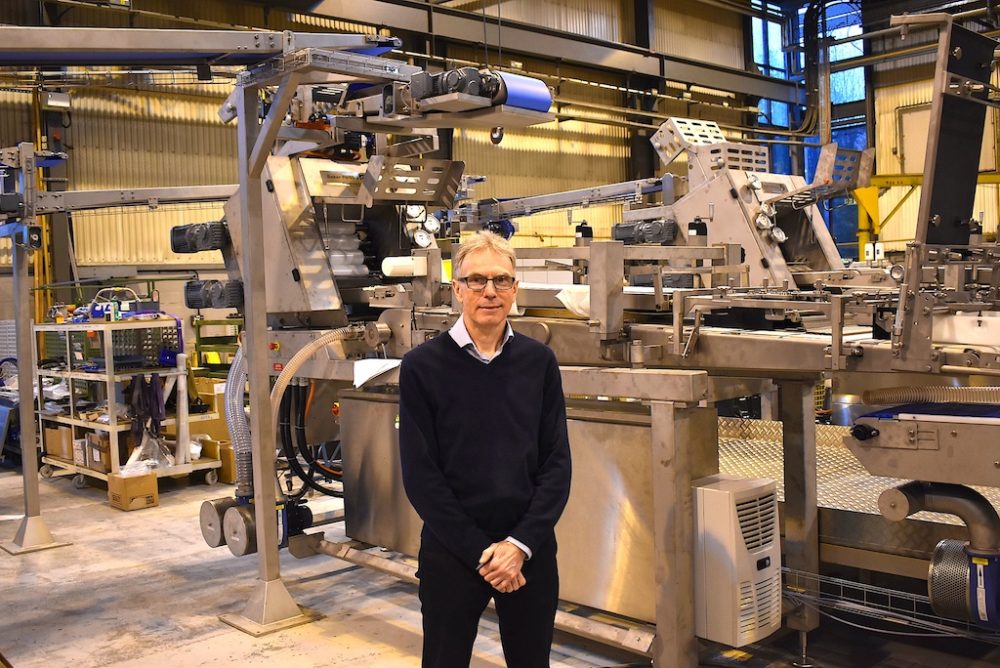
At the centre of the new line is Baker Perkins’ Microfilm cooker, which uses
thin-film heat exchange to deliver rapid, uniform cooking with tighter control over temperature and moisture. This is particularly relevant for pectin-based
confectionery, where consistency and gel performance require thermal precision.
Depositing is handled by the ServoForm system, a depositor designed for accurate portion control and complex moulding. Compared with traditional starch moguls, starch-free depositing reduces dust, improves hygiene and allows faster changeovers, while also supporting multi-colour, layered and centre-filled products.
For Mala’s, the combination has increased output and improved definition in 3D
jellies, while also enabling entry into fortified confectionery. The ability to
produce consistent, accurately dosed products is particularly important for
healthcare-adjacent applications, where weight control and uniformity are more tightly regulated.
Alongside advances in formulation, digitalisation and process control are
becoming increasingly central to confectionery production. This is reflected
in the latest developments from Chocotech, where there’s a growing focus on integrated, digitally enabled systems. One example is its Sucromaster system, which brings together ingredient handling, cooking, screw extraction of mass, mixing and tempering for hard candy, including medicated or sugar free masses.
The company’s Jellymaster and Jellymix systems, available in gravimetric and volumetric versions, are designed for the production of traditional jelly products as well as OTC-based gummy items. Beyond the machinery itself, Chocotech is placing emphasis on digital tools to support production. The business is part of the Sollich Group, one of the founding partners of SweetConnect, a significant digital platform for the confectionery industry.
The platform allows users to centrally manage all their machines, connecting data across all parties and processes to drive efficient production. The company also continues to drive the development of AI-based assistance systems.
Retrofitting for flexibility and efficiency
As product formats become more varied and production runs more fragmented, there is also growing demand for depositing systems that can be easily adapted to existing lines, rather than requiring full-scale replacement. This is an area where Winkler und Dünnebier Süßwarenmaschinen (WDS) is focusing its latest developments, with an emphasis on flexibility, hygiene and ease of integration.
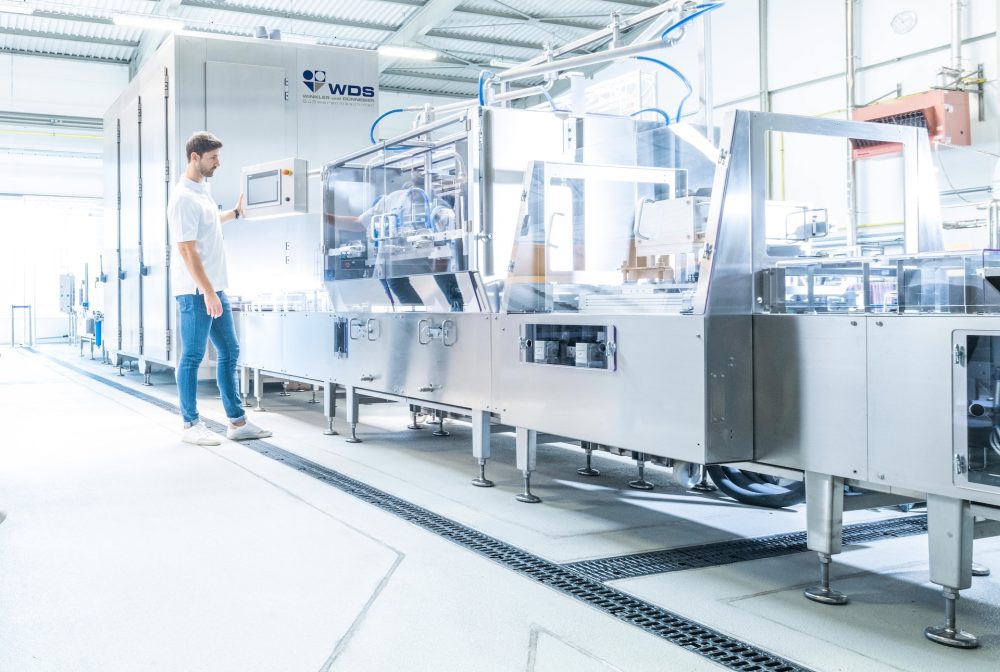
One example is its EasyClean depositor concept for chocolate, designed to retrofit onto existing production lines regardless of the original manufacturer. By lowering the barrier to upgrading, this allows producers to expand into new product types, including filled, layered or inclusion-based formats, without significant upfront investment.
Alongside flexibility, hygiene and maintenance remain central to newerdepositor designs. WDS is placing focus on CIP capability, simplified component access and reduced mechanical complexity.
These features are increasingly important as manufacturers handle more sensitive or functional formulations, where contamination risk, downtime and cleaning efficiency can directly impact productivity.
Showcasing the benefits of updating a depositor system is the newly rebranded Maeve confectionery company, which needed to upgrade its decades-old moulding plants. Larry Brighton, director of engineering at Maeve, explained: “We had chocolate leaking out of every seam. Our deposit consistency was all over the map.”
The company turned to Egan Food Technologies, first updating its bonbon depositor with new change parts from the machinery specialist. “We replaced the piston block, then built our own stand for it,” said Brighton. “The fit and precision is awesome. We were so impressed with how well that one had worked that we decided to do more.”
Egan Food Technologies then retrofitted custom depositors for Maeve’s chocolate bar line, which uses the cold pressing method to first create a chocolate shell. A second depositor fills the bars in a ribbon style over a moving mould, while a third seals the back of the bar with chocolate.
“We had these old servos driving the depositors, and they were a nightmare,” said Brighton. “They would just decide not to work. But the new ones work great.”
The second depositor handles blended inclusions that make up a number of
Maeve’s unique 25 flavours, which include Hungry Blackberry, Block Party Brownie and Café Latte Crunch. With the new Egan Food Technologies
depositors, the brand is able to achieve a significant increase in deposit consistency, while subsequently reducing waste.
This has been particularly beneficial as, due to allergens, Maeve can’t reuse scrap. The portable “c-style” depositors have also assisted with improving washdown procedures.
Overall, production has jumped from around ten to 18 moulds per minute. Even
after the upgrade, Egan was able to remotely reprogram the depositors when Maeve realised it needed changes made to the controls. “It was a really good experience,” Brighton concluded. “These are not a fullsolution. They are retrofits, which made it more complicated, and I would still buy them
all over again. It went really smoothly.