Plamil Foods continues its confectionery expansion and diversification
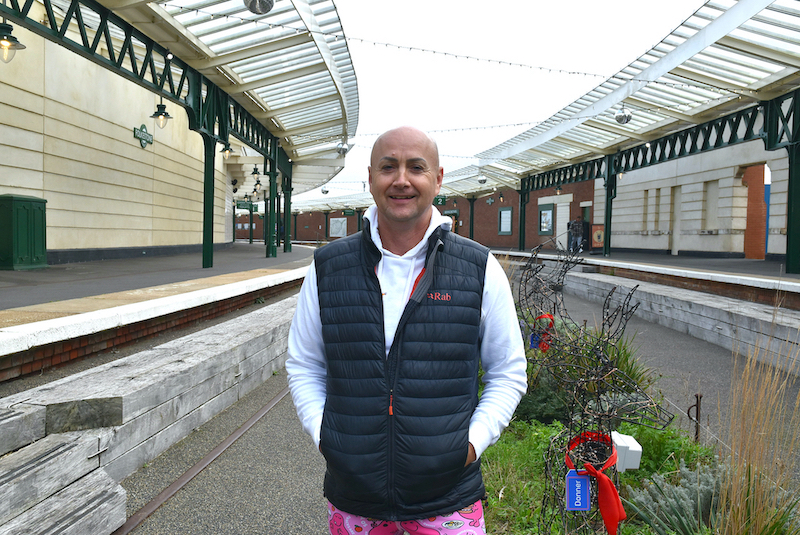
Adrian Ling is set to return as a speaker at this year's World Confectionery Conference, as it calls in at The View in London. Pic: Neill Barston
As key pioneers of the free-from and vegan movement in Britain, Kent-based Plamil Foods has diversified its scope considerably, as editor Neill Barston discovers meeting up with the company’s CEO, Adrian Ling, who is among speakers at the 2026 World Confectionery Conference.
Setting its stall out to place sustainability and ethical sourcing at the heart of its business has been a longstanding mission of Plamil Foods.
Though consumer trends have come and gone down the decades, the Kent-based firm has found a loyal customer base that has sought out its rainforest certified and free-from confectionery ranges.
While its founding origins lie in the 1950s roots of the Vegan Society, with its name derived from a combination of ‘plant and milk,’ the Folkestone business has gradually diversified into a host of segments across the food and drink sector.
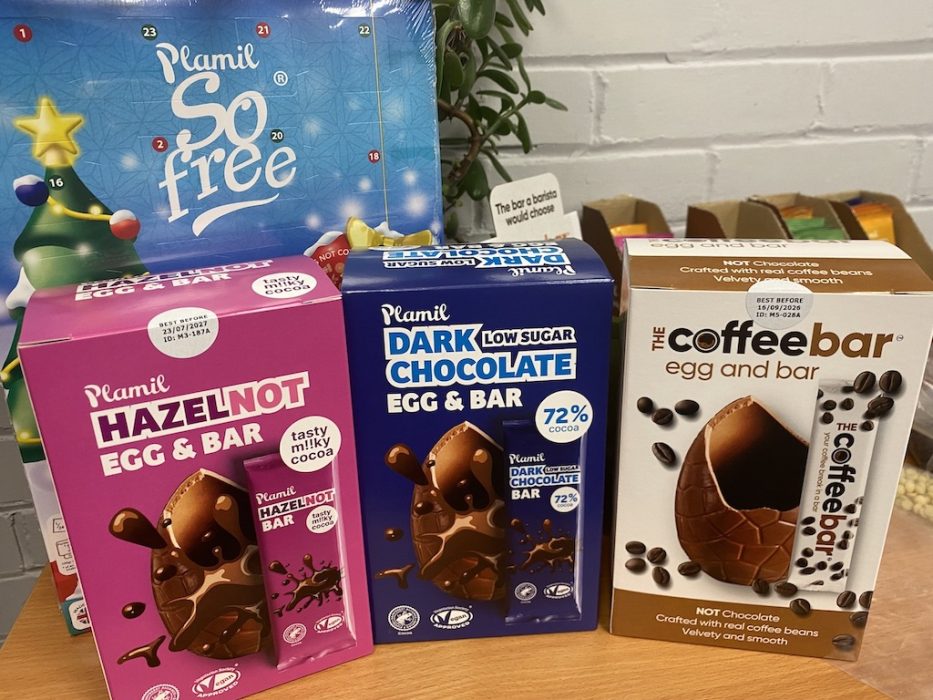
From its latest Vegan Society approved smaller tiger nut-based bar lines, through to its baking chips, Plamilla oatmilk spread, through to its Vegan Chocolat series, it has sought to offer high-grade production for its own ranges, as well as delivering an expanded range of private
label commissions for external customers.
The company has come a long way since its early days in terms of scale and ambition, and has continued to thrive through sheer determination and a dedication to making the very best free-from product ranges that it can possibly deliver.
Moreover, as our title has previously covered, with the broader confectionery sector, including vegan and free-from markets experiencing more than their fair share of market tests in recent times, being fleet of foot and reactive to market conditions is proving more crucial than ever for SMEs operating in the sector.
As CEO Adrian Ling explains to Confectionery Production, he’s eagerly awaiting a return to speak at this year’s World Confectionery Conference, as it moves to The View, in London, September 10.
Intriguingly, as he enthuses, there’s been a significant range of innovations in recent times, as well as a concerted drive to fulfil bespoke orders from the rest of the broader industry within the UK.
“The wider base that we now have comes from being able to produce good chocolate, at the right price that people want, as well as having the right formulations and quality standards that companies require. “So, we’re developing products for people, including doing so in relatively small quantities of specific formulas,” enthuses the company leader, who acknowledges that taking a proactive model of contract manufacturing forms a valuable element of its endeavours.
As previously reported, a significant vehicle in driving success in that respect has been attaining BRC manufacturing accreditation for the business. This has expanded its ability to guarantee certification-grade production for organic, Fairtrade and Rainforest Alliance assured criteria.
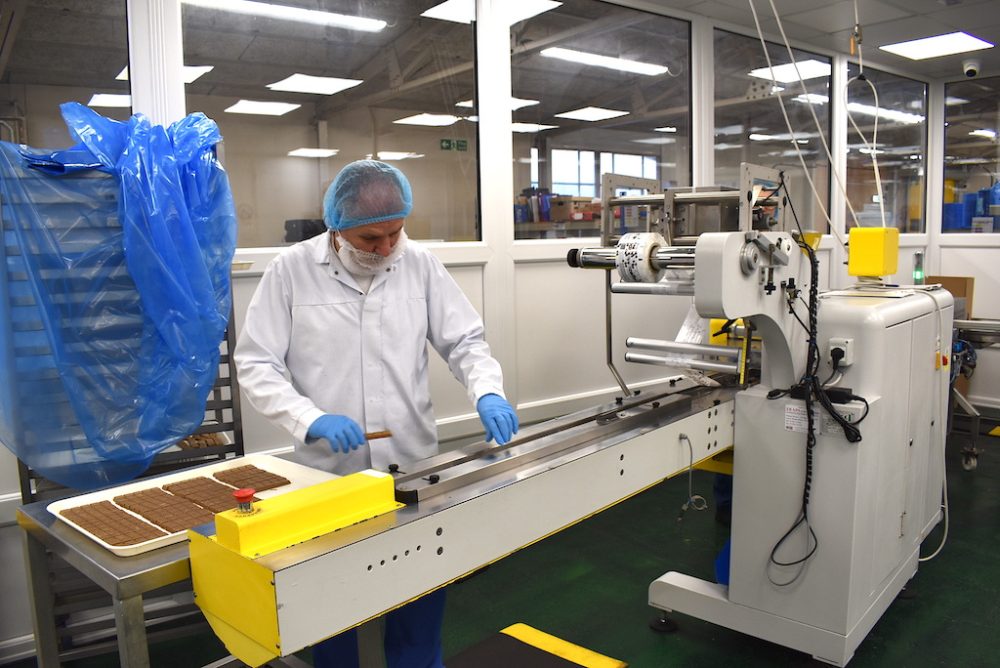
One of the most core enabling factors for this has been additional notable investment into automating the company’s manufacturing lines, which has driven production efficiencies considerably in recent years.
Clearly, as Adrian notes, this requires a willingness to be flexible and required plenty of research and development work. Yet, this has yielded some notably rewarding results as the business pushes forward in adapting to market challenges.
“There are so many more types of chocolate now that are considered to be different, including our launch of a date sugar variety earlier this year. There are lots of alternative options such as low sugar chocolate and no added sugar ones that might not necessarily be considered as vegan – but they are by chance. So, there’s a huge range of products that people are looking for.
“We’re able to produce down to volumes of just one or two tonnes if required, though often, people may order anything between 20-30 tonnes across a year, explains the CEO on how the company has tapped into market demand for alternative ingredient chocolate confectionery that fulfils an array of functional requirements beyond typical milk-based varieties,” he explains of its approach to offering bespoke solutions to its customers.
Product diversity
To its credit, the company is demonstrating an ability to embrace new concepts and work hard on its innovation pipeline. This now extends to producing around 50 different types of chocolate in total.
There has also been plenty of innovation across its other areas, including the recent release of products such as its Coffee Bar. As previous covered, this has targeting the on-the-go market, using quality cocoa beans to offer an alternative coffee hit in chocolate bar form. This a first of its kind that has garnered some encouraging feedback from within the industry.
The business has made excellent use of its present production site in Folkestone, which operates from what was formerly a dairy, and re-purposed for chocolate production that has been true to its ethical principles of sustainability.
With production requirements often meaning working months ahead, while the Christmas season has kept many companies extremely busy, the company’s Easter options are among its most notable, crafting an extended range of chocolate eggs for the key occasion.
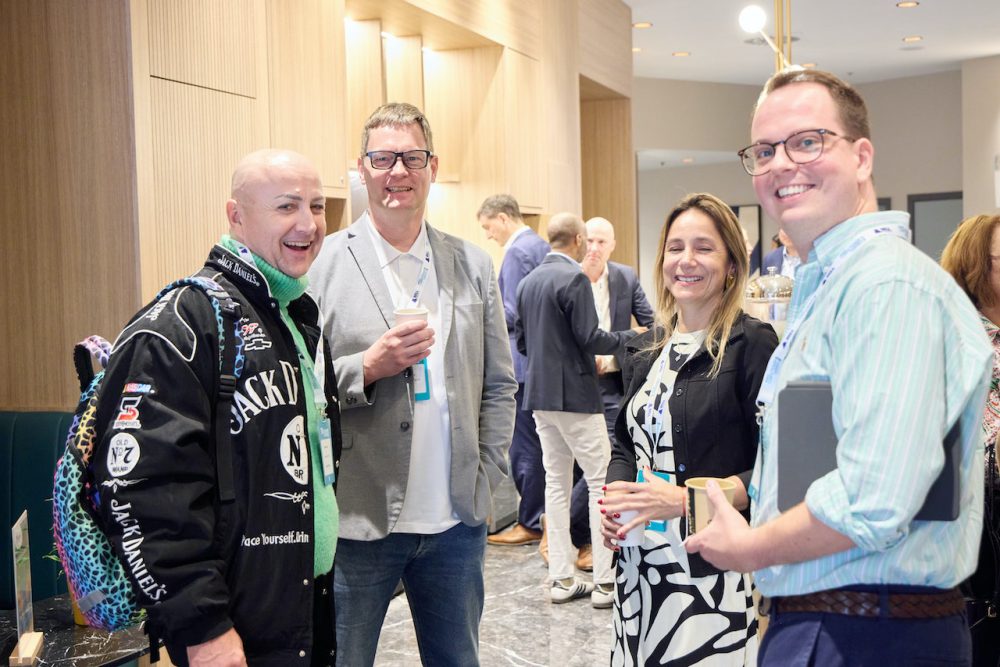
Adrian, left, attending our 2025 event in Brussels.
Significantly, as Adrian explains, the business has also set about looking to once again explore wider mainstream retail opportunities for its portfolio, having stepped away from this area of activity in the wake of the pandemic.
“We’ve increased the amount of retail that we are doing this year, which we are starting to do that with products such as all-year round bars that are bear and bunny shaped, as well as creating some 40g ranges, for which there is considerable demand for, and those are being produced for independent health stores in the form of a range of chocolates,” which he says may well be scaled-up, depending on how sales progress. Undoubtedly, there’s no shortage of determination within its ranks in attempting to meet the needs of an ever-shifting retail and wholesale markets. As the business knows all too well, consumer tastes and preferences don’t stand still, and it’s a question of having to continually adapt.
But precisely how is the business coping with the present cocktail of higher operating costs from ingredients prices due to the ongoing cocoa crisis, as well as factors such as national insurance tax rates and increases in energy prices?
“It has been a challenge this year, there’s no doubt about that. Efficiencies have had to be made, and we have had to cut some costs and volumes have decreased to some clients, because they can’t face those kinds of costs themselves.
“The upward slope of price increases has been a challenge for us,” he notes, and even when costs of ingredients may have fallen a little in recent months, this does not necessarily help when you’re planning ahead and contracts are arranged on an annual basis.
“It’s about working with our customers, and the majority of them have completely accepted that we are doing the best we can for them over a long period of time.
Those relationships are important,” he states of the tricky trade-off between having to price its own product ranges realistically against a shifting base of operating costs.
One recent tech tool that is potentially coming to its aid over the past year has been the dawn of AI. While some remain sceptical of how to utilise it, for its part, Adrian says Plamil is exploring its potential in terms of recipe development – which is certainly a factor that has been taken up by leading major operators including Nestle, Mondelez and Barry Callebaut to name but three.
Significantly, Adrian observes one factor which may well be working in the company’s favour, is that there are signs under the present Labour government, that trading relations with Europe may seemingly set to become a little easier.
As Adrian adds, the painful Brexit vote may well now be nearly a decade behind us, yet its full impact has only been felt in the past two years, as the additional administration and costs have fully kicked in from the decisions arising from that fateful moment have been completely realised. Few have anything good to say about the deal that was hastily assembled with the EU, which has by all accounts, made trading with our near neighbours a lot more complex.
The tide may be turning on this, with the government in negotiation with European partners on how certain sectors may once again work with less potential operating friction – with the food and drink sector clearly being a huge beneficiary of previous ‘just in time’ supply chains that were of significant mutual benefit.
With conditions potentially easing a little to encourage trade with the EU, Plamil has seen itself make a debut at the Fi Europe event in Paris held at the end of last year. (Catch Adrian’s contribution towards the end of the review below)
This vibrant event showcased its date sugar chocolate, and broader portfolio, as the business demonstrates that it is far from insular in its approach. Indeed, prior to Brexit, Plamil had enjoyed notable sales in continental Europe as part of its overall sales mix, which have not been possible in recent years with the additional regulatory and administrative hurdles that have been in place.
“We haven’t done that many exhibitions, so this is all part of looking back into Europe and knowing that the UK chocolate is going to be more acceptable in the coming years in Europe than it probably has been with all the exporting difficulties that have been there in recent years, so it’s all part of the UK being more welcome within Europe.”
Though he concedes that the past couple of years of uncertainty have indeed posed their test, it seems even more than 30 years on from following in his dad’s footsteps in joining the business, he remains motivated to succeed.
- You can see Adrian Ling’s presentation at the World Confectionery Conference on 10 September at The View, central London. To register and take advantage of early bird rates, visit our event website: confectioneryconference.com