World Cocoa Foundation partnership opening day tackles major industry challenges

Chris Vincent, president of the WCF, opened this year's partnership meeting. He has just confirmed his departure from the role at the end of this year. Pic: Neill Barston
The president of the World Cocoa Foundation (WCF), Chris Vincent, offered key thanks to sector members and wider businesses and organisations amid ‘a period pressure’ on the industry, as he opened this year’s annual partnership meeting reflecting on core tests ahead, reports Neill Barston.
As the senior executive observed, more than 500 of its members from around the world assembled in the Dutch capital of Amsterdam for the two-day gathering, which placed both key environmental, social and economic issues facing global markets, which have been impacted by crisis conditions.
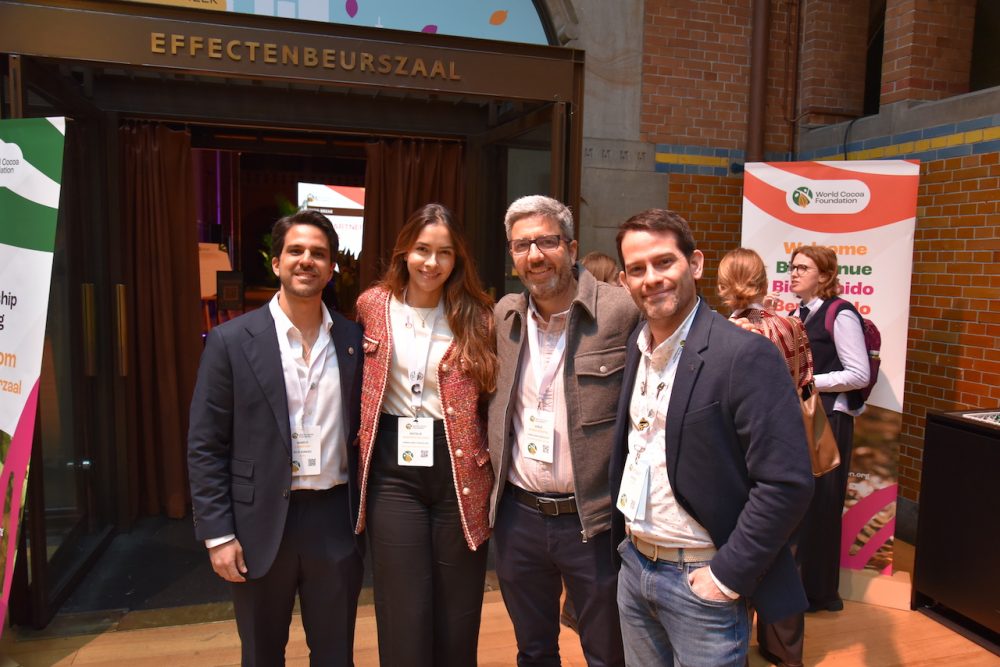
The Cordillera team made the journey from Latin America, for this year’s WCF.
Confectionery Production is on hand as a media partner for this year’s event, which is being staged at the historic Beurs van Berlage exchange building, that also serves as the location for the Chocoa event, which opened its doors for visitors yesterday for a special Farmer’s Day, ahead of the WCF.
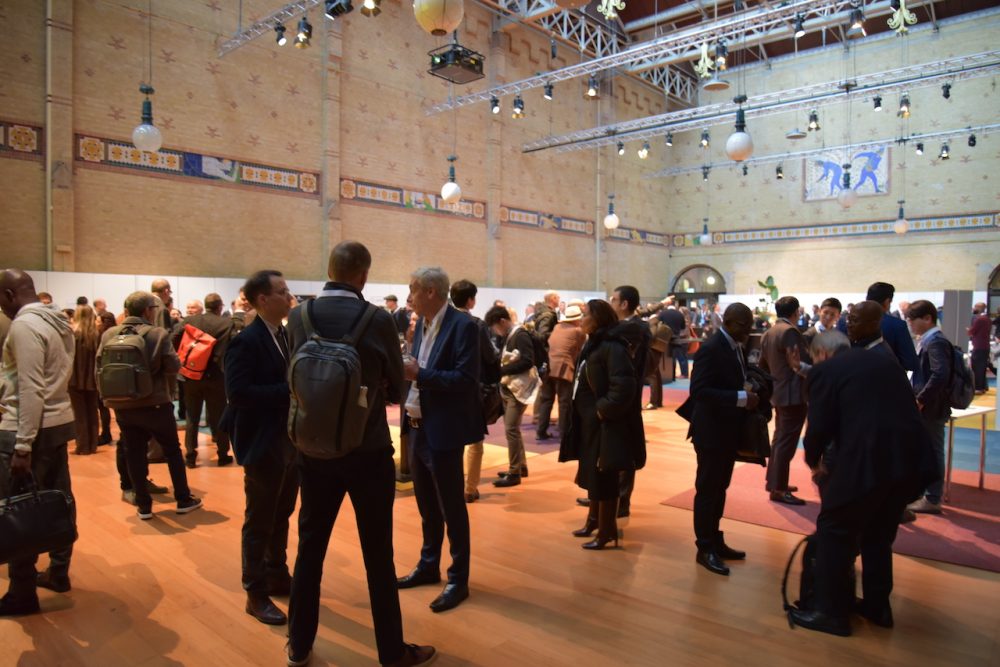 In his opening remarks, Chris Vincent reflected back on the last edition of its partnership meeting, which was held in Sao Paulo, Brazil, and placed key issues facing the region, and wider sector at large.
He recalled that last year, he had noted the significant investment that had been made by farms and companies in producing governance to ensure EUDR compliance, yet the legislation was delayed, only to be further delayed yet again at the end of last December by the EU Parliament.
“In the run-up to that meeting, cocoa prices had tripled in three months, and then after the meeting, the figure returned to around $8,000 a tonne, after having nearly been $13,000 in December.
“Here we are again in Amsterdam, and while some things have remained the same, we need to recognise that the market volatility is placing a strain on farms and institutions in Ghana and Ivory Coast, and understandably in light of headlines last week (in which cocoa prices continued to drop steeply, resulting in Ghana declaring a farm gate price valued at over 25 per cent less than last year), senior representatives from both countries will no longer be able to join us here, as they seek to navigate these challenges.
“We will miss them, but we respect the efforts they are taking to address the impacts on farmers and communities, and these issues remain central to the future of cocoa,” he reflected on a challenging situation within the core West African producing nations.
As he asserted, one of the key themes of the event would be in helping communities build resilience to help withstand the kind of economic and environmental shocks presently being experienced.
He explained that an approach of finding ‘practical solutions and shared accountability’ would be pivotal in delivering a way forward for the sector, as it finds itself under renewed strain.
Similarly, following him, Liberato Milo, Nestle’s head of confectionery and snacking business unit, stressed the urgency in working to urgently resolve the mounting climate and related challenges.
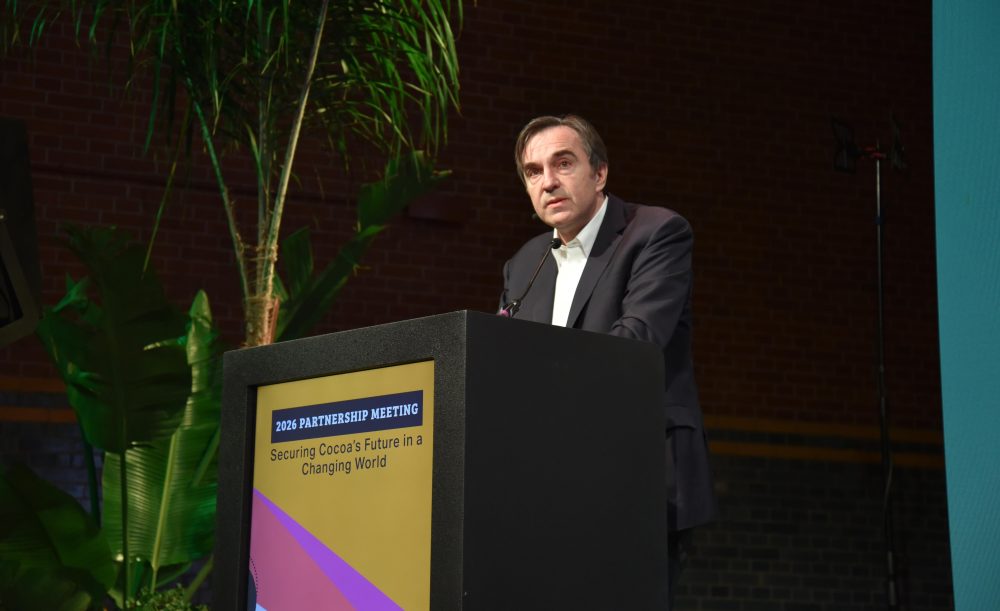
Liberato Milo, Nestle head of confectionery and snacking business unit.
He commented that cocoa prices had reached historic highs in the past 18 months, which had now retreated significantly, while many of its partners (farmers in the value chain) remained in poverty, which underlined the scale of the collective task ahead.
In addition, he stated: “With new due diligence law reshaping the legal landscape, the pressures on our sector have never been greater. These mounting pressures make one thing clear, no single actor can solve these challenges alone.
“There will be no cocoa industry left if we don’t collectively create long-term value across the complete value chain. At Nestle, cocoa is deeply rooted in our history, and we have a new vision for it- our ambition is to build a regenerative, resilient cocoa future which creates shared value for the business, communities and for farms, ” noting it would seek to achieve this through several means.
This included strengthening its resourcing model throughout the supply chain, based up sourcing models that are based on long-term commitments to provide stability and capacity building potential.
He cited the company’s continuing investment in West Africa, through its relatively recently introduced Income Accelerator scheme as a critical to its actions moving forward to address core issues in the industry.
Significantly, he added that “there was no more time to wait” in moving to resolve the numerous tests faced by the industry collectively.
Furthermore, the morning session also heard from Steven Collett, deputy director general of international cooperation, Dutch foreign ministry.
While he moved to strike a note of hope for the sector’s immediate ad long-term future, he highlighted the concerning fact that 75 per cent of those in agricultural supply chains are still not earning a living wage.
Opening plenary
The opening plenary debate featured a key focus on trade and regulation impacting the cocoa sector, with both EUDR and corporate due diligence regulations
Regis Meritan (right of pic), senior EU Commission expert, felt that the delivery of EUDR would eventually bring benefits to communities, but observed the challenges that have been met along the road to achieving that, which have yet to be fully overcome.
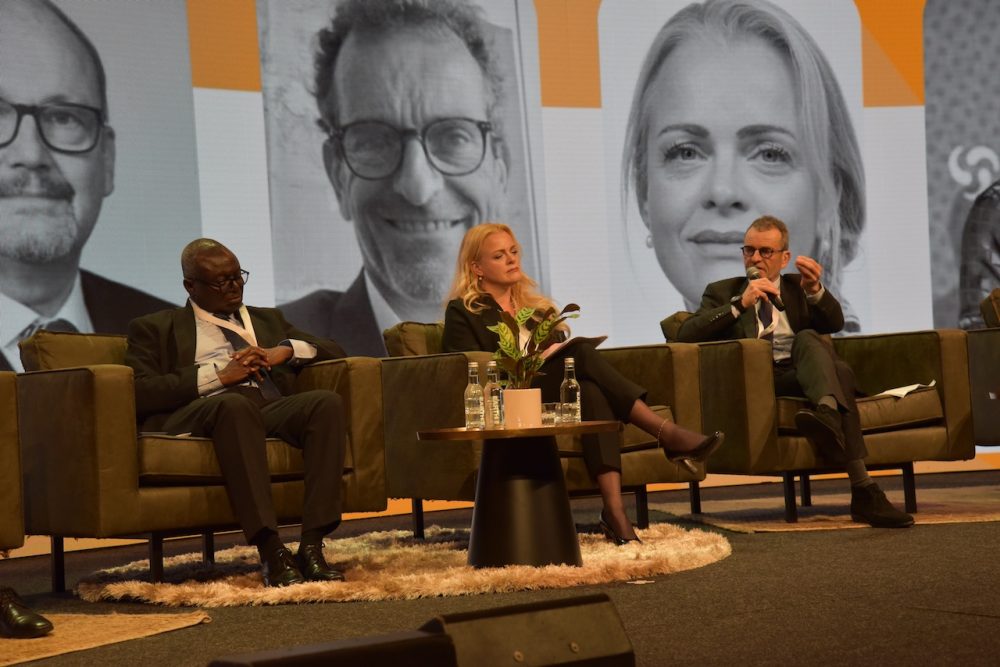
Regis Meritan, EU Commission policy specialist.
“We have seen prices tripling or more, before stabilising, and that during this period, the entire value chain from producers to consumers continued to function. But what we see now is huge price volatility, though it remains the case that prices and sustainability are strongly interlinked,” remarked the policy specialist on what is a complex, unfolding situation regarding the EUDR policy, which has now been twice-delayed, with sizeable further revisions being anticipated by many in the EU Parliament this April.
He added: “EUDR is not yet implemented, but even with that being the case, the fact that the regulation has been presented and discussed, it has already had an effect. It pushes governments and companies to act in terms of traceability of products, which is a strong expectation from consumers.”
Meanwhile, fellow panellist, Jessica Leeuwen, MEP, said the EUDR has good intentions in terms of deforestation, but warned that such legal frameworks must not end up as a greenwashing exercise that penalised those at the sharp end of the industry, the farmers, as in many instances, they were not in a position to finance or lead on advanced monitoring systems.
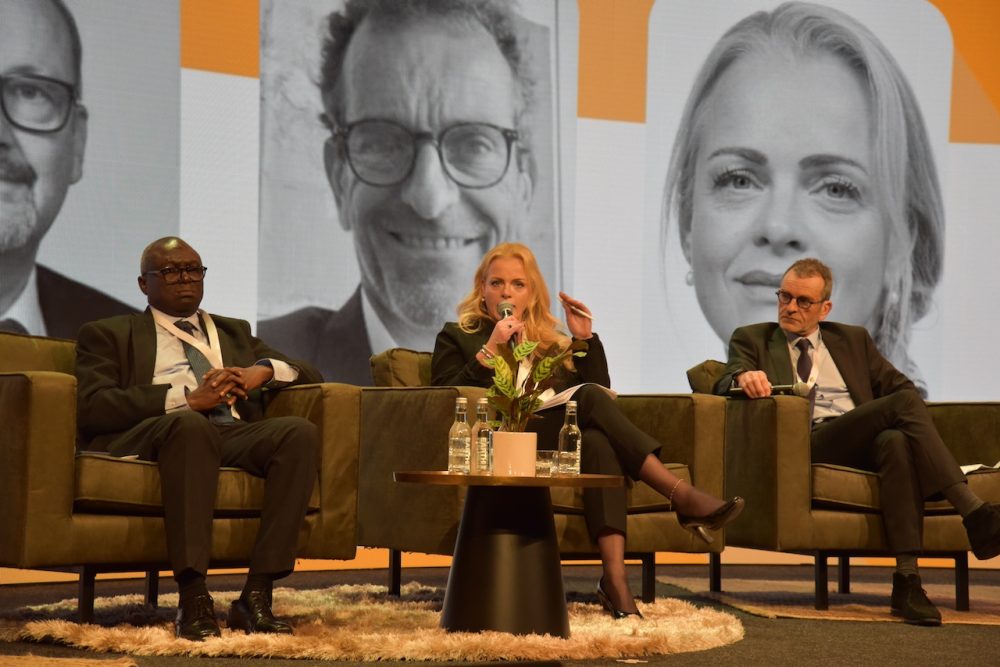 She commented: “What we have to be honest about – nobody had cocoa in their minds, they were thinking of soy and palm oil, and we had to make it fit for cocoa. As a business we like to have certainty – if it’s been postponed another year, and another major revision expected in April, it’s not giving certainty.”
In addition, she asserted that it remained the parliament’s job to scrutinise the EU Commission and hold it to account, which is why the delays in the EUDR came about. She added that it was very difficult to provide a one-size-fits all solution – there was a consensus that we should implement EUDR, but we have to do it in the right way, and that we don’t lose our producers as part of this. It’s a big concern.
For his part, Michel Arrion, executive director of the ICCO cocoa organisation, explained that there had initially been scepticism within the sector as for whether regulatory measures would negatively impact farming communities within the industry.
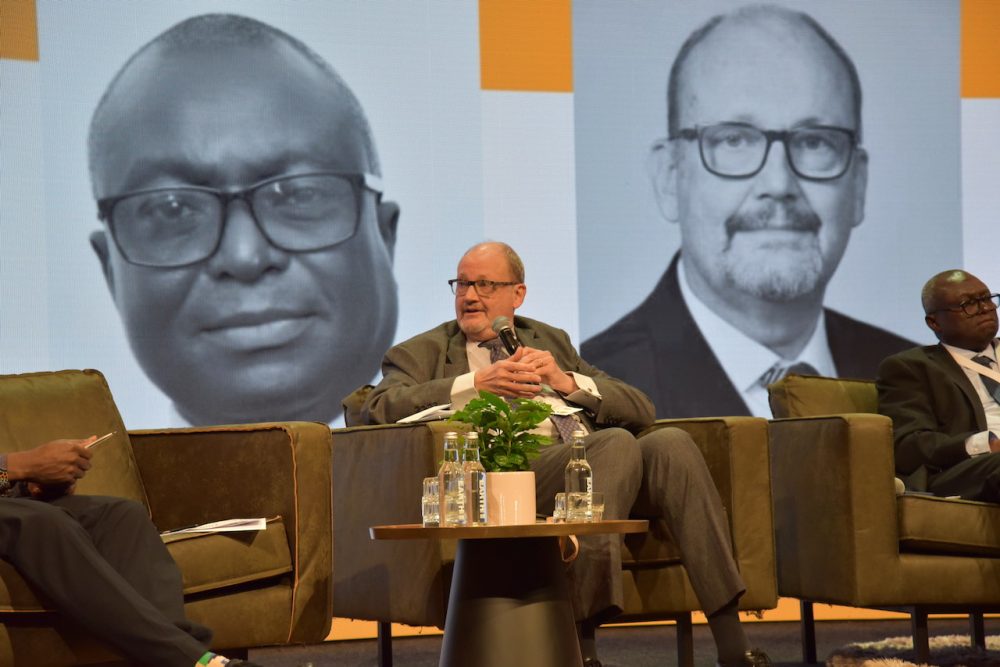 However, he believed that ultimately, it represented a force for good, though creating harmonised rules had been a complex procedure.
He commented: “By definition when you adopt a regulation, you are trying to put in a level playing field. We have heard this demand from many stakeholders – there were some who were not compliant, but the vast majority were. This regulation helped stakeholders produce EUDR and the corporate due diligence laws, and the regulations on sanetary regulations that are coming, and will impose more sets of regulations.
“Our ICCO members are exporting and importers. There was a lot of misunderstanding from some companies on this when we started out on it, but now they are working together on it. The development of the African regional standard by Ivory Coast and Ghana that has incorporated a lot of the elements of EUDR – the adoption of this norm has led to the identification of farmers.
“Five years ago, nobody knew where cocoa was coming from, so this was really important, as it’s formalised the identification of farmers. It was quite striking that Ivory Coast and Ghana were ready a year ago – the big question was over two-tier markets. We were fearing two tier cocoa, compliant and non-compliant. But now those risks are reduced,… the non-compliant cocoa can now go to other destinations including Asia, so there are plenty of other destinations.”
Furthermore, Lawrence Attipoe, African regional coordinator, UN International trade centre had expressed concerns that “some people will be left out of the market with EUDR.”
Consequently, he believed that while such regulations should be handled with care, it was best to take an approach of fully engaging with all those involved with the value chain, recognising the value of attempting to encourage all to buy-into its overarching goals.
Attipoe said: “It’s our job to ensure that everyone who wants to participate in world trade have the resources to do so. That’s why we look at regulations, CSDDD when it was first announced – people were unaware of their obligations before, so that brings into question for the necessity for them.
“Given that most people’s lives depend on the implication of these regulations, their reaction was very sharp – ‘here comes another regulation for us,’ but then there’s a calmness, and they ask if you can explain it, then the begin to understand the necessity for some of it.”
Continuing the discussion, Micheal Arrion stated that producing and consuming countries have a common interest and have to work together in order to attain shared targets.
He added that it was a matter of building trust on all sides, which he said required ‘creating a bigger cake’ in which to sell the potential benefits of legislation and frameworks that were raising the bar in technical achievements within the industry.
As the panel noted, just a couple of years ago, one of the core talking points was in fact whether volumes of cocoa should in fact be restricted to prevent over-supply, whereas now the sector is in a period of reported shortages.
In her closing remarks, MEP Leeuwen, noted that there were many challenges ahead in implementing EUDR and related legislation – which she asserted had been broadly accepted by the EU Parliament, but she stressed that it had to be implemented correctly to ensure that farmers gain from it properly.
 The day featured several other key sessions including on measuring the impact of forest protection measures, which featured contributions from Barry Callebaut, ofi, as well as Hershey.
With considerable scrutiny now being placed on all companies in relation to their approach to ending deforestation, companies have been further spurred into action with the dawn of EUDR frameworks.
Among the panel was Christopher Stewart (below, right of pic), ofi’s global head of sustainability impact, who asserted that the company, as with the rest of the sector, held a key responsibility to drive down its environmental impact.
He commented: “We are heavily invested in tree crops, so we are a part of those commodities, including cocoa – and the way that they are processed is incredibly important to us, both in meeting customer expectations, but also in maintaining the security of supplies of those crops.
“Our responsibility as a supplier is not just ending deforestation in those supply chains, but also making those chains more resilient, including through agroforestry, which has been a key focus for our sustainability programmes,” explained the sustainability head, who conceded that the delays surrounding EUDR had been too long and wished to see it in place as soon as possible.
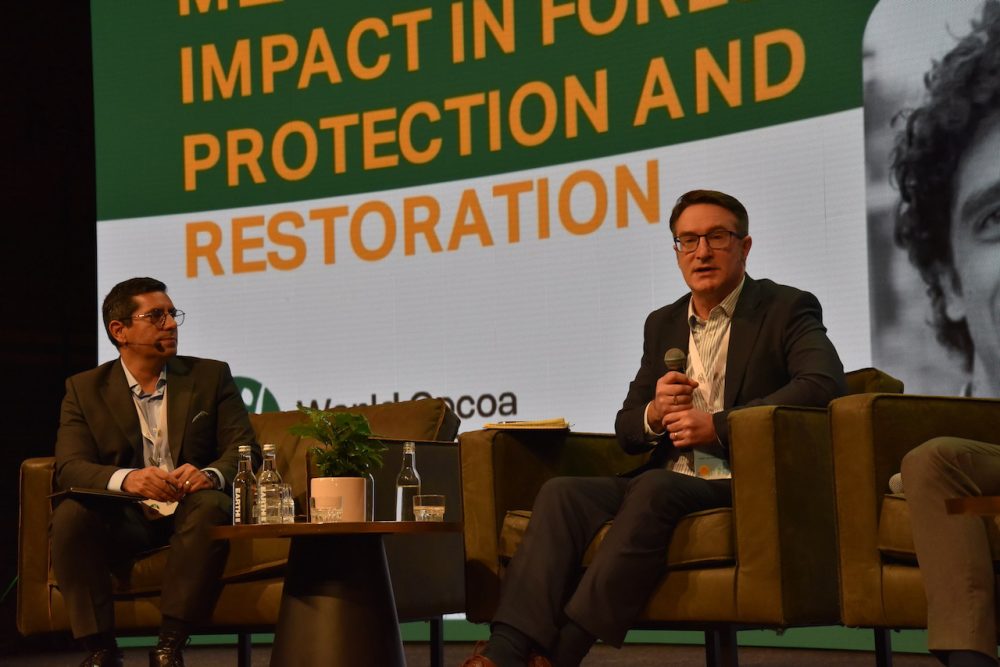
The panel also featured Ivory Coast’s Fernand Bale, director of the Bureau d’Etudes Techniques et de development, who explained that considerable work on a local level had been done to deliver accurate mapping of the landscape, and urged those who are engaged in wider work examining forest loss to ensure they they utilised the latest such resources to ensure that deforestation rates and other linked mapping was as up-to-date and aligned as is possible.
Significantly, he noted that historically, an especially high level of Ivory Coast’s primary forests had been lost to commercial activity (around 80%), which the country had set about trying to rectify, and has been making gains against its key targets.
For his part, Nicolas Mounard (below), VP of ESG, sustainability and traceability at Barry Callebaut expressed the importance of its work in seeking to provide protection for forested area.
He stated that legislation such as EUDR should be very much promoted a positive force rather than something negative, as its core goal is one of providing greater protection for forested areas.
He explained: “We’re investing millions a year in forest protection – why is it that we’re doing that – we do this as we need beans and we need the forest as part of that to get those beans. We can’t just rely on the due diligence processes, we need forest protection initiatives – and the fact is that if we don’t do this then the pool of beans is just going to shrink,” he noted of its environmental focus.
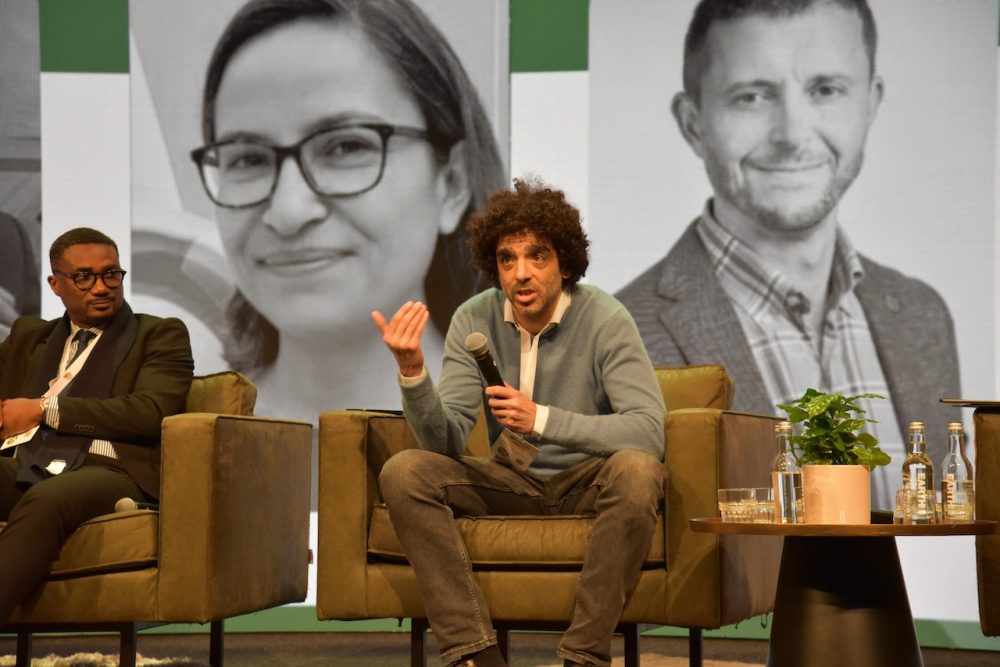 Furthermore, he cited the valuable work of conservation specialist organisations such as the WWF in providing assistance to the sector in working on geomapping exercises, which had further enhanced the industry’s overall performance on forest protection work.
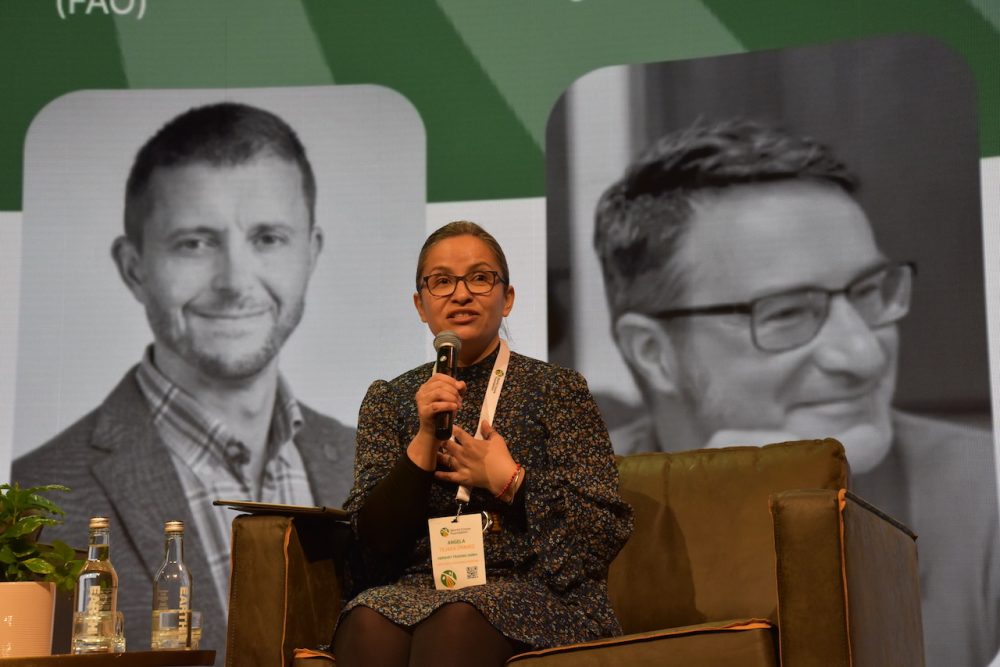
In addition, the event also heard from Angela Tejada Chavez, director of sustainable sourcing at Hershey Trading, who felt there were some positive measures being taken in the fight to ensure forests are maintained.
She commented: “when I think about the future of cocoa, I don’t being by thinking about laws, regulations and reporting, I think about people, For all our scientific knowledge, a lot of it has already existed traditionally for decades and centuries, and in some cases thousands of years, as we have been farming cocoa as humans for 5,000 years.
“When people are given the tools and respect, something very beautiful happens,” she added, noting that through engaging communities in a fair and open manner, and give them the time to change their practices and approach, they very often do, as promoting best practices in a direct and engaging manner has always yielded the most positive results.
 Read our next edition of Confectionery Production to see more on these sessions, which included exploring how public and private sector working together could potentially drive improvements in helping drive down rates of child labour with greater rapidity.
Meanwhile, the afternoon sessions turned the spotlight on other major issues including exploring the promotion of cacao resilience in the face of key outbreaks of crop disease – which is reportedly negatively impacting up to 40% of cocoa supplies in Ivory Coast.
This issue was further explore in one of several final breakout sessions that closed the day – which was brought to a conclusion by a concluding drinks session ,as well as a celebration from the Women in Cocoa and Chocolate network, as it launched its women’s mentoring academy (see separate subsequent report).
TopicsPeople
Chris Vincent Christopher Stewart Jessica Leeuwen Nicolas Mounard Regis Meritan
OrganisationsRegions