Germany’s Syntegon makes notable gains against sustainability targets
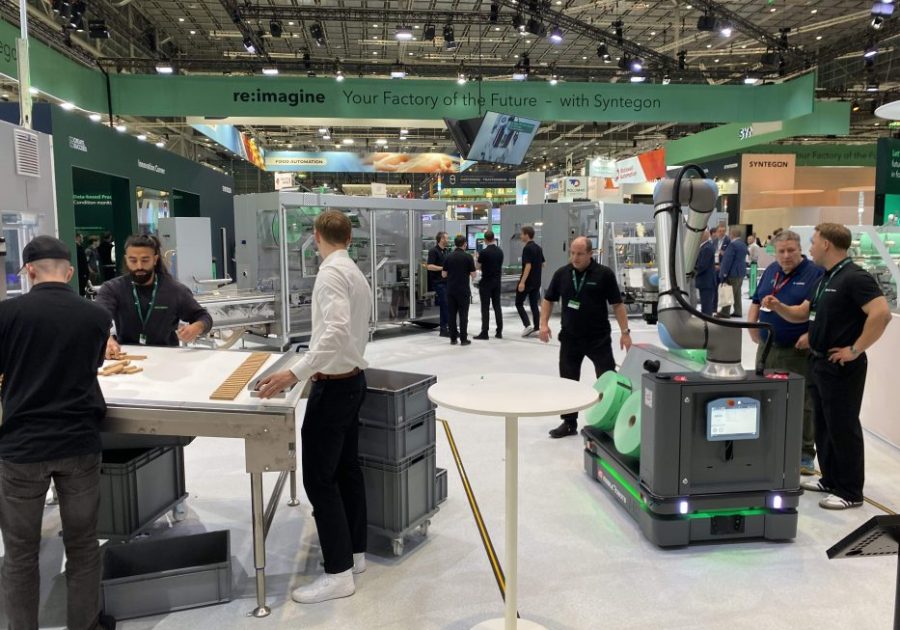
Syntegon has been among key businesses at this year's interpack (see next video feature), with a host of technology on display. Pic: Neill Barston
German-headquartered equipment and solutions group Syntegon, has renewed its net zero environmental commitments to reduce core greenhouse emissions as part of its 2025 sustainability report, writes Neill Barston.
The company, which is formerly part of the Bosch group before breaking away to become its own entity in recent years, has placed environmental consideration as a major part of its identity.
This has been reflected in the design characteristics of its equipment and systems developed for the confectionery, bakery and snacks sector, which have been instilled with energy-saving features, as well as being forged with reduced footprints and efficient processing capacity.
As the business confirmed, it has delivered tangible operational improvements, including reducing Scope 1 and Scope 2 CO2 emissions by 40 percent compared with 2019, while GHG intensity improved to 6.73 kg CO2e per thousand euro revenue.
In addition, the share of electricity sourced from renewables increased to 81 percent (+11 percentage points) compared with 2024. Investments in people and workplace safety also advanced, with continued improvements in employee training hours and key safety indicators.
As the business noted, with regulatory expectations and sustainability requirements continue to increase globally, it aims to support customers with solutions that combine productivity, compliance, and resource efficiency. The effectiveness of Syntegon’s sustainability strategy has been recognized by external experts such as EcoVadis and confirmed by its improved “B” rating from CDP for climate change.
The publication marks the company’s first sustainability disclosure prepared in orientation to the Corporate Sustainability Reporting Directive (CSRD) and assured by a third party, reflecting Syntegon’s commitment to enhanced transparency and evolving regulatory expectations.
“The transformation toward a more sustainable industry is accelerating and we want to actively shape it together with our customers and other stakeholders,” said Torsten Türling, Chief Executive Officer of Syntegon. “By combining technology, operational excellence, and lifecycle expertise, we are turning sustainability ambitions into measurable progress.”
“Our focus is on implementation and measurable impact,” said Petros Kapelles, Chief Operations Officer of Syntegon. “We are systematically advancing decarbonization across our operations while helping customers improve efficiency, reduce waste, and optimize resource consumption.”
Performance validation
Critically, the latest assessment by EcoVadis has shown that Syntegon ranks among the top 2 percent of companies worldwide, underscoring the strength of its performance in the areas of environmental, social, and corporate governance.
Syntegon achieved a CDP Climate Change score of B in 2025, demonstrating that the company actively manages its environmental impacts through established processes and robust strategies. The company’s climate targets are also validated by the Science Based Targets initiative (SBTi), reinforcing the credibility of its decarbonization pathway.
“We are proud that our sustainability efforts regularly receive positive assessments by external experts,” said Yvonne Gillet, Vice President Sustainability at Syntegon. “This recognition reinforces our commitment to continuing on our path.”
In addition, the company has confirmed that it has embedded sustainability as a strategic pillar of its value‑creation model.
Sustainable solutions and lifecycle services are integrated with product innovation and operational excellence to help customers lower emissions, reduce waste and strengthen operational resilience.
The company’s ambition is to provide essential solutions that enable the safe, efficient, and resource-conscious production and packaging of medicines and food. Syntegon supports its customers’ sustainability goals through improved energy efficiency, minimized safety risks, safeguarding product integrity across the system lifecycle.
The sustainability disclosure was prepared in orientation to the Corporate Sustainability Reporting Directive (CSRD) and European Sustainability Reporting Standards (ESRS), replacing GRI as the company’s primary reporting framework and reflecting Syntegon’s commitment to increased transparency and regulatory requirements through third-party assurance. In addition, the report details its governance enhancements, decarbonization roadmaps, operational measures to reduce emissions and resource consumption, and to continue improving health and safety of its global operations.