
Driving key developments in oils, fats and gum markets

pic: ofi
As reformulation accelerates and regulatory scrutiny intensifies, Confectionery Production explores how engineered fat systems, CBEs and hydrocolloids are helping manufacturers balance nutrition, texture, resilience and sustainability. Daisy Phillipson explores latest developments across the segment
Consumers may still buy sweets for indulgence, but expectations around what’s inside have changed rapidly, placing oils, fats and hydrocolloids at the centre of both reformulation efforts and technical challenges.
This core trend was very much in evidence at the most recent edition of Food Ingredients Europe, held in Paris, with many manufacturers demonstrating clear feedback from consumers that natural, clean label product offerings are more highly-prized than ever, amid an era of far greater health and wellbeing awareness.
Moreover, the growth in better-for-you lines that has been witnessed around the world in recent years has given rise to new segments, as well as posing challenges for firms in devising and reformulating their portfolios.
As explained by Cornelia Schaffrath, product line senior director of edible oils Europe, Cargill, “Demand in 2026 is being shaped by a dual imperative: improve nutritional profiles while preserving indulgence.”
Cargill’s proprietary FATitudes consumer research shows that scrutiny around fats and oils in packaged foods appears to have declined since its peak in 2019, but claims like ‘no saturated fat’ remain highly influential in purchasing decisions. In France and Germany, preference is growing for oils associated with positive health benefits, particularly Omega-3 and monosaturated fats.
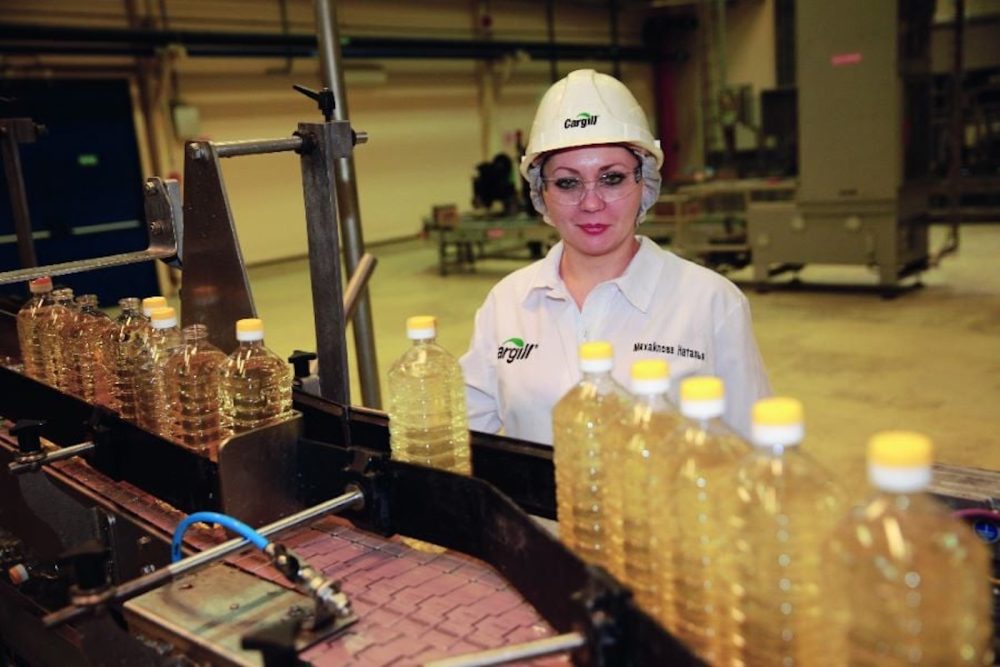
However, research shows that while consumers are increasingly looking for more nutritional options, they are not willing to compromise on taste and texture. “This is particularly relevant in filled confectionery, wafers, biscuits and sweet bakery applications, where fats play a critical structural role in aeration, creaminess, snap and shelf life,” adds Schaffrath.
Innova Market Insights has also highlighted ingredient quality as a primary driver of choice, while in confectionery, texture is another priority.
These factors are pushing confectioners and bakers towards fat, oil and gum systems that can deliver the same mouthfeel and structural benefits with cleaner labels, improved nutritional profiles and fewer processing compromises.
“Reformulation is no longer just about removing; it’s about optimisation,” explains Schaffrath. “Manufacturers are seeking fats that deliver specific crystallisation behaviour, controlled melting profiles and stability, while enabling reductions in saturated fatty acids and compliance with clean label expectations.”
Cargill’s CremoFLEX filling fats are developed for this reformulation landscape, offering tailored performance – from solutions that improve volume and lightness to options that provide healthier positioning – with up to 25 per cent saturated fatty acid reduction compared to conventional alternatives. The range is non-hydrogenated, meets WHO guidance on industrial trans fats, and can incorporate RSPO-certified palm.
Looking beyond individual applications, Schaffrath describes how interest is growing in high-oleic sunflower and controlled solidification speed.
For its part, ingredients group Bunge offers a range of solutions, including its
Coberine 206. Launched in 2024, the patent-pending shea-based CBE is said to address critical challenges chocolate manufacturers and artisanal chocolate makers face when creating soft chocolate and ganache products.
“In the past decade, the global artisanal soft chocolate market has gained significant popularity among younger consumers seeking indulgent treats, especially in Asian and Middle Eastern countries. The short shelf life, ranging from one week to three months, often deters industry entry,” notes Katherine Huang, senior commercial director food solutions Asia at Bunge.
“Bunge addresses this challenge with Coberine 206, offering a longer lasting premium soft chocolate taste, which is a game-changer for this market.” Alongside the chocolate taste, Coberine 206 is said to extend the shelf life of soft chocolate products up to 12 months and can be stored at room temperature.
Managing traceability and sustainability
Alongside functionality, cost and nutrition, sustainability and traceability are now shaping procurement and formulation strategies in fats and oils, with regulatory pressure intensifying. When it comes to key confectionery commodities such as cocoa and palm oil, the EU Deforestation Regulation (EUDR) is one such example.
Adopted in 2023, the legislation is intended to ensure products placed on the EU market are not linked to deforestation or forest degradation, meaning they must be produced on land not deforested after 31 December 2020. The regulation applies to large and medium operators from 30 December 2026, while micro and small operators have until 30 June 2027.
For manufacturers sourcing cocoa, palm and other vegetable fats, this shifts sustainability from a corporate reporting responsibility to an operational requirement. Cargill points to long-standing investment in supply chain transparency and certification across its ingredients portfolio, including its cocoa and palm offerings, positioning traceability and responsible sourcing at the forefront of its approach.
Adaptability and supply chain resilience in the face of market and climate disruption are also key. “In Europe, we offer Responsibly Sourced Palm Oil (RSPO)- certified palm products. Equally important is supply chain resilience. The past few years have demonstrated how geopolitical shifts and climate volatility can disrupt oilseed markets,” says Schaffrath.
“In practice, that means helping confectionery manufacturers evaluate palm’s role application by application. In some cases, RSPO-certified palm remains the optimal balance of performance and cost. In others, tailored blends or alternative oils may provide the right solution. The objective is pragmatic: safeguard functionality and economics while progressing responsibly sourced portfolios.”
Similar priorities are evident across the ingredients market, as suppliers respond to tightening regulation and increasing scrutiny around deforestation, emissions and farmer livelihoods. The latest Cocoa Compass Impact Report (2024) from Olam Food Ingredients (ofi) states that it achieved a 12 per cent reduction in cocoa greenhouse gas natural capital cost per tonne of output against its 2018 baseline.
Additionally, 155,000 farmers now earn a living income through its global cocoa sustainability programmes. Andrew Brooks, global head of cocoa sustainability at ofi, says, “As we continue towards 2030, our focus will be on maintaining this progress and enabling more sustainable outcomes for cocoa production against the unpredictability of fluctuating markets and climate changes.”
Similarly, Bunge continues to share sustainability newsletters with updates on its non-deforestation journey, expansion of its regenerative agriculture efforts into new regions and progress towards its science-based targets. The group also notes its commitment to improving the lives of shea crop farmers through its Where Life Grows program.
A recent example is through water conservation, with Bunge partnering with the Dutch foundation, Stichting Ghana over de IJssel, to teach men in Northern Ghana how to construct rainwater storage cisterns. By using readily available local materials like cement, steel wire, chicken wire and taps, it ensures that local masons can both build and maintain the systems.
Texture meets functionality
In the world of gums and hydrocolloids, achieving the ideal texture is just as critical as taste. According to Ingredion’s proprietary consumer research, 79 per cent of consumers say texture shapes satisfaction, 72 per cent would switch brands over poor texture and 60 per cent actively seek products with multiple textures and flavours.
To help manufacturers with this key element, Ingredion developed the Texture Equation, a proprietary framework that combines consumer insights, technical expertise and ingredient innovation to deliver desirable textures that perform across applications.

This can also assist in reformulation strategies, from plant-based alternatives to reduced sugar recipes. While the framework spans starches, proteins and other texturants, hydrocolloids remain central to delivering chew, suspension and stability in confectionery applications. Through its TIC Gums portfolio, Ingredion focuses on naturally-derived solutions sourced from seeds, trees and seaweed, enabling manufacturers to fine-tune viscosity, texture and mouthfeel while aligning with clean-label expectations.
Beyond their traditional structural role, natural gums are increasingly being positioned as multifunctional ingredients, contributing not only to texture but to fibre enrichment while assisting with sustainability goals. Ingredients firm Nexira, for instance, offers Inavea Pure Acacia, an organic, non-GMO verified dietary fibre. Additionally, its Fibregum is a natural, GMO-free prebiotic acacia gum ingredient.
The company notes that these solutions are available in organic and carbon-neutral options. Nexira also continues to develop its Naltive range of natural texturisers, designed to deliver both functional and nutritional benefits. As with most hydrocolloid systems, performance depends on application context, with Nexira providing comprehensive support for product formulation.
Natural tree exudates specialist Alland & Robert highlights the importance of collaborating with its customers, including those operating in the confectionery industry.
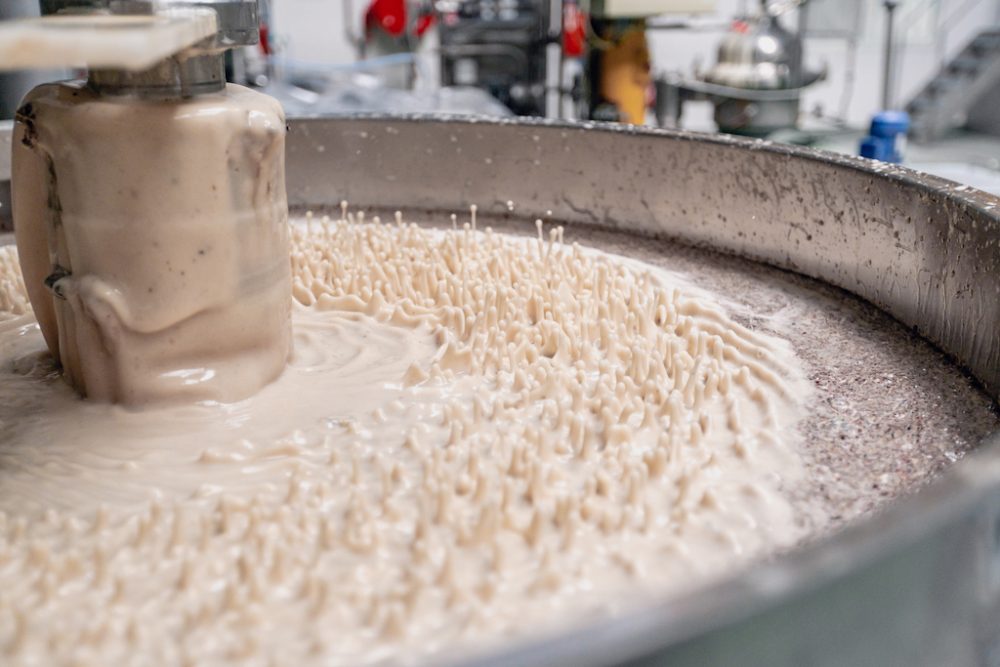
As the company’s CEO, Charles Alland, previously told Confectionery Production, “We are focusing on helping our clients to formulate their products with solutions such as gum acacia, that answer their needs and consumers’ needs.”
In terms of innovations, an example is Alland & Robert’s Beyond Acacia line of high-density acacia gum granules. The range is highly-soluble, enabling faster dispersion and improved process efficiency in confectionery applications, while delivering a reported 51.1 per cent reduction in Scope one and two emissions, calculated in accordance with the Greenhouse Gas Protocol.
For a plant-based alternative to traditional gelling agents, the company offers Syndeo Gelling, which won the Innovation in Ingredient Award at our 2025 World Confectionery Conference in Brussels. Combining gum acacia and plant-based, natural hydrocolloids, the texturing solution provides natural stabilising, gelling, thickening, binding and texturing properties in vegan products. Such solutions demonstrate how traditional hydrocolloids are being re-engineered for modern confectionery demands, from plant-based requirements to cleaner labels and lower carbon footprints. More broadly, the evolution of oils, fats and gums reflects a wider shift across the sector in 2026, where reformulation is less about removal and more about precision.