
Exclusive: Hershey CEO Kirk Tanner seeks to tackle industry tests and embrace key opportunities

Kirk Tanner in conversation at this year's SOTIC event in Orlando. Pic: Neill Barston
Among major highlights of this year’s State of the Industry Conference, was a key discussion with Hershey’s recently appointed CEO, Kirk Tanner, who stressed the significance of innovation, reports Neill Barston.
His arrival at the helm of the business last summer, having previously played a senior management role at PepsiCo, came at a pivotal moment for the company, as it faced a number of supply chain challenges including tariffs, cocoa price volatility and pressures on consumer demand, as household budgets came under strain notably in the past year.
However, despite such tests, which have also recently seen the business hit the headlines over product reformulation allegations – which it has moved to rebuff, the business has delivered a steady performance. (Watch our exclusive video review of SOTIC 2026 below).
Confectionery Production was on hand to report on his fireside chat at last week’s SOTIC event, in which he stressed the core importance of engagement with consumers and staff alike.
“I believe in three things, consumer, customer and colleague. So that it’s that simple, and I truly believe in it, and you have to practice what you preach.
“So consumer obsession, customer partnership, and colleagues. So, to get to know the Hershey team, about once a week, I would push a beverage cart through the halls and serve beverages and get to know each of the individuals in the business,” explained Tanner of his hands-on philosophy in approaching the role of CEO, which he took over from long-serving former chief executive Michele Buck last summer.
It’s certainly been an eventful period for the business, which appeared to have successfully lobbied the White House last autumn to remove tariffs that it had publicly stated would cost it $180 million, arguing that as cocoa cannot be grown on a commercial scale in the US, it should not be subjected to additional taxation.
Consequently, taxes were rolled-back in November, yet following a Supreme Court verdict in February that many of the initial tariffs were not in fact lawfully enacted, meaning the tariffs were now null and void in many instances, the White House has moved to place 10% tariffs on all imports – under a different, limited law allowing the move for a period of a few months.
Meeting challenges
With such tests in the background, it was put to Tanner that the sector has proved resilient despite uncertainties in the market. Reflecting on a trends presentation from Circana earlier that morning, he noted that ‘consumers are changing’ between the selections that Gen Z make, compared against their elders, the ‘Baby boomers,’ or Gen Alpha born to children of Millennials. In his view there were opportunities to expand the sector, which he was notably encouraged by.
“I took away a few other things from that presentation earlier – there’s resilience in the category, driven by affordability, innovation, excitement, and connection. There’s still opportunities for growth.
“We talked about gifting innovation plays such a big role, and there’s been many innovations in the category. I think with consumers, more you give them, the more they want.
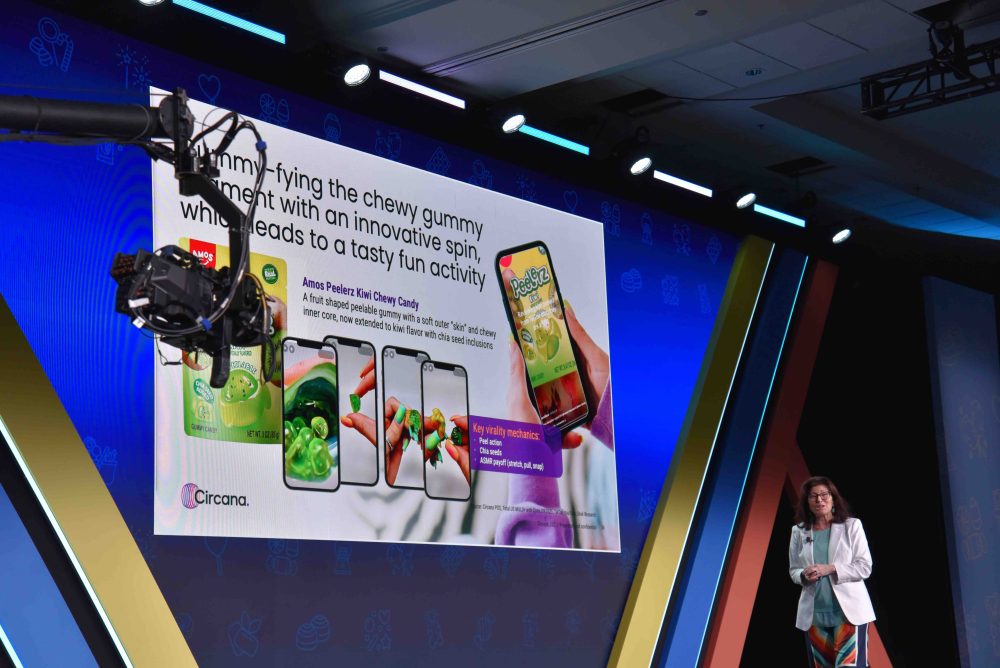
“We’ve had this one innovation that happened, that I had nothing to do with – Reese’s Oreo – when you hear that, you’re like, yeah, that’s gonna work. There’s a lot of innovation in the category, and that’s the exciting thing that keeps it vibrant. We need great innovation in the category, because that makes us interesting,” adding that connecting with consumers through physical campaigns, as well as reaching them digitally, in order to drive further creativity within the market.
As Tanner added, ‘not all ideas are captured in one place,’ conceding that as a business, you had to be willing to make some mistakes along the way in order to arrive at a final destination of product ranges that made a key impact.
“Sometimes we may be ahead of the trend or the curve, and something doesn’t work, but then you bring it back later, and it works, right? But I think you have to have a fearless approach to innovation all through the lens of the consumer. Staying ahead of it is the challenging part. I think if the speed of the world is moving faster than the speed of your company, you’re going to be less relevant. I think that is true about innovation,” he told the State of the Industry Conference audience in Orlando, at the JW Marriott Grande Lakes venue, which included around 700 industry professionals.

Furthermore, the CEO was also quizzed on the importance of seasonal confectionery, and whether that the market is potentially too linked to defined moments in the year.
Notably, he remarked that ‘the four key seasons are critical,’ but added that these are now being joined by many other moments of celebration during the calendar year that are proving increasingly important.
Significantly, he acknowledged that it was very much a case of responding to consumer demands in terms of their requirements across chocolate and non-chocolate categories, which Hershey is well-placed to handle in having expanded its offering into broader snacking environments.
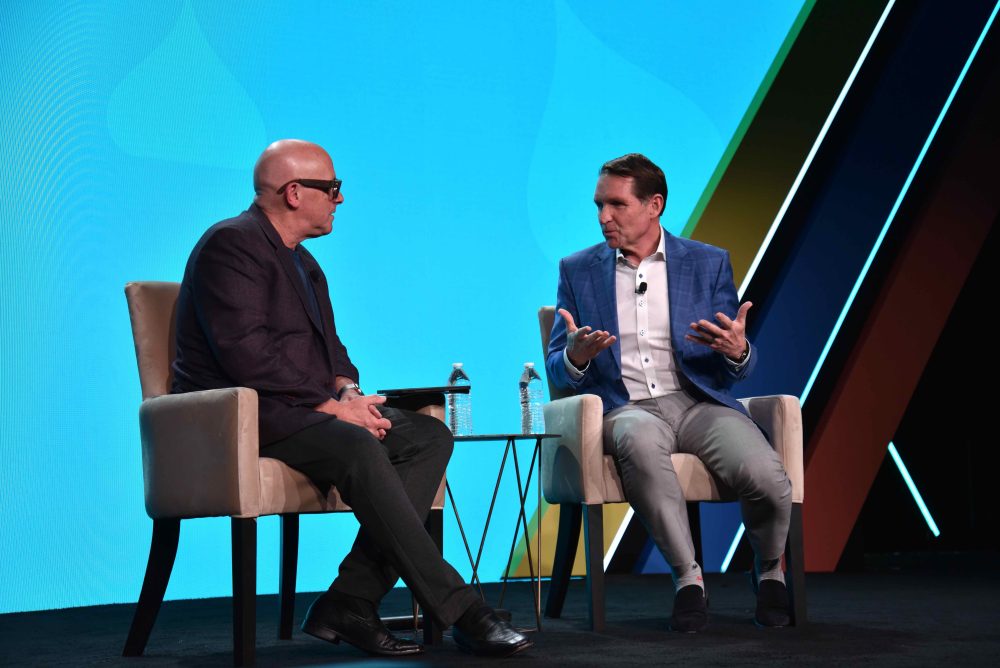 As previously noted, this year’s event placed a clear focus on how manufacturers have continued to engage with retailers in developing their strategies, and in the view of the Hershey chief executive, managing those relationships was of vital importance, and creating partnerships to thrive in response to market conditions.
He said: “I think that it is critical (to form partnerships). I think the most important thing to do as a supplier is to be a great listener, and so that we can co create ideas and make solutions come to life that are very specific for their shopper.
“We have so many retailers in here, and you all have different strategies and different shoppers and different locations and demographics and to be a great partner and build trust. CO-creating, bringing ideas that drive growth and delivering what you say you’re going to do. I mean, I think that’s probably the cement in a trust relationship, is your actions speak louder than your words, co creating and then being able to deliver and execute.
“I mean, it really does start with listening and having the resources to talk to the customers and get those solutions. The thing is, is it’s not one sided, right? This idea of we have insights, the customer has insights. I think the most powerful thing you can do with a customer is walk one of their stores together. So go out of the office, pull yourself away from the PowerPoints, and get in front of all those moments of truth that are in the store, and hear from the customer why this location is important, why the traffic goes this way?” noting that through working closely with those retailers offered a route to success, as they are well acquainted with how their respective shopping environments are operating and what drives purchases.
As for wider challenges and learning within the industry, he reflected back on his Pepsi days, noting that ‘We learned one big fat lesson from Covid’ in being able to handle disrupted supply chains, and being open about the challenges that such major scenarios can cause a business.
In terms of wider shopping issues, he turned his attention to the recent issue of federal SNAP food stamps for those on low incomes, with several US states legislating that these payments could now not be used for candy or snacking – and in Tanner’s view “Making restrictions on SNAP for candy does not change change nutrition,” noting that he had seen other previous legislation being reversed, and noted the importance with working with regions around the US in order to engage with nutritional debates and deliver policy improvements.
Grasping the digital future
In addition, as for how to tackle the notion of driving further growth for the industry, Tanner observed that there were a number of aspects to achieving this, and as he previously alluded to, reaching consumers where they are most readily found, including on social media platforms such as TikTok and Instagram is of paramount importance.
He added: “I think innovation is also critical to keep consumer engagement. And then, you know, having those moments where our products are included in lives, so in baking, in celebrations, in gifting. There’s a lot of opportunities for growth, but the digital opportunity is one I don’t think we have completely solved, right, how to engage with consumers flawlessly in the digital universe. That’s that needs some work.”
