Exclusive: International Cocoa Diplomacy group reveals trade compact offering key industry blueprint
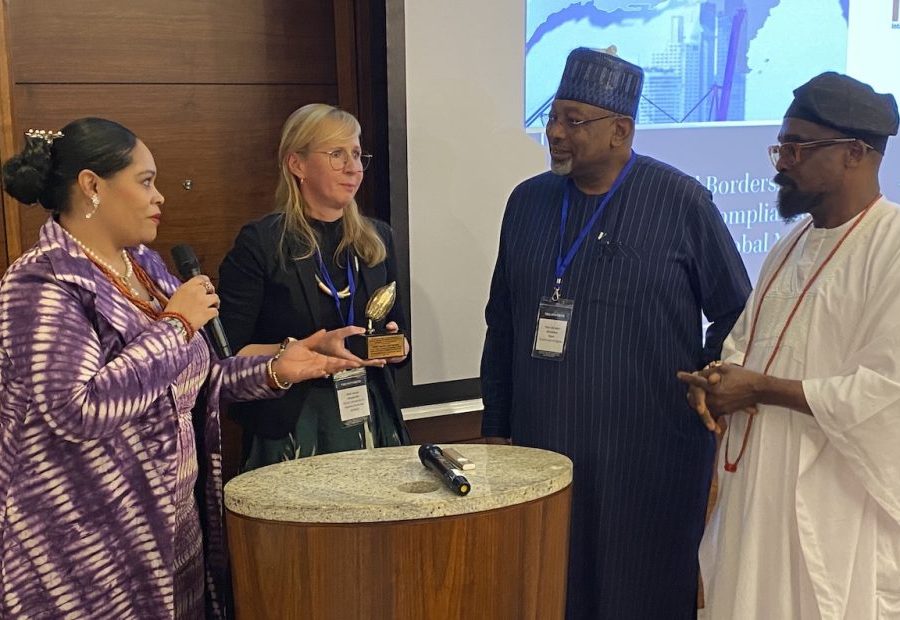
Queen Angelique-Monet Gureje-Thompson, director of ICD (left of picture) praises Minister of Agriculture and Food Security for Nigeria, Senator Abubakar Kyari (right of image), who receives an award for his services to the industry. Pic: Neill Barston
The International Cocoa Diplomacy (ICD) non-profit organisation has released a trade compact agreement outlining the sector’s prime priorities in the wake of its inaugural UK event held earlier this year, reports Neill Barston.
Confectionery Production was on hand to attend the Cocoa Without Borders event, and partake in moderating one of its sessions, with its core goal of shining a light on industry challenges at origin in Nigeria, as well examining initiatives in Switzerland as a key example of a nation with its finger on the pulse of innovation, research within the sector.
Registered in London in 2020, the ICD has sought to place a spotlight on cocoa growing tests within the African continent, and driving shared knowledge towards a more transformational industry that genuinely delivers for agricultural communities.
As the organisation observed, while the next Cocoa New Year does not begin until the start of October, optimism is growing for improved fortunes for the sector, especially in light of the Ivory recently announcing a potential two-million-tonne output for the upcoming 2026/27 season.
The body also asserted that its latest trade compact – which is not a legally binding piece of legislation, more a shared code of conduct and common reference points, comes against a major backdrop of regulatory shifts, that will see the enforcement of the EUDR deforestation laws finally introduced in Europe at the end of December this year, would hold a notable impact for both producing regions, and consuming nations around the world.
In addition, the trade compact also sought to analyse how policy changes and consumer expectations for products can create powerful incentives for genuine transformation that have the power to potentially stabilise global markets – which have remained under significant pressure due to multiple factors including adverse weather conditions, insufficient pay for farmers, and disease-prone cocoa stock affecting yields.
As the ICD noted, the future of cocoa very much depends on delivery of strategic collaboration across the full value chain, which requires “bridging the
gap between producing regions and innovation hubs.”
ICD trade Compact
As the organisation stated, its trade compact has been devised from an initial starting proposition that regulatory compliance is not rejected, but it must be designed in ways that are fair, intelligible, and workable for those expected to
carry its greatest burdens.
The compact raised a series of assertions, which included: Shared context, with Cocoa Without Borders participants recognising that regulatory compliance is now the defining element of participating in international cocoa markets – yet all too often, systems place unbalanced demands upon producing nations and cooperatives in delivering higher standards without sufficient support and clarity.
The compact noted concerns raised in the Cocoa Without Borders conference, surrounding governance, ownership and use of traceability data, uncertainty over who benefits from compliance, and the urgent need for ESG transparency systems to be improved. There was also significant discussion of the need for ‘farmer agency’ – in the form of direct engagement and ownership of schemes linked to compliance legislation.
Furthermore, priority action areas raised in the ICD compact included calls for traceability systems that are governed transparently, and are aligned with national oversight and local decision making. It also noted the need to respect producer and national data interests, designed around usability, not only data control. In the view of the conference, technology should support markets in transformation, not merely increase monitoring.
Cocoa Beyond Borders reflections
As noted, the Cocoa Beyond Borders event held at the end of January, saw an eclectic audience of policymakers, producers, financiers, traders, researchers, industry leaders, and civil society groups gather to assess how the global cocoa market is evolving.

His Majesty Oba Dokun Thompson, of the ICD played a moderating role at this year’s inaugural event.
In a keynote address, Honourable Senator Abubakar kyari, Nigeria’s Minister of Agriculture and Food security, offered optimism for how the country could continue to play a significant role in helping mould the future direction of the global sector.
He said: “Nigeria’s cocoa sector stands on the foundation of natural advantage: water, oil, suitable employment, and a deeply rooted farming tradition.
“However, climate variability, pest and disease outbreaks, and productivity gaps continue to constrain output and climate impact. Permit me to state clearly that Nigeria must reclaim the value of its cocoa. This requires deliberate investment in climate smart agriculture, including the adaptation of sustainable practices that enhance crop resilience and mitigate the impacts of climate change.
“It also requires a strong focus on improving farmer livelihoods through targeted training, access to farm. and stronger marketing issues, while promoting environmentally responsible production practices that preserve our natural ecosystems,” adding that as part of Nigeria’s commitment to responsible and sustainable agricultural trade, the federal government has established the National Task Force on EUDR Compliance, co-chaired by the Honourable Minister of Industry, Trade and Investment.
This was designed to strengthen the capacity of agricultural business trade organisations and farmers to comply with EUDR requirements, with the primary emphasis on developing national frameworks, infrastructure, and traceability systems that support long-term sustainability and market access.
He added: “The national task force has produced a white paper on the European Union deforestation regulation. This white paper identifies and analyses the key legal, technical, and economic challenges associated with the implementing of the EUDR compliance across Nigeria’s agricultural export value chains, specifically cocoa, rubber, oil palm, soybeans, and leather products. These commodities are central to Nigeria’s non-oil export economy, accounting for over $1 billion in annual market exposure to the European Union.
“The white paper demonstrates that Nigeria can convert EUDR compliance from a regulatory obligation into a competitive advantage through the establishment of a national traceability system on public-private partnerships, the use of geospatial capabilities, and the adoption of proven regional models while advancing innovative financial solutions enabled by artificial intelligence and blockchain technology within the broader trade framework. Nigeria is reinforcing its commitment to regional trade sovereignty through the African Continental Free Trade Area.”
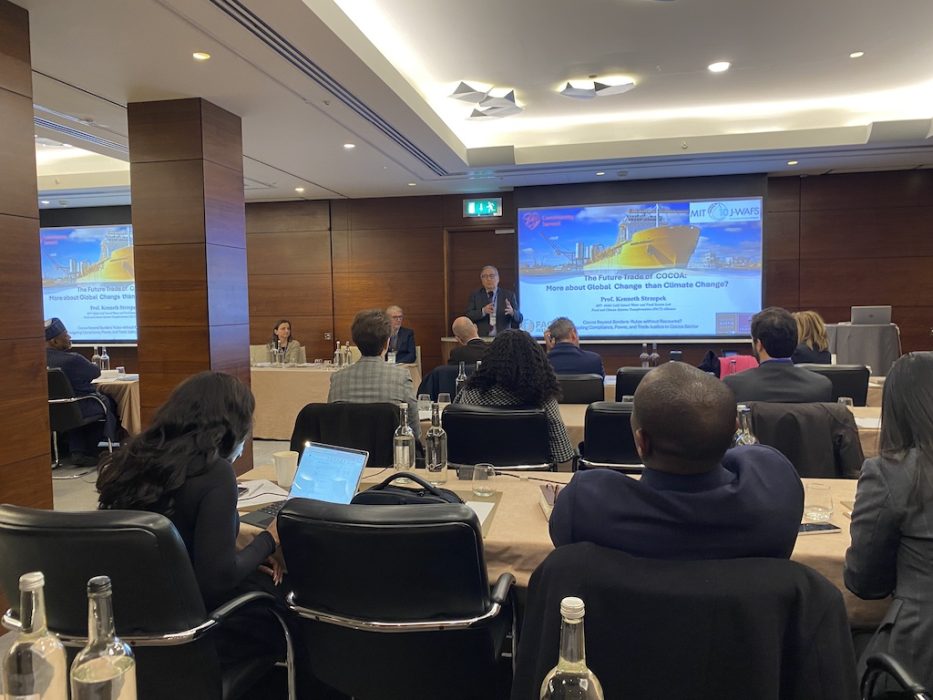
Notably, the programme also saw presentations that included a panel exploring CSDDD corporate due diligence human rights laws relating to cocoa. This was moderated by Chantal Coady, OBE, and featured contributions from Peter Whiting of Beech’s Fine Chocolates, Elizabeth Garland, of Verite, and Francesco Tramontin, VP of public affairs for Ferrero, who is set to join our World Confectionery Conference on 10th September in London (visit confectioneryconference.com for registration).
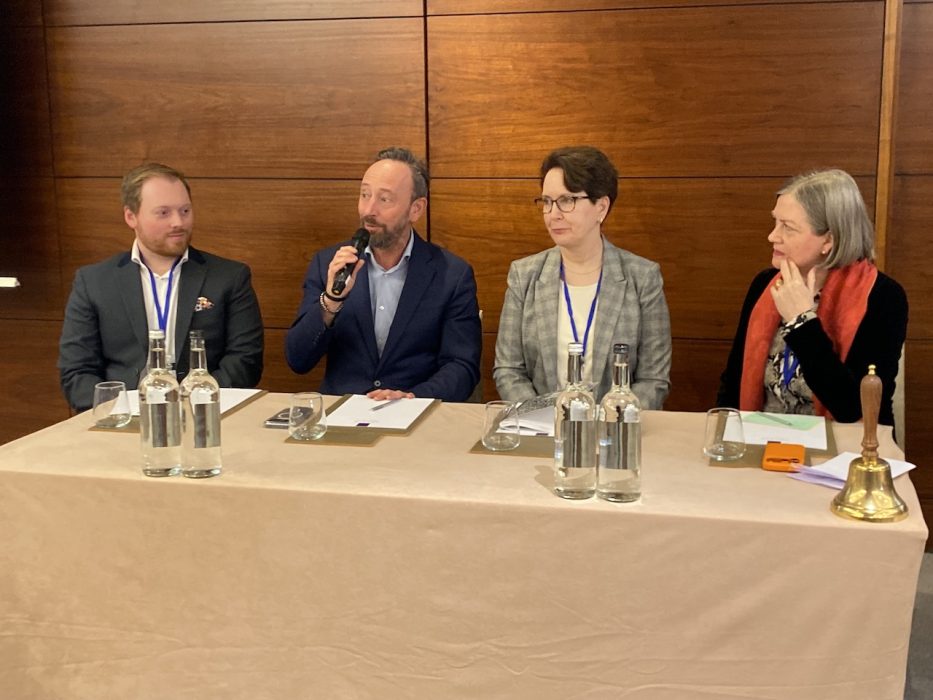
The panel recognised the needs for greater regulatory involvement in driving human rights transformation, but recognised that it must be done through involving all throughout supply chains in an equitable manner.
Its afternoon session featured a panel moderated by Sophie Jewett, of York Cocoa House, on the forming strategic alliances to help stabilise volatility in cocoa markets. This included Fuad Abubakar, head of the Ghana Cocoa Marketing Company (linked to the country’s Cocobod governing body), who expressed confidence in his nation’s measures to engage with cocoa communities, in spite of sector-wide challenges.
There was also a further panel chaired by Tony Myers, editor of Cocoaradar, exploring carbon capture as a means of cocoa market legislation compliance, and explored EUDR frameworks which are set to be fully rolled-out at the end of the year, after delays totalling two years.
The day concluded with a panel moderated by Confectionery Production on the merits of cell-cultured cocoa compared with conventional growing methods. This explore some of the key advances being made over the past couple of years, and whether lab grown supplies could be accepted in the same manner of traditional forms of production.
The panel consisted of Professor Irene Chetschik, head of food chemistry research group, at the Institute of of Food and Beverage Innovation at the Zurich University of Applied Sciences, John Newell, technical director of Tree2Bar (and former Nestle specialist), and Professor Tilo Huhn, also of Zurich’s University of Applied Sciences.
Assessing the prospects of ‘lab-grown cocoa’ Professor Chetschik believed it held notable potential alongside traditional varieties.
She said: “For the past couple of years at our university, we have looked at the alternatives to cacao. It’s becoming a more and more important topic, and we also investigate the properties of cell-based or plant-based ingredients, and this we do with many different partners from the industry, from different academic institutions and other organisations.
“The aim of this research is to to produce, on one hand, better, more flavorful products, and also increase the sustainability. I absolutely think that they (lab grown and traditional cocoa) can coexist in future because now it’s still under development and will take quite a while to just remark.
“So we see a big potential in cell-based cocoa. For example for use as bulk chocolate replacement, and, those are products-that we have already seen in the lab. They show very very similar properties, and are like a real chocolate, and the flavour is already quite good. If we transform that into a milk chocolate, there is even more potential to to have a similar product to the one that the consumers know,” with her fellow panellists agreeing that there was in fact space for both formats of chocolate to exist in serving complex global supply chains around the world.
People
Francesco Tramontin Fuad Abubakar HRM Oba Dokun Thompson John Newell Professor Irene Chetschik Senator Abubakar kyari Sophie Jewett Tony Myers