Putting AI in the driving seat

pic: Adobestock
Digital twins, industrial copilots and generative AI-powered robotics are no longer just buzzwords. As Confectionery Production examines, they’re redefining efficiency and sustainability for confectionery and bakery manufacturers worldwide. Daisy Phillipson reports
From cost-of-living pressures and labour shortages to changing consumer preferences and sustainability expectations, there has been no shortage of challenges in 2025. For confectionery and bakery manufacturers, the need to adapt through increased automation and digital tools has never been higher.
“As consumer preferences shift towards more personalised, seasonal and small- batch products, confectionery and bakery manufacturers are facing increased complexity in their production environments,” explains Neil Smith, president of consumer-packaged goods (CPG) at Schneider Electric.
“To meet these evolving demands, manufacturers are turning to open, software-defined automation and digital tools that enable real-time insights, predictive maintenance and guided corrective actions. These technologies support more agile production processes and help improve yield and traceability: key priorities in food manufacturing.”
Schneider Electric, which offers artificial intelligence (AI) based solutions, highlights a notable innovation: the Industrial AI Copilot. Co-developed with Microsoft and trained on Schneider’s industrial data, this domain-specific assistant is said to help automation engineers reduce development time by up to 50 per cent through features like automated code generation, intelligent test case creation and rapid comprehension of legacy code and documentation.
However, utilising these tools doesn’t mean replacing the human workforce. “By handling repetitive tasks, the Industrial Copilot allows engineers to focus on innovation and problem-solving, enhancing productivity and collaboration,” adds Smith.
“Interestingly, research shows that top-performing production sites invest approximately four times more in processes and people than technology alone. This underscores the importance of workforce enablement and process optimisation alongside digital transformation.”
Closing the skills gap with automation
While smart systems aren’t designed to replace the human workforce, it’s no secret that labour shortages have reached record highs over the past decade. How is it that both a fear of digitalisation eliminating jobs and labour shortage concerns can coexist? The issue isn’t so much a shortage of workers but a shortage of skills.
According to a study by professional services firm Deloitte, 62 per cent of European manufacturers cited talent recruitment and retention as their greatest challenge, while 80 per cent of those companies say they don’t have the skills they need for Industry 4.0. There’s also the topic of an ageing workforce, with a significant portion reaching retirement age in the next decade.
One-way manufacturers are tackling the skills gap is by adopting user-friendly digital tools and automating repetitive tasks, freeing staff to focus on higher-value work. As Thiago Roriz, chief operations officer at TNA Solutions, explains: “To address these challenges, the industry has accelerated its adoption of automation and prioritised user-friendly technologies.”
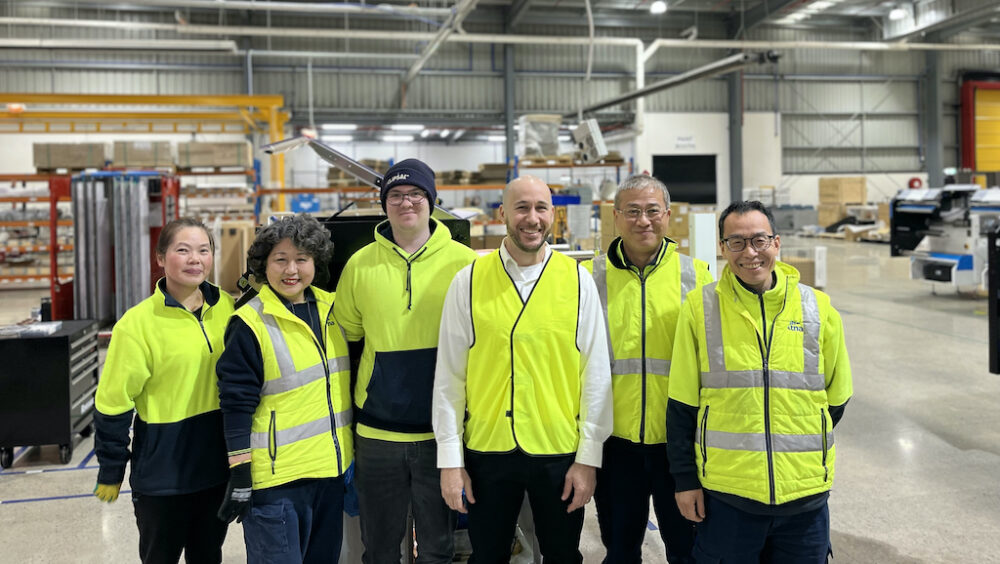
The TNA team has made use of advanced tech solutions alongside its human workforce…
Case packing, for instance, is a common bottleneck, and TNA’s answer is its high-performance tna ropac 5 case packer. Majans offers a clear example of the machine’s impact, as it allowed the snack producer to increase output by 140 per cent in just 12 months of installation.
Andrew McManus, manufacturing manager at Majans, comments: “Just five years ago, we regularly had between 28 and 35 people on a single shift, bagging, mixing and case packing. Today, with the help of TNA Solutions, that same factory operates with just 10-11 people per shift at outputs up to 6.9 times greater than before the automation process began.
“Casual jobs have been transformed into stable, full-time employment contracts, and technicians and maintenance crews have also been upskilled to effectively service and support these systems at a higher technology level.”
In the cookies and crackers segment, equipment and technology group Syntegon notes how these products are on an upswing despite economical uncertainties, as they’re an affordable indulgence and can also be reformulated to cater to free from, functional or healthier preferences.
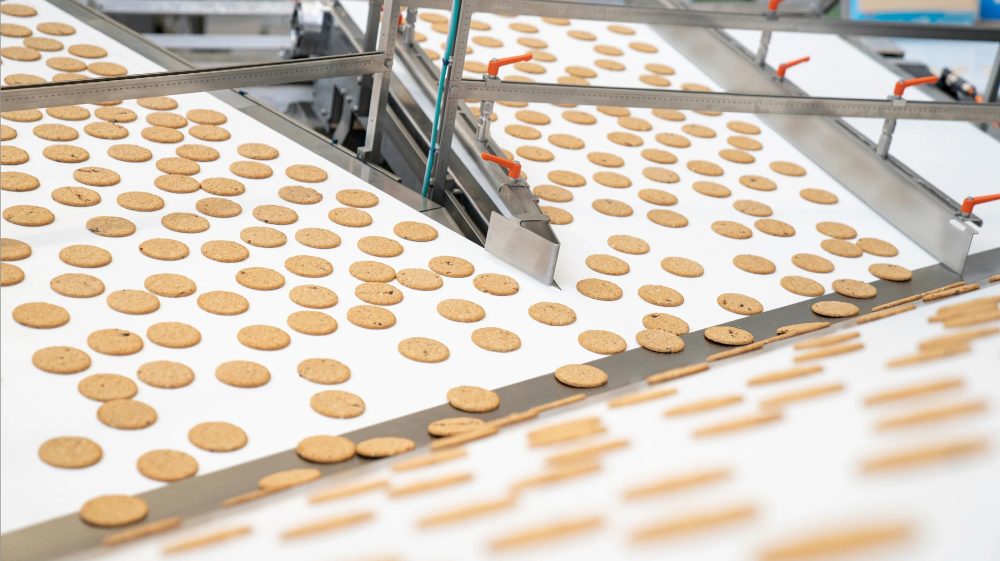
There’s plenty of growth opportunities for manufacturers, yet shifting consumer habits, cost pressures, sustainability requirements and skilled worker shortages are just some of the issues to contend with. While advanced machinery and technology is essential, finding the right partner with industry expertise is just as pivotal.
“Today’s challenges require more than individual machines – they need well- thought-out system solutions and genuine partnership,” says Daniel Bossel, product manager at Syntegon. “We see ourselves not just as technology suppliers, but as problem solvers who develop future-proof concepts together with our customers. Our global network and experience from hundreds of successful projects in the bakery industry help us in this.”
Introducing the robots of the future
Another equipment specialist highlighting the value of long-term partnerships is Gerhard Schubert, which recently extended its 25-year collaboration with healthy snack producer Nutrition & Santé, by installing a new packaging solution at its Revel plant. The company, which offers a range of free from products, needed higher output without compromising flexibility.
“We also wanted to be able to quickly switch between formats and save material in order to keep production costs low,” says Pierre-Louis Nicolau-Guillaumet, project manager at Nutrition & Santé. The answer was a combination of Schubert’s Flowpacker and a cartoner with two A3 erectors.
Robotics play a central role in this setup: Gerhard Schubert, which recently extended its 25-year collaboration with healthy snack producer Nutrition & Santé, by installing a new packaging solution at its Revel plant. The company, which offers a range of free from products, needed higher output without compromising flexibility.
“We also wanted to be able to quickly switch between formats and save material in order to keep production costs low,” says Pierre-Louis Nicolau-Guillaumet, project manager at Nutrition & Santé. The answer was a combination of Schubert’s Flowpacker and a cartoner with two A3 erectors.
Robotics play a central role in this setup: the Flowpacker wraps 13 biscuit varieties in protective film, while pick-and-place robots with 3D image recognition handle multiple formats with ease. Products that fail quality checks are removed automatically, and ultrasonic sealing allows the option to use paper films, a key sustainability advantage.
Downstream, the TLM cartoner handles seven pouch formats and box sizes with automated setup, filling, sealing and printing. Schubert also improved the packaging design to cut material use and made tooling changes simpler, with lightweight components requiring just one operator.
“The new packaging line not only delivers the performance boost we urgently needed in production, but will also save us packaging material in the future,” adds Nicolau-Guillaumet. “At the same time, the machine concept offers us sufficient flexibility to implement future formats and grouping schemes.”
These system solutions show just how far automation and robotics have come in delivering flexibility, efficiency and sustainability. The next step in that journey is being driven by advances in robotics powered by generative AI, which promise to make machines not only faster, but smarter and more adaptable than ever before.Having driven analytical AI innovations for ten years, ABB has demonstrated that this technology – enabled and enhanced by
Generative AI as well as vision and mobility systems – can create tangible benefits and increase adoption in industrial automation by overcoming challenges previously limiting the use of robots in fast-moving environments.
“We have already given our robots eyes, through 3D AI vision technology; hands, through advanced force-sensing and dexterity; and independent mobility, through 3D mapping,” says Marc Segura, president of ABB Robotics Division. “Now, with the quantum leap forward of generative AI, we are driving innovation in their brains, with problem-solving intelligence and the ability to understand our language.
“This capability – to understand our spoken instructions, and work out how to execute tasks, with no prior programming – brings new horizons of versatility to robots to do more things, in more places, and do it faster, safer and smarter. And it opens a door to automation for businesses, without needing specialist skills or infrastructure.”
Technology group Siemens has also been at the forefront of innovation, presenting generative AI as a way to address labour shortages while boosting efficiency and creativity. “Generative AI has the potential to revolutionise the way companies design, develop, manufacture and operate,” says Roland Busch, president and chief executive officer of Siemens AG.
An example of the company’s many offerings is its suite of Industrial Copilots, a range of generative AI-powered solutions that span the entire value chain from design and planning to engineering, operations and service. These assistants can be applied across multiple industries, including bakery and confectionery, where they help generate code, support engineering tasks, advise operators, optimise workloads and reduce repetitive tasks.
For its part, TNA Solutions launched the tna intelli-assist platform, which harnesses XR and simulation technologies to enable food manufacturers to virtually create and integrate new equipment and technology into production lines. The platform leverages a digital twin environment using spatial technology to deliver 95 per cent planning accuracy and reduce reworks down to zero.
Smart and sustainable
Alongside issues such as labour shortages, technology and automation is changing the way the confectionery and bakery sectors are addressing sustainability. This was elaborated on by Roger Gaemperle, industry strategy and marketing manager – consumer packaged goods and life science EMEA at Rockwell Automation.
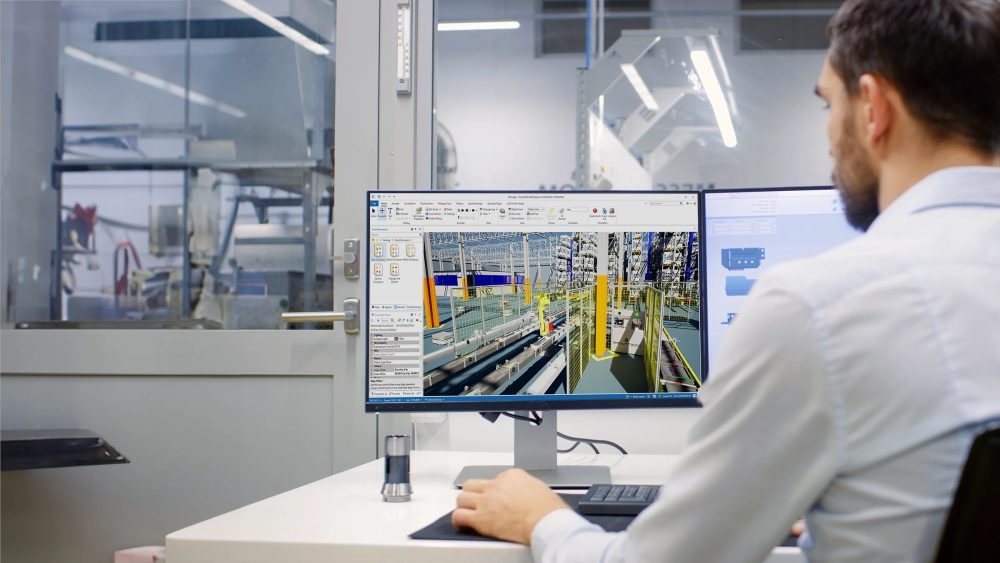
The company offers a wide range of industrial process solutions and digital tools to assist manufacturers, including those in the food sector, to meet business objectives. Regarding environmental goals, Gaemperle states, “Sustainability demands have reshaped automation and control across all industries, driving companies to enhance resource efficiency through cutting-edge technologies.”
One solution available is Emulate3D, a digital twin software by Rockwell Automation, which is used specifically to simulate, test and optimise production lines. This virtual modelling capability enables detailed insights and process improvements, allowing manufacturers to refine processes without physical trials, thereby saving energy and materials.
“A case study involving Salas O’Brien, a North American engineering and technical services firm, highlights how digital twin technology enabled a major food manufacturer to simulate existing operations and test potential process upgrades before committing capital investment,” adds Gaemperle.
“This approach informed better business decisions, identified resource needs and optimised production processes, demonstrating how embracing digital tools helps companies stay competitive and sustainable.”
For mixing and kneading in industrial bakery production, VMI, a brand of Coperion, highlights the benefits of IoT technology for smart production monitoring. Octopus Solutions, an IoT platform developed by VMI, allows users to monitor industrial performance by providing access to all connected machines and processes, enabling a comprehensive overview of operations for optimisation.
By providing instant and continuous access to data, not only can users enhance the productivity of their equipment but also improve factors such as energy efficiency. Additionally, VMI was awarded the EcoVadis Silver Label last year, earning a 94 per cent score thanks to its ethical, social and environmental practices.
The Bühler Group continues to prove its leadership in helping food manufacturers link sustainability goals with business performance. At its Networking Days 2025 event, the company presented an environmental footprint assessment across 15 value chains, alongside its corresponding Environmental Impact Services, highlighting where reductions in energy, water and emissions can be achieved.
“Sustainability is often perceived as a burden or cost factor,” says Samuel Schaer, head of services and sales at Bühler. “With this assessment and our Environmental Impact Services, we can clearly demonstrate how business objectives and sustainability are closely interlinked – with sustainability serving as a driver of long-term business success.”
For bakery and confectionery producers, the assessment showed that milk chocolate production could see up to 77 per cent lower CO2 emissions, 37 per cent less water use and 32 per cent less energy consumption. Through its Environmental Impact Services, Bühler is able to support customers in achieving these potentials.
The service identifies environmental hotspots across entire value chains and provides guidance on how to reduce emissions, water consumption, waste and
land use, while improving operational and financial performance. Bühler notes how this systems-level perspective enables the development of tailored, actionable pathways toward transformation.
This once again demonstrates why seeking the right partner is integral when it comes to identifying and meeting environmental goals. As stated by Schneider Electric’s Neil Smith, “Sustainability also remains a key focus. Many manufacturers are redesigning facilities to incorporate intelligent energy-efficient HVAC systems, water reuse technologies and digital energy management.
“Industrial electrification is gaining traction. Yet, it requires knowledge of the electrical systems and close grid capacity planning and management.” Schneider’s EcoStruxure Power platform addresses this challenge by digitising and simplifying power distribution systems.
“The IoT- enabled, open and interoperable architecture integrates connected products, edge control, apps, analytics and services for more efficient and sustainable energy management. This provides facility owners and managers with key information to make informed, data-driven decisions about energy usage. Smith adds, “As the sector continues to evolve, the integration of automation and AI offers a pathway to more resilient, efficient and sustainable operations, rewarding early adopters with greater industrial competitiveness.”
Topics