
Nigerian president outlines African cocoa market vision at key sector summit
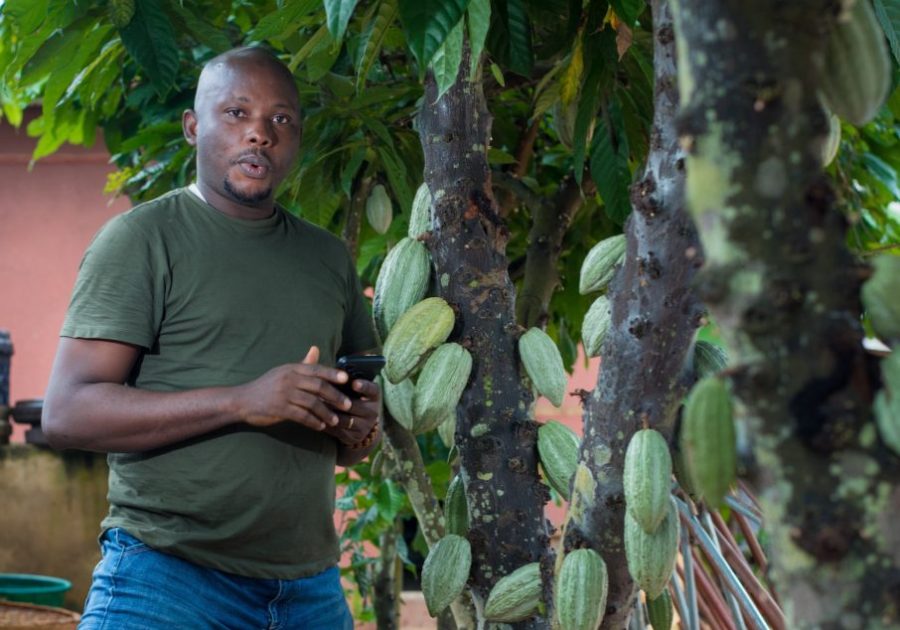
Cocoa farmers in Nigeria, and across neighbouring countries in West Africa, are set to be supported with plans to remodel the industry. Pic: Adobestock
The president of Nigeria, Bola Ahmed Tinubu has unveiled far-reaching plans for enhancing the country’s and wider region’s cocoa production to retain a greater share of its overall commercial value, writes Neill Barston.
Notably, the country’s leader made the comments at this week’s Cocoa Value Addition Summit, which saw initial proposals emerge for the nation to join forces alongside Cameroon, Ivory Coast and Ghana to combine to ensure their collective operations thrive for the future and deliver a full living income for farming communities.
According to industry research, the global finished chocolate product market is presently worth in the region of $150 billion, with African countries supplying over 70% of the cocoa for it – yet its farming communities reportedly gain no more than between 5-10% of that overall value, due to the longstanding supply chain system that has seen the majority of profits returned to largely European-based processing facilities and corporations.
As Confectionery Production reported earlier this week, a recent agreement between Ivory Coast and Ghana within the past month sought to extend formal cooperating between the two nations in driving greater values for local communities within cocoa supply chains – which they proposed to extend to other African producing countries operating in the sector.
This has led to market observers posing the question of the Cocoa Value Addition Summit seeking to create a trading group of cocoa producting countries in the style of the OPEC oil producing nations of the Middle East, in a bid to break traditional colonial era supply chain models that have seen West Africa gain but a small share of the overall market’s values.
Nigeria’s role in cocoa
As Nigeria’s Federal Ministry of Agriculture and Food Security (FMAFS) noted, the core aim of the latest summit this week was to revitalise local processing practices and drive economic growth, with its cocoa industry presently accounting for around 7% of international supplies.
As the ministry reported, President Tinubu asserted that the initiative would promote a sustainable cocoa economy, which presently stands as its leading contributor to GDP.
The leader added that increased industrialisation targeting greater domestic consumption levels aimed to drive greater farm gate prosperity (with farmers throughout the region, particularly in Ghana and Ivory Coast earning below World Bank defined poverty wages, though Nigerian pay has reportedly held up comparatively well).
As FMAFS reported, building prosperity in the region also required greater youth engagement and raising earnings on commodities markets from the export of consistently higher quality beans were central to its approach.
According to the ministry, the president stated that ‘’Nigeria is shifting from exporting raw cocoa to processing it domestically, to create jobs, attract investments and earn more foreign exchange from cocoa sub sector’’.
Significantly, he also revealed that ‘’Africa produces about 70 per cent of the world’s cocoa, the continent earns only a tiny fraction of the over $130bn global chocolate industry because most processing, branding and manufacturing take place overseas’’.
As the ministry added, he disclosed that ‘’the proof is already rising out of the ground, At Sagamu, Nigerian investors are building a 70,000-ton processing facility, the largest this nation has ever seen. Our national grinding capacity has crossed 120,000 tons a year, and it’s growing. The Bank of Industry stands ready as a co-convener of this summit, with capital prepared for deployment into bankable projects.”
In terms of statistics for the region, the agricultural ministry added that with 350,000 farmers across 1.4 million hectares of cocoa production, Nigeria had a strong part to play in the industry’s future.
The President noted that more than 350,000 Nigerian farming families cultivate cocoa across over 1.4 million hectares, making the country one of the world’s leading producers with about six to seven per cent of global output, and the sector accounted for nearing a quarter of its non-oil exports.
Linked to this, the Ministry of Agriculture and Food Security has this past week at the Cocoa Research Institute of Nigeria in Ibadan, Oyo state, delivered its One Million Improved Cocoa Seedlings Roll-Out Programme, which have been bred for greater disease resistance and higher yields.
In addition in his address, the president reportedly stated that “there has never been a moment when processing of origin made more commercial sense than it does today. Nigeria is not asking for charity. Nigeria is offering the best open position in the global food economy. We are open for business, and we are serious’’.
“Take it to our farmers, the true owners of this crop. I make a promise, and I make it in the name of the Federal Republic of Nigeria. Value addition is not a project to be done around you. It is a covenant to be kept with you. For a century, the reward of this harvest has been far from the hands that raise It.” he concluded.
The president’s outline for the sector’s growth was also welcomed by the country’s Minister of State for Industry, who described the summit as a major building block for delivering its wider sector goals.
In addition, as the ministry noted, he reaffirmed that it was now the country’s target not to simply measure volumes of export, but to mark the value created in the crops before commodities leave for export markets.
People
