
The power of cocoa co-operatives highlighted in Fairtrade report
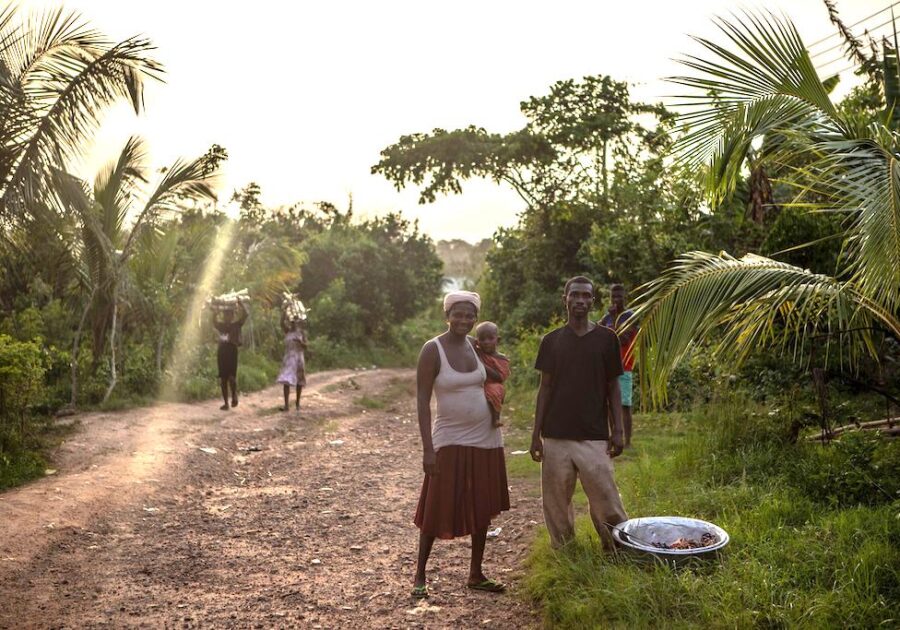
Cocoa farming in West Africa (pic Ben Rotthoff/Koa)
A call to provide greater support to strengthen co-operatives has been made in a new Fairtrade report, which highlights the value of collaborative working within West African cocoa production, writes Neill Barston.
Notably, the social justice movement, which last year played a notable role with our World Confectionery Conference, has carried out a series of fresh evaluations of the sector amid a host of major challenges that has pushed agriculture workers to crisis point.
Fairtrade’s report, Building a Better World for Cocoa Farmers: How co-operatives drive change for cocoa farmers in West Africa, uses data from the 2024–25, via independent studies, and other research projects.
As the organisation noted, considerable tests have been faced by the region, including supply and price volatility, as well as much-reported incidents of crop disease, broader impact of climate change, and other factors including illegal gold mining impacting on cocoa operations.
Moreover, as Fairtrade asserts, strong member-led co-operatives are crucial to drive sustainable, resilient livelihoods for cocoa farmers beyond the scope or duration of specific interventions, but they can only unlock their transformative potential if they’re backed by long-term partnerships with holistic interventions and sustained investments.
To achieve this, says the organisation, co-operatives require greater financial support to keep them afloat in order to deliver on the stated goals of traceability and transparency that are being demanded by the EUDR deforestation laws, as well as parallel corporate due diligence systems making their way through the European Parliament.
Furthermore, as Fairtrade stated, it has been an exceptionally turbulent year for the cocoa industry, which saw historic highs peaking at $12,000 per metric tonne in late 2024 and into 2025, driven by climate-related shocks, global supply chain disruptions, and fluctuating consumer demand.
Yet despite record prices, most West African cocoa farmers remain trapped below the poverty line, burdened by rising costs – this comes despite recent notable pay rises from the Ivory Coast and Ghana governments, which both raised farm gate prices in the past year. However, this has not kept pace with the wider rate of inflation and comparative payments that are being made in other neighbouring countries.
As the new Fairtrade study asserts, cocoa co-operatives not only boost farmer incomes and lift more families out of poverty but also play a vital role in advancing the UN’s Sustainable Development Goals.
For instance, Fairtrade co-operatives have helped thousands of farmers move closer to earning a living income, while investing millions in education, healthcare, and infrastructure projects that benefit entire communities. In Côte d’Ivoire, the proportion of Fairtrade cocoa farmers projected to earn above a living income has more than tripled in two years, from 7% to 24%, with another 50% earning close to a living income.
In addition, the social justice movement observed, that when invested in, cooperatives can go much further to drive impact for their farmer members. The report highlights examples of cooperatives starting to move up the cocoa value chain including Ecookim exporting and negotiating directly with Mars and Ferrero or nine unions in Ghana joining forces to create their own License Buying Company. It also shares examples of cooperatives providing aggregation services and market access to their members for their income generating activities.
Beyond the services they offer, cooperatives are trusted partners who are at the heart of cocoa communities.
Another recent Fairtrade study evaluating a pruning initiative funded by Ben & Jerry’s and implemented in partnership with Barry Callebaut found that one of the key motivating factors that encourage people to invest in pruning beyond subsidised services was the trust built through long ties with co-operatives: “Farmers with longer associations with the co-operative tend to exhibit greater trust in the recommendations provided to them. They are more willing to not only enhance their farming practices but also strengthen the overall effectiveness of the co-operative initiatives.”
Furthermore, the Ecookim union, representing over 42,000 producers, has built schools, water towers, and solar canteens, and distributed more than 2.5 million seedlings to combat deforestation and improve soil fertility.
Aminata Bamba, Sustainability Manager, ECOOKIM, Ivory Coast, commented: “A well-organised and structured cooperative with good governance is more credible and has more commercial clout than an individual producer. By joining forces, our members improve their bargaining power, obtain better prices and premiums, and invest in their communities. Alone, we are vulnerable, but with others, we resist better.”
As Fairtrade noted, co-operatives don’t merely act as economic unites, but they are also agents of change and ecological trailblazers, helping smallholder farmers become frontline defenders of forests and champion regenerative agriculture
Rachel Wadham, Head of Evidence and Insights at the Fairtrade Foundation said: “The International Year of Cooperatives (2025) marks a pivotal moment for sector transformation. When cocoa farmers unite through co-operatives, they don’t just weather the storms, they build the future together, turning shared challenges into shared strength. Investing in co-operatives as partners in responsible sourcing is essential to rebalance global trade and protect the future supply of our food.”
People
