
Confectionery companies and NGO’s urge no to ‘stopping EUDR clocks’, as EU Council backs delays
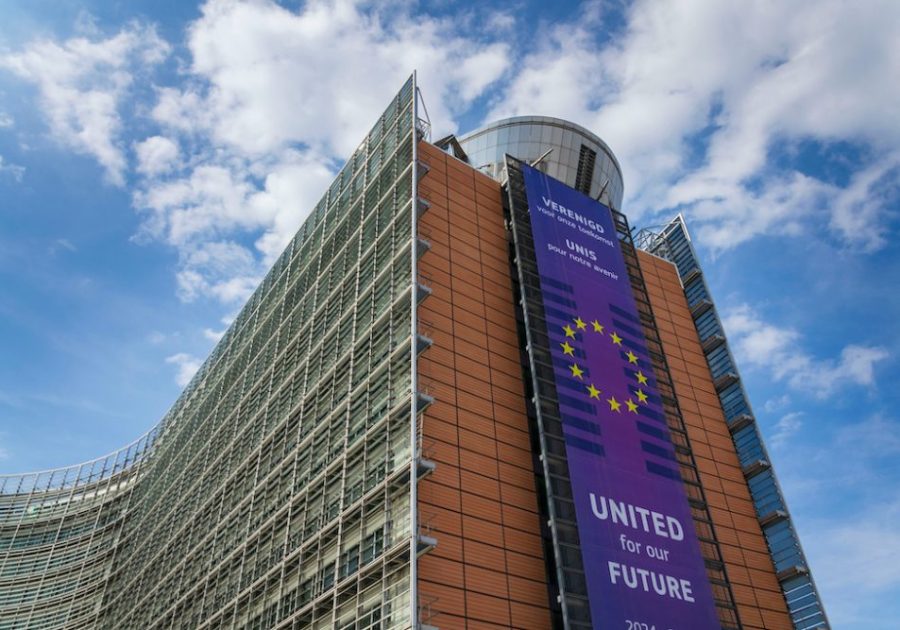
The EU Commission's HQ in Brussels has been hosting significant discussions over the EUDR policy - which is now in a state of chaos. Pic: Adobestock
A broad industry coalition of confectionery companies and sector bodes including Ferrero, Nestlé, Mars, Barry Callebaut, Olam, Cémoi, Tony’s Chocolonely and Rainforest Alliance, have called to reject ‘stopping the clocks’ on EUDR for an additional year, reports Neill Barston.
The landmark frameworks compelling companies to prove zero deforestation in their supply chains have already been delayed by a year, and had been due to start at the beginning of 2025, and have now been pushed back until the end of next month after intense right-wing European political lobbying.
Those calls to stall the legislation have gathered further momentum with a major vote in the European Council today, with the EU’s decision making body asserting its own position that an extra delay of another year is now required across industries.
This is sharply at odds with the group of more than 30 key industry businesses an NGOs demanding that the legislation goes ahead as originally agreed. Signatories to the coalition include The Voice Network, Solidaridad and organisations representing the robber and coffee sectors, stated its opposition to any further delay beyond the year already agreed.
In a joint statement they claimed that a one-year delay offers no greater certainty of successful implementation of EUDR. In the coalition’s view, the relevant actors – including companies, smallholder farmers, national competent authorities and producing countries – need to begin implementing the due diligence obligations immediately, generating the practical experience that will be essential for sectors and markets to be able to adjust to the EUDR’s effects and impacts.
The framework has already been notably amended in that it now principally applies to companies employing over 500 people following further wrangling from centre right parliamentary groups, meaning smaller firms will be largely unaffected by the major incoming policy.
Furthermore, despite the EU Commission eventually asserting its position that the legislation should start in December 2025 (which in itself was a u-turn on a minister’s suggestion that an extra year’s delay was needed due to a lack of readiness of its IT systems), the EU Council, has put forward its stated position of rejecting that proposal and instead voting to delay further.
According to those voting for the move, they argued that it would benefit smaller companies, which are not entirely exempt from compliance requirements, but are expected to adhere to basic requirements, which would not now become legally binding until the middle of 2027 – which environmental campaigners have warned will have significant negative consequences in tackling issues surrounding climate criss that have already impacted majorly upon many agricultural chains, including within cocoa.
Sources close to the EUDR process has said that prospects for the legislation are now facing chaotic scenes, with the EU Council at odds with the EU Commission’s proposals that had attempted to strike a balance between firing the starting gun on the legislation, and enabling a grace period in relation to the IT infrastructure.
Isabel Fernandez, senior advisor for Mighty Earth believed the EU Council vote today was a significantly negative development.
She said: “EU member states have just agreed to massively betray the Amazon rainforest and other key forests crucial for tackling climate change by agreeing to postpone the landmark EUDR by another year.
“While EU climate negotiators mouth platitudes at COP30 in the Amazon in Brazil, member states in Brussels are condemning another 70,000 hectares of forests like the Amazon to be razed to the ground via this outrageous proposal to further postpone the EUDR.”
“A second postponement is simply a way for laggards in deforestation-risk industries, such as meat, soy, palm oil and cocoa, to buy more time to keep attacking and trying to kill off the EU’s flagship zero-deforestation law.”
What does this mean for the legislation?
As Confectionery Production has reported over the past 18 months on the topic, the issue of the European deforestation regulation was always destined to be contentious. Its well-meaning aims have sought to address major, urgent environmental matters relating to climate change – which industry had agreed required solving sooner rather than later.
However, the introduction of US tariffs earlier this year, has seen many EU states become extremely caution in terms of international relations, with many members fearing that the region now stands to be non-competitive with the US if tighter regulations are brought in within just a few weeks.
With the EU Commission now at loggerheads with the EU Council, and uncertainty as to how the vote will go in the third European decision-making body, the EU Parliament, the prospects for EUDR and its associated corporate due diligence laws that enshrine greater human rights and social responsibilities at company level, are hanging entirely in the balance.
It’s clear there are some right wing forces are clear that any level of additional environmental policy that comes with a price tag is entirely unwelcome, which has created a mood of significant unease across EU circles as to whether this watershed moment for the EU’s signature polices will ever properly come to fruition if it is delayed yet again, leaving time to further chip away at its agreed form and opportunities for additional lobbying against its scope.
