
Mondelez unveils latest Human Rights, Due Diligence and Modern Slavery Report amid ongoing child labour challenges
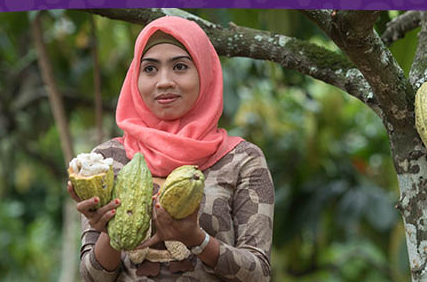
Mondelez International has released its latest Human Rights, Due Diligence and Modern Slavery report, which has outlined its progress made in introducing remediation programmes – against a backdrop of persisting problems of child labour within the sector, writes Neill Barston.
While the business has placed renewed focus on the issue, confirming that 96% of its sites have been fully third-party audited and a $1 billion investment being placed into its Cocoa Life sustainability venture running between 2012-2030, the most recent official studies have found that 1.5 million minors aged 5-17 are still being employed on farms (many of them smallholder operations), and are at risk of exposure to the worst forms of child labour.
With estimations of between two and three million cocoa farms believed to be in operation across Ghana and Ivory Coast in the core producing markets of West Africa, Mondelez is presently working with around 208,000 farmers.
This includes a reported total of around 3,200 communities in 2024, as well as supporting some 379,000 community members identify additional income generating opportunities beyond cocoa, and engaging with 411,000 people in the West Africa participate in village savings and loans schemes to further support economic growth within the region at grass-roots level.
Notably, as previously reported, the sector is facing unprecedented strain, with crops in West Africa being hit by unseasonal weather, diseases including swollen shoot virus, and the systemic issue of an ageing agricultural workforce, with younger generations opting to seek urban employment outside of farming. There has been a significant issue of sustained high prices within the industry, peaking at around $12,000 a tonne on Futures markets in New York. However, farmgate prices remain stubbornly comparatively low, which has further negatively impacted the situation despite governments in the region moving to offer modest price rises in the past year.
As Confectionery Production has previously reported, underlying poverty remains the stand-out contributing factor in managing the industry, with many farmers continuing to earn below poverty wages of under $2 a day in both Ghana and Ivory Coast. This has resulted in many small family-run cocoa operations being forced to use their own children due to being unable to afford to employ adult labourers for advanced manual tasks.
However, Mondelez has asserted progress on its programmes, and as of f year-end 2024, approximately 89% of Cocoa Life communities in West Africa – representing approximately 2,480 communities – are covered by Child Labor Monitoring & Remediation System (CLMRS).
Furthermore, the company has said that it aims to cover all West African Cocoa Life communities with a CLMRS by the end of 2025 and has conducted more than 240,000 interviews to help prevent child labour.
Wider systemic issues
As Mondelez acknowledged recently at the Chocoa cocoa event in Amsterdam, significant structural challenges to the industry remain in terms of tackling issues surrounding human rights and child labour, but the business has asserted that it remains dedicated to raising its standards and is continuing investment in this area.
Its work on these issues is underpinned by the United Nations Guiding Principles on Business and Human Rights (UNGPs) which it confirmed it has used as a guide to prevent and mitigate associated risks, supporting safe and healthy working environments.
Chris McGrath, Chief Impact & Sustainability Officer, Mondelēz International commented: “Doing what’s right is ingrained in our Snacking Made Right mission. We strive to embed human rights due diligence into how we do business every day,
“The scale of challenges needs increased focus and meaningful partnerships – and we continue to evolve and make progress on both fronts. We have strong execution plans that we believe will continue to support our growth around the world, underpinned by our focus on promoting a culture where everyone is treated with care and integrity.”
Notably, the company confirmed that has placed an enhanced focus on strengthen its human rights due diligence (HRDD) across both its own operations and supplier network. This has seen 96% of owned manufacturing sites and 98% of prioritised suppliers have completed third-party SMETA audits in the past three years, which has been expanded to cover logistics sites as well as finished product processing facilities.
In addition, the business has also launched a dedicated human rights policy in 2021, training 50,000 colleagues on human rights issues, including 7,000 in manufacturing and logistics, and 3,000 in key stewardship roles.
Detailing the work on cocoa communities as part of its latest report, the company confirmed that as well as scaling its CLMRS to cover 89% of Cocoa Life communities, it also took on 240,000 interviews were to help prevent child labour.
This has involved scaling its actions across Cameroon, Côte d’Ivoire, Ghana, and Nigeria, we have continued to support community-centered activities that may include community action including training on identification surveys, raising awareness, and building local support, where appropriate.
It has also set up its Community Child Protection Committees (Ghana and Côte d’Ivoire), as well as household monitoring to help identify child labor and to help with remediation.
In a long-term partnership with the ICI, the company further confirmed that it is looking for opportunities to further enhance CLMRS implementation and help develop standards for household monitoring and identification, in line with emerging sector practices.
A recent assessment by ICI highlighted strengths of the Cocoa Life CLMRS, such as the child rights centered approach and the development of Child Protection Committees anchored in farming communities (in Côte d’Ivoire and Ghana). Building on the sector’s learnings, the assessment also helped identify ways that could further harmonize and enhance
implementation.
Cédric van Cutsem Senior Director, Cocoa Life, Mondelēz International, who represented Mondelez at Chocoa, believed that forging further industry collaboration represented the best strategy for addressing major tests.
Speaking in the report, he said: “I see a unique moment for cocoa: to develop public-private partnerships with improved coordination, reduced duplication, and breakthrough collaboration. It is only through an inclusive approach that long-term aspirations for change can be attained.”
Collaboration across industries
As the business has noted, it has addressed systemic human rights issues in ingredient supply chains through continued collaboration between governments, industry, and civil society, and in terms of child labour, it invested $3million from 2022 to 2026 in the Child Learning and Education Facility (CLEF), which aims to reach over 4 million children by transforming rural education in Ivory Coast.
Furthermore, the company added that building on the CLEF initiative, it is supporting the development of a new public-private partnership, the System Change Architecture for Learning and excellence, known as SCALE to help improve the quality of education in Ghana with an investment of $1million over the next four years.
This venture, based around three philanthropic partners and 10 cocoa and chocolate companies have joined forces to fund the Ghana Accountability for Learning Outcomes Project (Galop), a five-year governmental initiative seeking to improve the quality of education in low-performing basic education (ages 4-15) schools and strengthen the education sector across Ghana. It focuses on strengthening teaching capacity, accountability and leadership systems, access to high-quality school resources, and better operational management.
Furthermore, its additional work on human rights has included Co-chairing the Consumer Goods Forum (CGF) Human Rights Coalition, to help shape industry leading practices, supporting the World Cocoa Foundation’s vision to back a thriving and equitable cocoa sector, and serving as a member of the International Cocoa Initiative (ICI) Board of Directors to support sector-wide progress in addressing child labor in West African cocoa.
There have been other wider engagement programmes it has been involved in including Coalition for Responsible Sugarcane India (CRSI) to help strengthen human rights practices in India’s sugarcane sector, as well as co-chairing European confectionery body Caobisco’s partnership with the International Labor Organisation tackling harvesting of hazelnuts in Turkey, which has encountered notable issues with child labour that are now being fully addressed.
