
Sustainability goals set out by ofi, as it releases latest Cocoa Compass report

Pic: Tyson Sadlo
A significant sustainability move has been confirmed by ofi (Olam food ingredients), as it confirms seven landscape partnerships and setting a target of delivering over a million hectares of land utilising regenerative agriculture within the next five years, writes Neill Barston.
According to the company, its latest strategy builds upon its existing frameworks for action regarding supporting farming communities within its supply chains, including for the confectionery sector, alongside its 2023 Cocoa Compass impact report detailing progress against core goals providing positive frameworks for action across its sourcing activities.
The latter study has shown that it is on track for its target this year of 60,000 farmers attaining a living income, and it aims to reach 150,000 within five years.
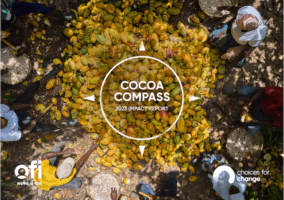
Furthermore, as the business noted, its fresh targets relate to its Choices for Change strategy and will be boosted by the cocoa business’ tree carbon stock target of 15 million trees by 2030, converting as many farms as possible to agroforestry.
Among its core areas of progress since 2018, the company has seen 8.9 million trees distributed for agroforestry programs by ofi’s cocoa business, working with customers and partners, delivered 57,000 hectares of land rehabilitated globally, and achieved 970,000 farmers trained in Good Agricultural Practices.
Notably, the company cited a key example in the form of what it considered a pioneering project with major global confectionery group, Mars and the German Development Cooperation (GIZ) in Indonesia, where ofi is implementing 20 hectares of agroforestry plots to test Sloping Agriculture Land Technology (SALT), an innovative technique that involves planting cocoa trees in combination with fruit trees, timber and food crops so the root systems bind the soil on the hillsides and help prevent erosion.
Impact report
Andrew Brooks, ofi’s, Head of Cocoa Sustainability, welcomed the latest initiatives, though acknowledged that there was still some distance left to travel for the industry in bringing about major change.
He commented: “Greater action and urgency will be needed to address climate change and protect nature and farmer livelihoods in the years to come. Since the launch of Cocoa Compass in 2019, we have now published four years of data and insights from our cocoa sustainability programs, partnerships, and tools, which we are using to raise our regenerative agriculture ambition and focus attention where we can make the greatest difference, including regenerative farming.
“Change at scale requires industry, national governments, communities and civil society to work together. So, learning from the success of partnerships like Restore and Lascarcoco, we plan to go faster and further by co-developing several new and ambitious multi-stakeholder landscape partnerships that create impact beyond individual programs and help to drive collective action.”
Speaking in the company’s latest Cocoa impact report, he noted that the past year had been ‘perhaps the most economically challenging year ever for the sector’, with crop diseases in Ghana and Ivory Coast having a notable negative impact.
He also noted that with cocoa bean output at its lowest level for a decade, another core issue had been on the subject of pricing, with the market expecting further tests on this front – which have played out as cocoa prices rise to a fresh high for the year as 2024 draws to a close
Andrew continued that the introduction of the new EUDR environmental legislation at the end of 2025 is set to have a major impact, and underlines its need to roll-out new community initiatives.
He added: “We’ve supported cocoa farmers with tailored farm development plans and good agricultural practices to strengthen their resilience and to grow their economic opportunities outside of cocoa to help them achieve a living income. In 2023, we supported 44,000 farmers in our cocoa supply chain to earn a living income.
“Our new data analysis also looks at living income trends over three years to understand what contributes to farmer household incomes and the external influencing factors.”
People
