
Barry Callebaut continues progress improving global environmental emissions
Barry Callebaut has underlined a renewed commitment to reducing its environmental footprint, highlighting key ongoing projects including a partnership in California, US, with Project Apis m’s Seeds For Bees scheme, planting hundreds of new crops, writes Neill Barston.
As the global chocolate and cocoa business noted, its drive for improved eco-performance follows industry recognition from the Carbon Disclosure Project (CDP), which noted its gains in cutting greenhouse gas emissions, which saw the Swiss-headquartered firm gain a fifth A rating from the organisation.
“We have an opportunity to create truly sustainable supply chains through partnerships with organisations dedicated to regenerative agriculture,” explained Kevin Ogorzalek, Senior Manager, Sustainability Sourcing Americas.
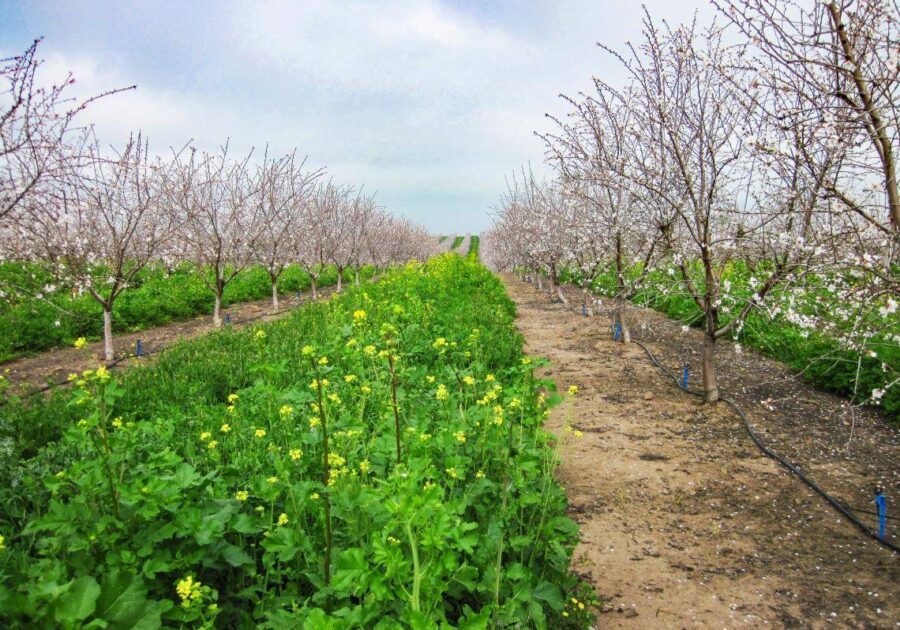
On its major project in California with Apis M, which aims to support bee health (main image), the business confirmed that it has targeted making significant environmental gains to positive enhance landscapes in the US.
“With Seeds for Bees, we’re able to contribute to healthy soil and attract pollinators by planting cover crops between almond trees,” Ogorzalek explained. Cover crops are native foliage that are planted in between rows of crops to improve soil health by providing nutrients, reducing erosion, improving water stewardship, and controlling weeds. Cover crops allow farms to persist through unpredictable weather patterns while positively contributing to the health of local pollinating insects. Barry Callebaut’s partnership with Seeds for Bees is projected to plant over 780 cover crops, impacting 1593 acres of almond crops and 3186 honey bee colonies in Fiscal Year 22/23.”
Furthermore, the company also revealed that it has launched an innovative program with a Michigan-based company, Regenerative Connections. By supporting this farmer owned advisory company, the business noted that it is catalysing peer-to-peer led regenerative agriculture in our supply chain by supporting farmers to plant cover crops, and replant native vegetation to support biodiversity. The dairy collaboration has reportedly led to the conversion of 100% sustainable ingredients for Barry Callebaut’s US-brand Van Leer.
In addition, within Brazil and Mexico, Barry Callebaut has trained its sights on the sugarcane sector by partnering with local farmers to reduce greenhouse gas (GHG) emissions by 12-25% per year and increase sugarcane yields.
Ogorzalek added: “One of the biggest opportunities to improve our environment is to reduce chemical fertilisers and pesticides. By using biological amendments and compost, we significantly reduce the use of chemicals and are seeing not only increased sugarcane yields and decreased GHG emissions, but improvement to water quality too. These practices can be scaled for a huge impact.” Additionally, Barry Callebaut has begun reforesting around our Mexico-supplying sugarcane mill and plans to expand the reforestation program to two other mills in the region.
The environmental challenges chocolate manufacturing companies like Barry Callebaut experience are faced first-hand by the cocoa farmers. Raony Penteado, Commercial Sustainability Manager at Barry Callebaut added: “It takes a lot of manual labour that farmers can’t always afford if they want a high yield, and the crop can be taxing on forests around them. That’s why it’s important for us to support farmers in ensuring they can produce as much as they can while also preventing deforestation.”
Cocoa production
As the business noted, it takes 400 cocoa beans to produce one chocolate bar, and one cocoa tree can grow up to 2500 cocoa beans per harvest. The average American alone consumes about 12 pounds of chocolate per year.
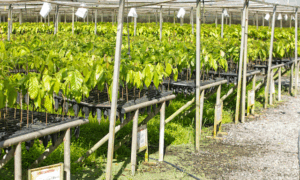
“To keep up with this kind of demand, farmers have to harvest hundreds of cocoa trees per year,” said Penteado. Native to Brazil’s Amazon, cocoa seedlings are being widely adopted in landscape restoration projects through agroforestry and consortiums. Barry Callebaut is helping to prevent deforestation and restore degraded landscapes as well as increase the productivity on existing cocoa farms by subsidising cocoa seedlings from our Cocoa Horizons-certified nursery in Itabuna, Brazil (formerly housed in Ilheus, Brazil). These seedlings are bred to be resistant to a variety of pests and diseases that affect cocoa production. The nursery already has the capacity to produce 2 million per year and we have the ambition to increase the output volume to 6 million seedlings per year in the near future to be distributed to cocoa farmers in Brazil.
Environmental challenges are not the only ones farmers face. Receiving timely cash payments for their harvests have also set farmers back from investing in sustainable agricultural practices, an issue Barry Callebaut is committed to solving. In 2020, Barry Callebaut’s digital payment program kicked off with large-scale farmers in Ecuador and has allowed many experienced farmers to be paid on delivery.
“Supporting our farmers is equally as important as supporting the environment. It’s imperative that our farmers have the tools necessary for prospering crops, and we have the ability to assist them in receiving those tools,” noted Raony Penteado, Commercial Sustainability Manager, as the business continues a broad range of measures to support farming operations in the region, and across the world.
Organisations
