
Exclusive: Flexible packaging standards continuing to evolve

pic: Nestle
Standards within flexible packaging have risen considerably in recent years, in terms of technical capabilities, and compliance for fast-approaching regulations. Neill Barston reports on some of the latest trends making an impact within the global sector
As consumer demand for ever-more imaginative products continues apace, this is increasingly reflected in requirements for environmentally-friendly, flexible packaging across confectionery markets.
With the global market awash with solutions across all segments, developing foil, film and paper options for manufacturers has become a significantly big business.
Underlining this, studies from Grand View Research have put the segment at nearly $300 billion on an international level, as major brands and independent businesses alike clamour to find creative, sustainable options for packaging their core product ranges around the world.
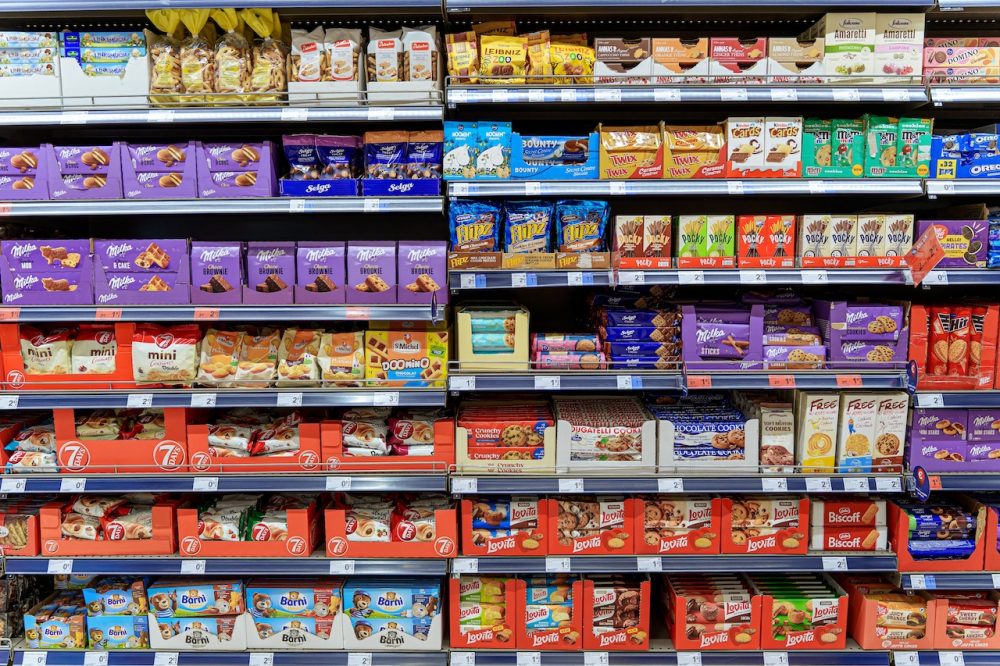
Clearly, this upturn in demand is not just driven by aesthetic considerations to aid companies in standing out amid crowded shelves, there is also now the added factor of legislative pressure.
While the UK may no longer be in the EU, it remains a pressing fact that newly introduced European Packaging and Packaging Waste Regulation (PPWR), which comes into force this August, will most definitely apply to any companies wishing to export across the continent.
This will require additional compliance measures for businesses right across the region – making factors such as the UK’s decision to enact Brexit related legislation even more challenging.
This was reaffirmed in recent British government studies that found export trade from the United Kingdom is down in Europe by 20 per cent, but even in spite of this, there will be no exemptions made for complying with goods entering Europe.
So, wherever companies are based, there are now significant, urgent tests in meeting with both compliance demands, and the desire to make products even more inspiring.
As far as brands are concerned, companies such as Nestlé have made moves in recent years to offer not only differing shapes to classic ranges such as Smarties, but also made the move to deliver recyclability into ranges in advance of regulatory changes.
Moreover, another business attempting to push boundaries with its packaging options is Fuji Seal, which showcased its latest offerings at the recent Paris Packaging week at the Expo Porte de Versailles.
Across the two-day event, the company unveiled its extended selection of shrink sleeve labels, pressure-sensitive labels and spouted pouches.
As the company asserted, its portfolio has revealed how packaging can protect products, carry essential information and help brands express their identity, create a distinctive appearance and stand out on the shelf across a wide range of consumer markets.
Moreover, as the business explained, its series includes new shrink sleeve labels offering 360-degree decoration to support brand storytelling and promotional designs on a wide range of bottles and complex shapes. This in including high- embellishment options such as foils, tactile effects and personalised sleeves for seasonal launches or special campaigns.
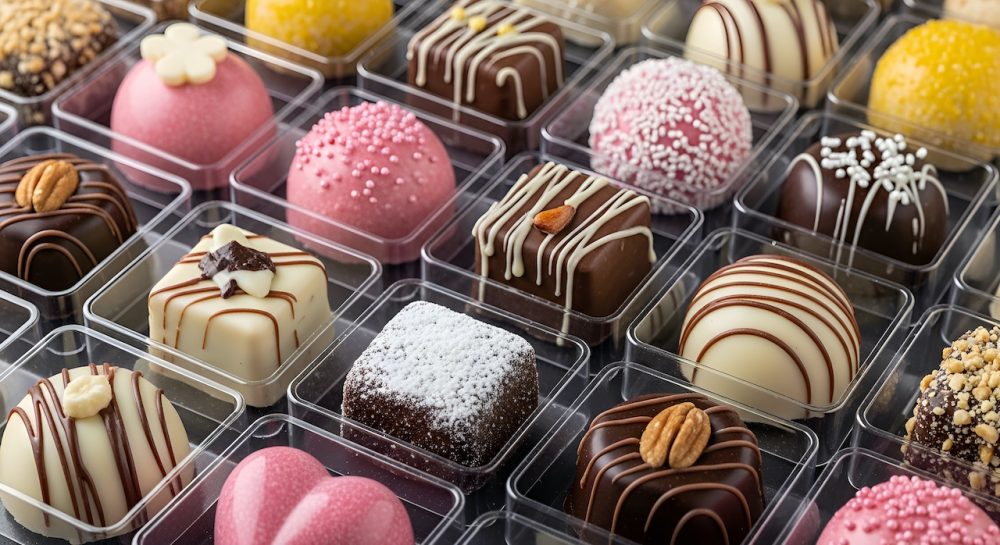
The company’s pressure-sensitive labels offer diverse decorative and tactile finishes, giving bottles, jars and rigid packs an immediate high-quality look and feel on supermarket shelves.
As the firm added, sustainability remains a key consideration in its development work, aiming to help create solutions that help support more circular economy models.
Extended investment
Another enterprise active in the sector, is ePac Flexible Packaging, which over the past year has continued to register continued growth across Europe, with a number of core investments.
These have been focused on expanding production capabilities, improving operational efficiency, and supporting rising customer demand for sustainable, digitally printed options for its customers.
As the company revealed, it has been in the process of upgrading its sites in Lyon, Innsbruck, Silverstone, and Poland. For its French location, it has expanded its manufacturing footprint and added a new external onsite warehouse to improve material flow and operational efficiency. New technology installations include an HP Indigo 200K digital press and a Totani pouch converting line, alongside increased staffing to support continued growth.
At its Innsbruck facility, ePac is executing a major scale-up designed to accelerate both digital print output and pouch production. Planned investments include the installation of an HP Indigo 200K digital press, followed by the addition of multiple Totani pouch converting lines. The site is also expanding its specialised team to support enhanced production capabilities and technical expertise.
In the UK, ePac’s Silverstone operation is
responding to growing demand for pouches and rollstock by expanding its converting output with the addition of a new Totani pouch line.
Meanwhile, ePac Poland is expanding its lamination and converting capabilities to support customers across Central and Eastern Europe. The site is installing a Karlville Laminator, enabling both thermal and solventless lamination.
As the company added, this investment broadens the facility’s product offering and enhances its ability to deliver high- performance packaging solutions supported by advanced lamination technologies.
Together, these combined moves strengthen ePac’s European manufacturing network, enabling faster lead times, greater flexibility, and improved responsiveness to customer needs. They also reinforce the sustainability advantages of digital printing, including reduced material waste and the elimination of minimum order requirements.
“Our focus is on delivering the best possible experience for our customers,” enthused John Peat, group vice president of operations. By expanding our operations and deploying the latest digital technologies, we’re ensuring our sites across Europe continue to operate with speed, efficiency, and reliability.”
Packaging materials market
In addition to the market for flexible packaging materials has seen some fluctuation, as it has right across the entire food and drink sector throughout the past couple of years.
In the last quarter, based on the FPE raw-material index (Q4 2020 = 100),
quarterly minimum prices decreased quarter-on-quarter for most substrates.
Moreover, the polyethylene markets remained under pressure as well, with mid-price levels for HDPE down by six per cent and LDPE down by five per cent compared with Q3 2025. Aluminium foil (7 micron) was the main exception, edging up by one per cent quarter-on-quarter. Year-on- year, price levels were generally lower than Q4 2024 while aluminium foil was only marginally lower.
The polyethylene markets were also weak in the fourth quarter, with European gas and electricity prices in 2026 are generally expected to trend downwards from recent highs, supported by growing renewable generation and policy measures.
Crucially, European flexible packaging demand in Q4 2025 showed signs of stabilisation, supported by cautious consumer spending and value-seeking (including trading down to discounters and private labels) as well as sustained demand for fresh, healthy and convenient products.
Guido Aufdemkamp, executive director of Flexible Packaging Europe (FPE) trade organisation, expressed hope for a stable year.
He remarked: “The end of 2025 was characterised by broad-based price adjustments across flexible packaging substrates and materials.
“The combination of a flat consumption in the end-markets and geopolitical uncertainties only allows a rather stable than optimistic outlook for the flexible packaging sector in 2026. One focus of the suppliers of flexible packaging materials is the further adaptation to the new European packaging legislation where more relevant details are expected to come out during the year.”
