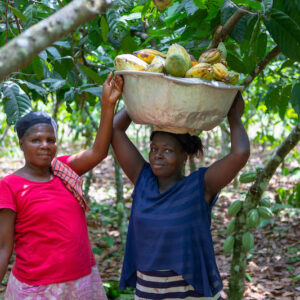
After years of successive delays, will EUDR deliver its hoped-for impact?

pic: shutterstock
There is undoubtedly a sense that for many people within our industry and right across sectors, the phrase EUDR has become synonymous with slow, politically motivated delays that have seen this landmark legislation become mired in controversy.
So, when the EU Commission finally presented its last declaration relating to the mammoth project, many observers have unfortunately felt that the venture has been so watered down, that it really is a shadow of its former self in terms of forcing the whole of industry, together, working with governments and civil organisations to actual deliver major impact on the ground.
Moreover, so what exactly is in this final piece of sign-off legislation put forward on Monday you may well ask? Well, the long and short of it is that they’ve added palm oil linked products to the list of included ingredients that are within its scope, which includes cocoa, soy, rubber and other commodities,
However, controversially, they have taken leather out of the equation – much to the concern from campaign groups including Mighty Earth that has cited the fact that the EU’s own findings have revealed that this market segment accounts for around 17% of deforestation alone. So removing it from a higher standard of operating makes little or no sense from either a policy or legislative position.
So it seems the power of political lobbying to influence key legislative frameworks is very much alive and well – though this is not a welcome factor at all. It is one thing to appreciate the fact that Europe is blessed with a series democratic nations, yet when such major laws are on the table, it is reasonable to expect that the EU Commission should not be leant on or EU Parliament engage in moves to destabilise these key pieces of legislation – especially ones that impact massively on the state of the planet and its fragile resources.
Yet that’s exactly what has come to pass with the EUDR – an ambitious and well-meaning, and expansive project to try and compel industry and individuals to ‘do the right thing;’ in ensuring their supply chains are as transparent as possible, that was agreed some three years ago, has morphed into something that resembles its original goals in a sanitised form that has backed away from significant involvement from SME companies across Europe. All they really have to do to comply now is vaguely tick a box on an enquiry form once in a while, with the major onus on larger companies to prove due diligence within their chains.
That’s a good thing that big business across market segments is being asked to step up and really engage with such legislation – but the whole point of it originally was that the entire sector was supposed to buy into this vision, with sustainability being a strong driver, in which companies were actively walking the talk.
There is also the major issue of the parallel corporate due diligence frameworks also making their way slowly through the EU parliament also encountering resistance from some quarters, meaning that the human rights and social safeguards that are part of those frameworks may also come under threat from those who may not agree with their objectives.
In addition, as some observers have noted, the eventual, ‘simplified’ EUDR regulations that are now left with now seem what looks like (to some market observers at least), as “selective protectionism” for some commercial products and sectors, while other market segments appear to be very much front and centre of the legislation.
There are still so many question marks as to how it will all work in reality both for manufacturers and farming communities alike, that it is little wonder that there are a number of admittedly very savvy companies that have made a significant sum from offering compliance services for those businesses that are due to be affected by this legislation as it finally come into force at the end of 2026, after two successive year-long delays. It’s going to be an interesting period to see how companies adapt to the new landscape.
Neill Barston, editor, Confectionery Production magazine
- keep in touch at [email protected] or via social media @confectionprod and our Linkedin pages
Topics