
pladis delivers annual revenue increase, yet profits dip amid wider trading tests
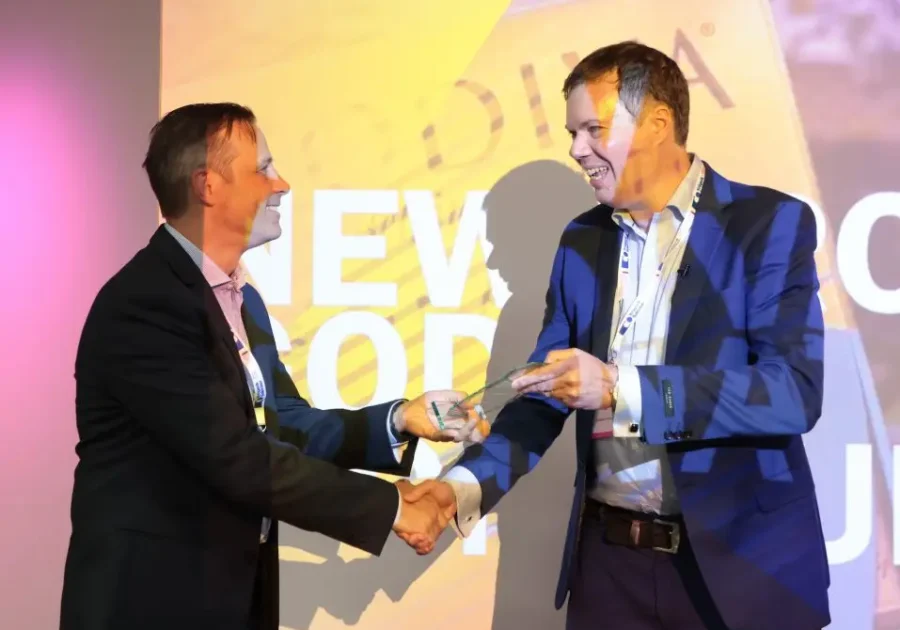
Godiva gains our Finished Product of the Year award at our recent World Confectionery Conference in London. Pic: Hugo Philpott
Global snacking group pladis has revealed its latest performance results, delivering a1.2% revenue increase to £3.2billion, while operating profit of £304 million, was down against £344mn the prior year, writes Neill Barston.
Consequently, the company behind major brands McVitie’s, Godiva and Ülker, acknowledged in its key review covering the year ending December 31 2025, that wider trading conditions have remained challenging.
The company’s revenues for 2025 stood against a figure of £3.232bn in 2024, with the business confirming that branded sales represented 90 per cent of its sales figures. Tests in the market during the past year were also reflected by its EBIDTA earnings, standing at £474 million, compared against £494 achieved in the 2024 financial year.

The Pladis team has been a strong feature at the Sweets & Snacks Expo in the US, and has continued to deliver a broad range of new products. Pic: Neill Barston
On a key positive, one of its most significant milestones for the year came with marking the centenary of Chocolate Digestives, which it noted had remained among category leaders in the segment.
There were further encouraging signs for the business, as the company marked the centenary of its Godiva brand, with its special edition signature milk chocolate baton series, recently emerging triumphant in our finished product of the year category at our World Confectionery Conference (see our exclusive event review video below).
However, as the company observed, significant tests remain in the global market that influenced its resuts. The 2025 results reflect a demanding year for the wider food industry, shaped by commodity inflation, currency volatility and macroeconomic headwinds.
“Against that backdrop, pladis delivered, and operating profit of £301.6m, compared with £344.4m, while maintaining a disciplined focus on execution, productivity and supply-chain efficiency. Working capital requirements increased during the year, contributing to lower cash generation, while net debt stood at £1.028bn at year end,” noted the company of its fortunes over the past twelve months.
The company confirmed that it had invested £100.5m in capital expenditure during 2025 to strengthen capacity, productivity, efficiency and resilience across its operations. In the Americas, the firm also took action to simplify its manufacturing footprint during the year, supporting a more efficient and resilient platform for future growth.
In addition, it also highlighted further investment including a £68m programme across UK bakeries producing brands such as McVitie’s, Jacob’s and Carr’s; investment in its Cairo facility, which had reached £8.6m by the end of 2025; and a €5.4m investment in a new Mini BN line at Vertou in France.
Innovation remained central to pladis’ Compete to Win strategy. In Türkiye, recent product innovation continued to support Ülker’s leadership in snacking, with products launched over the past three years accounting for 12% of Ülker’s annual snacking revenue in 2025. The Annual Report also highlights pladis’ first global Accelerator Programme, which selected 12 start-ups from more than 300 applications across five continents.
Further priorities for the business included evolving the next phase of McVitie’s expansion in China, as the business looks to build scale in attractive growth markets.
In addition, it has also pushed its sustainability strategy unveiled in April 2026, bringing together five focus areas: colleagues and communities; responsible snacking; carbon; packaging and waste; and responsible sourcing.
Sridhar Ramamurthy, Chief Financial Officer, pladis, said: “pladis delivered a resilient performance in 2025, growing revenue to £3.3 billion and maintaining market-leading positions in the UK, Türkiye, Saudi Arabia, Egypt and elsewhere. This reflects the enduring strength of our branded portfolio and the focus and commitment of our teams around the world. It was achieved in a year that tested every part of the food industry – from commodity inflation and currency volatility to broader macroeconomic headwinds.
“Our private, family-owned structure gives us the freedom to take a long-term view, beyond the reporting cycle. That perspective shapes how we invest in the business: in 2025, we invested £100 million in capital expenditure to support efficiency, capacity and resilience, while continuing to innovate across our priority brands,” adding that the business was building from a strong commercial platform, which it would continue to scale-up, alongside delivering a programme of digital transformation across the business.
People
