
European Cocoa Association calls for collaboration to address major market tests

The latest ECA cocoa forum concluded successfully in Malta this month. Pic: Adobestock
Major issues of tackling market volatility, preparing for regulations and a quest for collaboration across the sector were high on the agenda of this year’s European Cocoa Association Forum in Malta, as the organisation marked its 25th anniversary.
As a media partner for the event, Cocoa Radar, offering an exclusive report for Confectionery Production, noted that the high-level sector gathering, which took place between 16-18 September at the Radisson Blu Golden Sands, addressed core topics impacting the sector.
Notably, the meeting took place under ‘Chatham House Rules’ with participants speaking freely on the basis of not being named unless authorised, which prompted some engaging debate (pics: Cocoa Radar).
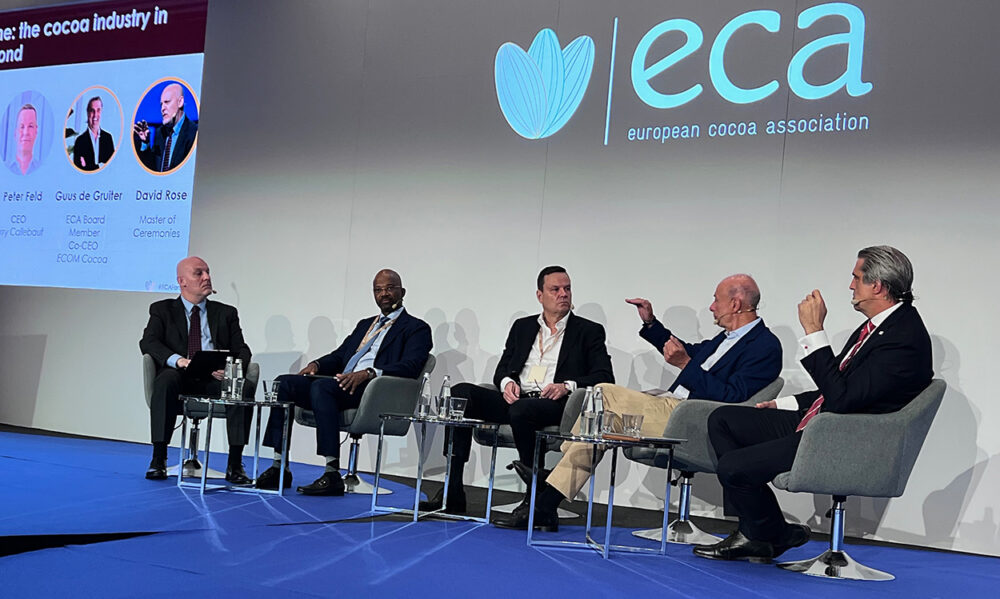 According to Cocoa Radar, the sold-out event for the ECA, which represents 90% of EU cocoa grinding and 85 % of industrial chocolate production, has expanded from nine founders to 58 members.
Among its core topics were how to address key crop diseases such as Swollen Shoot virus, as well as how to approach new EUDR deforestation regulations – which are slated to begin at the end of this year, but are now facing a further year’s pushback at the EU Commission’s request.
Four broad themes framed the agenda, including market dynamics and price volatility, which included sessions explored how cocoa price swings over the past 18 months have affected chocolate demand and how processors can hedge their risk.
The event also looked at sustainability and farming resilience – discussions focused on climate change, pests and diseases, the role of agroforestry, and integrated pest management, as well as training to empower farmers. A dedicated session on the Joint Cocoa Research Fund (JRF) highlighted projects on pollination, disease resistance and contaminant mitigation.

Christian Vollers speaking at the ECA forum.
Furthermore, as Cocoa Radar noted, regulatory preparedness was also critical with EUDR compliance a key topic. The ECA has developed a due diligence protocol, and, according to Director-General Catherine Entzminger, the law should remain focused on countering deforestation. Newly elected ECA president Christian Vollers argued that there was “no substantial reason to delay implementation” and that data‑driven transparency should turn compliance into a strategic asset.
Finally, innovation, data and research was also prominent – Vollers noted that data can be “gold or dust” depending on how it is used. The Forum therefore promised discussions on digital traceability platforms, satellite monitoring, AI applications and the need for an industry‑wide data consortium with open standards.
Beyond compliance, the ECA intends to rebuild trust and motivation through investment, risk management and workforce development; the JRF’s applied research on pollination, vascular streak dieback and contamination mitigation was highlighted.
On the first day, there was a call for trust, collaboration and data‑driven action in which delegates emphasised unity, respect and “practical collaboration”. Rather than dwelling on problems, facilitators steered conversations toward solution‑oriented dialogue – a mindset symbolised by referencing the recovery of the ozone layer as proof that change is possible.
Participants acknowledged heightened market volatility, reduced liquidity and intensifying pressure from tariffs and regulation. To thrive in this environment, speakers argued, the cocoa industry must foster trust, transparency and consistent action, creating a “high‑trust” ecosystem to sustain motivation and progress.
As the report was prepared under the Chatham House Rule, individual comments were not attributed. The general sentiment, however, was clear: only through collective investment, fair value distribution and the strategic use of data can the sector ensure long‑term sustainability. This message should resonate with confectionery manufacturers, who rely on stable supplies of cocoa beans and consumer trust in ethical sourcing.
For the second day, European Commission officials told the Forum that the EU remains focused on implementing the EUDR on 30 December 2025 – however within inside a week of this statement, it emerged that EU ministers have proposed to further delay the scheme so that it would not now start until December 26.
Following last year’s postponement, there is “no instruction to work differently”, and the Commission is finalising tools, answering outstanding questions and preparing for entry into application.
Delegates heard that the EUDR information system, which opened in December 2024, is nearing completion. Work is concentrated on developing technical tools, simplifying the product scope and establishing a benchmarking system based on international data. Upcoming updates will add new features, enhanced training for companies and authorities and expanded translation.
For context, the EU’s Access2Markets portal explains that the Deforestation‑Free Products Regulation (EU 2023/1115) covers commodities such as coffee and cocoa and requires operators to prove products are deforestation‑free with due diligence statements.
For chocolate and confectionery businesses, the takeaway is clear: compliance work cannot be deferred. Supply‑chain traceability systems will need to integrate with the EU’s platform, and investments in geolocation data, risk assessment and supplier engagement must accelerate. The ECA has already developed its own due diligence protocol and encouraged members to view the regulation as an opportunity to drive environmental accountability.
Closing day – optimism, unity and farmer empowerment
The Forum closed on a note of optimism. Against Malta’s Mediterranean backdrop, participants agreed that the industry has both the will and the tools to tackle its most pressing challenges. In his closing address, ECA president Christian Vollers set out three aspirations: Firstly – an open and balanced ECA: Vollers urged the association to remain open, engaging, professional and balanced, reflecting diverse perspectives.
Secondly – fairer pricing for farmers: he called for a system where farmers can refuse unfairly low prices. For confectionery companies, this suggests rising pressure to pay remunerative prices and invest in farmer resilience.
Finally – a high‑trust ecosystem: Vollers envisioned a cocoa value chain where collaboration and transparency replace suspicion and fragmentation. He quoted Mahatma Gandhi, telling delegates to “be the change you want to see in the world,” a reminder that trust must be built through action.
For confectionery producers, this translates into closer collaboration with suppliers, investment in sustainability programmes and participation in multi‑stakeholder initiatives.
As for the top three areas of focus for the event, this included: Regulatory readiness – With the EUDR entering into force in December 2025 for large companies, confectionery firms must ensure their cocoa supply chains are traceable back to farm level. The imminent release of the EUDR information system and the availability of benchmarking tools mean that data quality and integration will be critical.
Secondly, Supply-chain resilience – High prices and weather-related shocks remain a persistent challenge. The Forum highlighted agro‑forestry, pest management and resilient cocoa varieties as avenues to secure future supply. Manufacturers may need to support these initiatives through long‑term partnerships and research funding.
Thirdly, Farmer income and social equity – Calls to empower farmers to negotiate better prices reflect increasing scrutiny of the value distribution in cocoa chains. Businesses may face greater expectations to adopt living‑income benchmarks, share value transparently and support diversification of farmer incomes.
In its take on the conference, Cocoa Radar noted that the European Cocoa Forum underscored how quickly the business environment for cocoa and chocolate is changing. Under the discretion of the Chatham House Rule, delegates shared candid views on price volatility, sustainability, regulatory compliance and digital innovation. The EUDR’s December 2025 deadline, the need for data‑driven transparency, and calls for a high‑trust ecosystem emerged as recurring themes. For confectionery manufacturers, the message is unambiguous: prepare now, collaborate widely and invest in farmers and data systems to ensure a sustainable and competitive supply chain.
