
Exclusive: Global snacking markets reveal sustained growth

Sally Lyons Wyatt of Circana presenting at SOTIC 2026. Pic: Neill Barston
Global snacking markets have continued a steady upward growth trend, with functional and interactive elements seen as key to driving consumer demand, according to latest sector studies, reports Neill Barston.
The new report from Circana highlighted that the US market has reached $231 billion this year, up 3.2% on 2025, with Europe producing sales of $186 bn, up 5.5%, and Australia managing AS $30bn, up 6%, demonstrating sustained shopper interest in a wealth of product ranges.
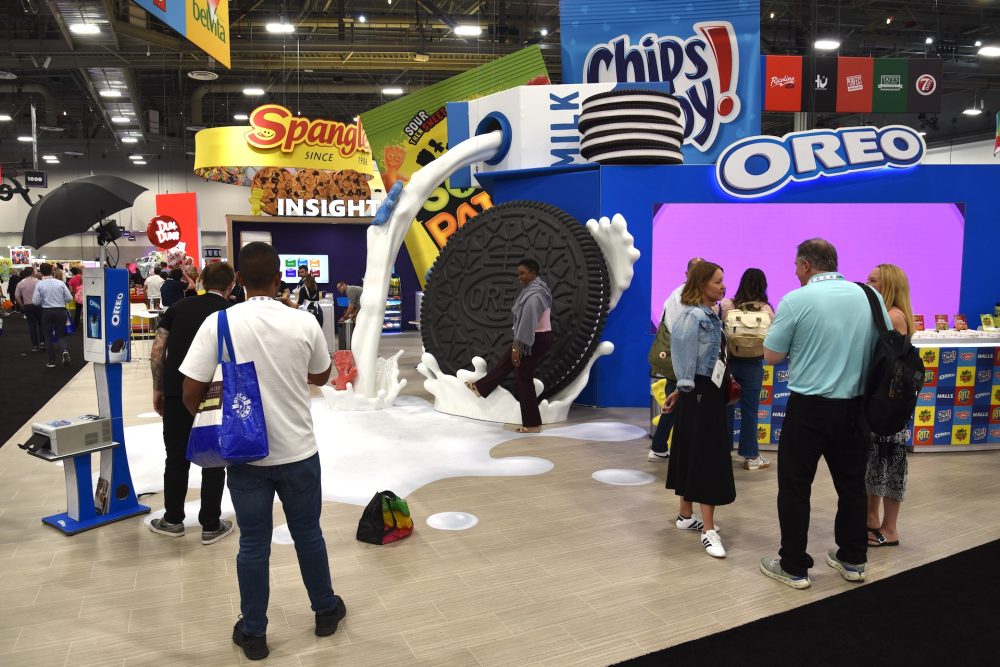
As Confectionery Production recently reported, this was very much underlined at the recent Sweets & Snacks Expo in Las Vegas, which saw a host of smaller independent brands, as well as household names including Hershey, Mars and Mondelez release their latest respective lines for the category (watch our exclusive video review of the event in Nevada below).
With features including its Start-Up street, a wide array of companies were turning their attention to devising protein-enhanced product options, as well as value-added health ingredients, and natural flavours, which has become a major topic of discussion in the US, following in the footsteps of European markets that have for some period legislated closely surrounding health claims and clean-label offerings.
Notably, as the report revealed, snacking has become a daily necessity for consumers worldwide. In the U.S. alone, 55% of shoppers now eat three or more treats each day, up nine percentage points since 2021 – this is particularly significant given the fact that between 2020-2022, there was in itself a significant snacking boom amid the global pandemic, as consumers looked to fill their grocery baskets with an elevated level of comfort food and confectionery amid unparalleled challenges amid COVID-19.
Furthermore, as the study found, factors including a significant rise in GLP-1 medication use, and AI-powered discovery, snacking has evolved far beyond an occasional indulgence into a primary driver of nutrition, energy, and enjoyment.
The Mondelez stand at this year’s Sweets & Snacks Expo in Las Vegas. Pic: Neill Barston
Market shifts
One of the biggest trends seen during the past year has been the expansion of the private label market – which was highly evident at the most recent Dubai trade show last September dedicated to the segment.
In addition, Circana noted that Health-focused benefits are driving purchase decisions. Consumers increasingly choose snacks for energy, digestion, and weight management. Options rich in protein have gone fully mainstream, while snacks high in fiber and those supporting gut health are gaining ground quickly.
Of particular interest is the fact that the line between snacks and meals continues to blur. More consumers are replacing traditional meals with snacking, further fuelling category growth.
Linked to this, how consumers find snacks is changing, too. Discovery is fragmenting across social commerce and digital search, and younger shoppers increasingly rely on AI to find, compare, and select their next snack. Brands that optimise their product data will be the ones that surface in these AI-powered searches.
“Snacking has become one of the most reliable growth engines in food and beverage, and the reasons behind each purchase are now more deliberate than ever,” said Sally Lyons Wyatt, global executive vice president and chief Advisor at Circana. “Consumers expect their snacks to do more, whether that means delivering protein, supporting a health goal, or simply providing a moment of joy. The brands that win will design products around these specific needs and prove their value at every price point.”
Consumers are navigating a divided market. Many pay a premium for unique flavors, textures, and clean ingredients, while others switch to private labels to manage tight budgets. This value polarization requires brands to compete at both ends of the spectrum.
“Snacking is no longer a uniform category, and what drives growth looks very different from one market to the next,” said Ananda Roy, senior vice president and industry advisor at Circana. “We see functional benefits, bold flavors, and value-conscious choices playing out differently in each market. Success depends on reading those regional signals precisely and acting on them faster than the competition.”
The report noted that manufacturers are paying increasing focus on the use of ingredients such as protein, which the study found has strong potential linkage with fibre and hydration benefits in products.
In addition, tapping into the healthier lifestyle market is something many companies are now responding to significantly, with AI becoming increasingly influential in purchasing decisions, the industry is having to rapidly shift its focus to both delivering on strong shelf presence and significantly upping its game in digital arenas.
