
Exclusive: State of the Industry Conference hails US sector’s history and resilience

John Downs, CEO and president of the NCA, pictured at the State of the Industry Conference, has welcomed a new team member devoted to expanding its membership. Pic: Neill Barston
A core theme of confectionery sector resilience amid key challenges formed the centrepiece for the opening sessions of the NCA’s the annual State of the Industry Conference, reports Neill Barston.
As John Downs, the association’s president and CEO, enthused to a record audience of more than 700 professionals from across the sector, there remained notable hope ahead in 2026, as the candy market continues playing an integral role in the nation’s economy.
The industry leader underlined his reflections (officially day two of the event, with its first day, Sunday), including its chocolate council meeting and awards ceremony), with encouraging news from the latest State of Treating Report. This delivered a core assessment of confectionery markets for 2025 delivered an upward growth pattern, registering sales of $55 billion, up by around a billion against the prior year.
The upturn in results came despite a backdrop of continued tests for the market of higher ingredients faced by many operating in the industry, particularly the considerable cocoa price volatility, as well as US regulatory tests that had seen some 170 bills being put forward at state level during the past year.

Proceedings for this year’s conference started last night with its annual awards ceremony, including Arsh Ghuman, of Mars, gaining the Woman of Influence award.
Notably, as the NCA’s president revealed, all but three of those pieces of regional legislation had been successfully addressed, with Downs asserting that the organisation would continue to lobby hard to on behalf of the sector – while recognising that change in itself was not something the industry has ever feared. But as he explained, a level playing field of national legislation was what was required for the legislature in relation to matters of product safety, which remained a major priority for the NCA.
Significantly, reflecting on the history of the candy industry in the US, the engaging sector leader referenced the fact that the confectionery business in the US can trace its heritage back to 1773, several years before the declaration of independence was signed, when the region sourced 320 tonnes of cocoa for use within its nascent settler colonies.
He paid testament to the industry’s determination, noting that the industry has consistently delivered products that people know and love, while introducing new innovations,” with the latter point being particularly significant in generating further growth, especially among younger generations eager to latch-on to the latest trends.
In tribute to its heritage, the NCA’s president enthused that his trade body is believed to be the oldest of its kind within the country, tracing its roots back to the 1880s. Moreover, in celebration of the country’s major milestone, he explained that he had set out on a major road trip with senior colleagues from the organisation to visit some of the country’s longest-established chocolate and candy businesses, as the country marks its 250th anniversary of independence.
John commented: “Well, folks, the more things change, the more they stay the same. Some 142 years ago (when NCA founded), the industry wanted the federal government to create a uniform national standard for food safety, and the NCA helped secure the passage of the nation’s first food safety laws in 1906 so today, we’re still fighting for The same cause, demanding that we have a federal regulatory framework, not a patchwork state laws when it comes to food safety.
“If there’s one thing that I’ve learned in this job over the years, and I’ve learned this, and that is, you all are fanatically, fanatically devoted to our retail partners and our consumers, and that’s what it’s all about,”
The opening morning also featured a significant panel examining the issue of regulatory reforms and wider policy decisions that are creating tests and opportunities in the market.
This featured the NCA’s public policy VP, Brian McKeon, and Chris Gindlesperger, alongside former White House press secretary, Kellyanne Conway, who had previously been at the heart of Donald Trump’s operations, and built a strong understanding of how he had approached governing matters relating to the food and confectionery sector.
Brian McKeon commented that while there has been progress in terms of regulatory reform, there still remained major tests in the market due to the volume of state-level legislation coming through.
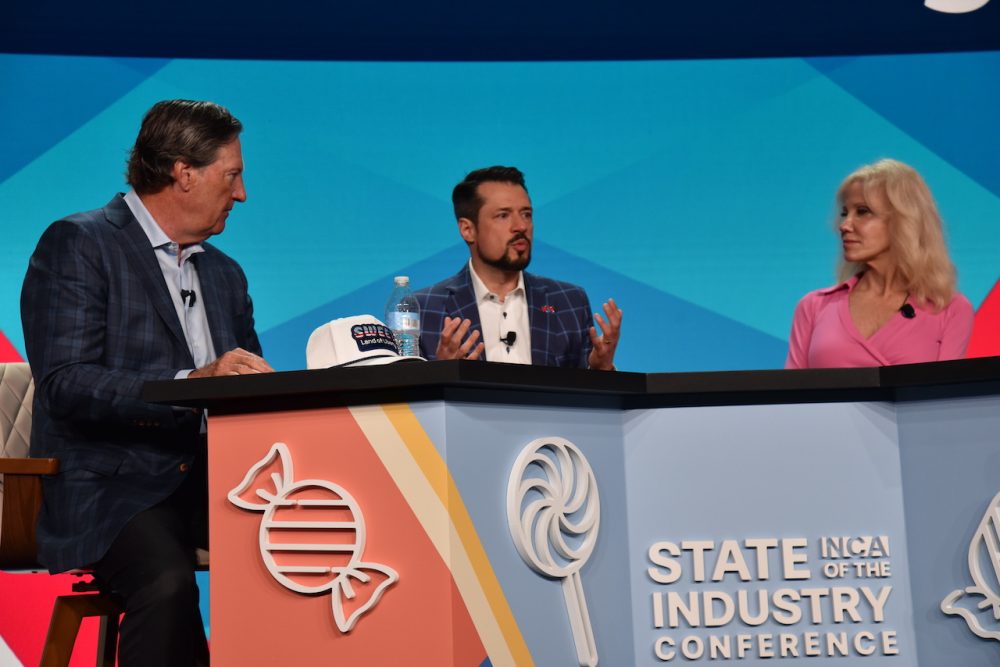
He said: “America is 250 years old. The sugar programme is about half that aid, and in those 100 or so years, it’s never been changed in statute in a direction towards food and beverage manufacturers in this country until the year 2025 so it’s important to note how hard fought and the length of commitment from the folks in this room and our trade association and others who helped us in Washington get modest improvements to the trigger that programme in law. It’s a big deal.
“We had success last year in the Congress with a beautiful bill that was signed into law in July, and We’re working on implementation now, but we’re hopeful that there is faithful implementation of the law by the USDA. and trade representative in the administration, that the results will be significant and real for you all as purchasers of sugar.”
For her part, Kellyanne Conway noted that there had been concerns over the introduction of tariffs, but asserted the White House had recognised that there were exceptions to be made for the confectionery sector in terms of removing the taxes.
She said: “We don’t grow cocoa here. We can’t harvest it here. So this was one that was easier – if you look at the arc of the President’s tariff strategy and what he actually did, it’s very rare that he would take them off, that he would dial them down,” noting this was testament to the work done by the NCA’s team members.
Significantly, Chris Gindlesperger, senior VP of public affairs, added that the country had seen an ‘unprecedented’ level of Bills being put forward this past year, to the point of being the most the country had ever witnessed. In light of this, he believed the work of the NCA and its partners was more vital than ever.
State of Treating report
Notably, delivering the State of Treating Report, Anne-Marie Roerink, explained there was a mixed picture with the market’s performance. On the plus side, total sales volumes remained buoyant, registering an upturn on 2024’s performance.
As she explained, in terms of forecasts, the market was in fact projected to grow even further over the next five years, by a further $7.3 billion, to $62bn in total for the industry by 2030.
This has been driven through solid performance within chocolate, candy, gum and mints – though, as the report revealed, there appeared generational divides in consumption patterns.
According to the analyst, this translated into the ‘baby boomer’ generation aged 60 plus maintaining strong levels of chocolate buying behaviour within the US, while younger generations reportedly were reducing their intake of chocolate tablets, though they were more inclined to enjoy innovative confectionery ranges that featured chocolate as an inclusion, with many younger buyers seemingly favouring the non-chocolate candy segment as their ‘go-to’ confectionery.
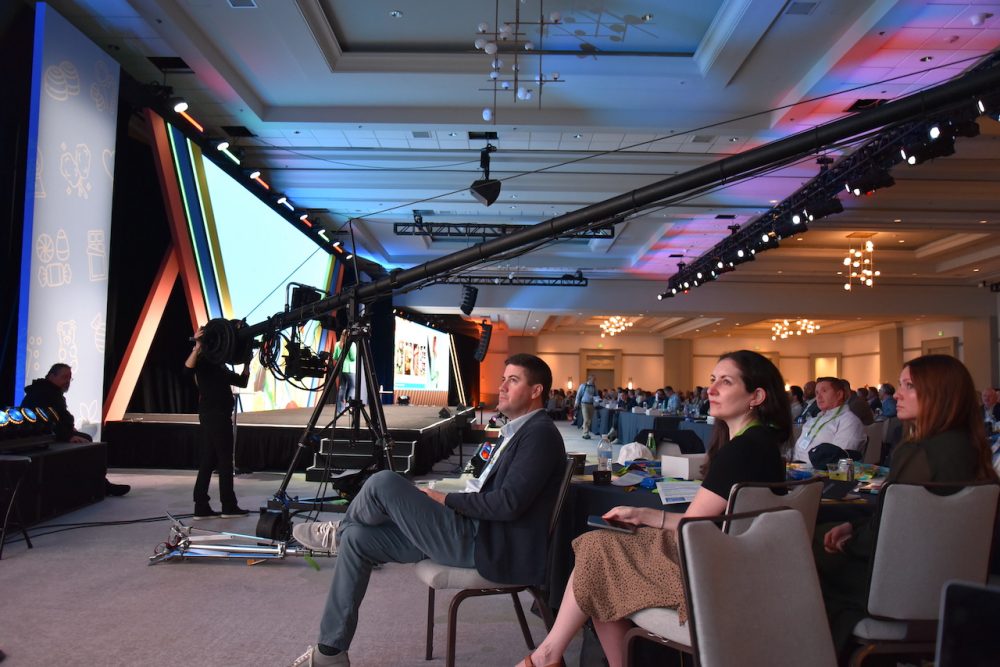
Intriguingly, as the report revealed, while in-store promotions still dominated the sector in terms of influencing purchases, an increasingly number of consumers are shifting their attention to online channels. This included a still-rising level of interest in Tik-Tok, with the platform fuelling the success of many limited edition releases.
Among key facts for the nation’s consumption habit, in 2025, 99.8% of households purchased confectionery products at least once. The study noted thatWhile consumers are carefully weighing their food purchases, their steady engagement with the confectionery category signals the meaningful role that chocolate and candy play in enhancing everyday moments and special celebrations.
Among the core takeaways from the report was that consumers still valued seasonal confectionery.The big four candy seasons (Valentine’s Day, Easter, Halloween, and the winter holidays) accounted for 63% of all confectionery sales in 2025, but consumers are also gifting chocolate and candy for other occasions, including Mother’s Day, Father’s Day, and the Fourth of July.
Furthermore, across all outlets, chocolate represented 51.7% of confectionery sales, but non-chocolate candy continues to gain ground, growing from one-third of market share in 2015 to 40.9% in 2025. Boomers prefer traditional milk and dark chocolate, while Gen Z and Millennials over-index for gummy, chewy, and freeze-dried candies.
Another significant trend was seen with Gen Z and Millennials – with a fine degree of interest in exact re-releases of nostalgic or retro candy, which saw patters of younger generations exploring more novel confectionery and unexpected flavours. There was also the notable factor of candy and confectionery still being regarded as being a great joy-bringer – with most Americans consuming treats on an occasional basis two or three times per week, which chimed with the NCA’s Always A Treat campaign of responsible enjoyment of products within the category.
The morning’s proceedings concluded with an incisive report from Ron Insana, financial specialist, who discussed the potential impact of major geopolitical conditions, including the conflict in Iran. He noted that ‘the longer this went on, the longer the impact it would have’ – particularly within the energy sector, so this would be a key determining factor.
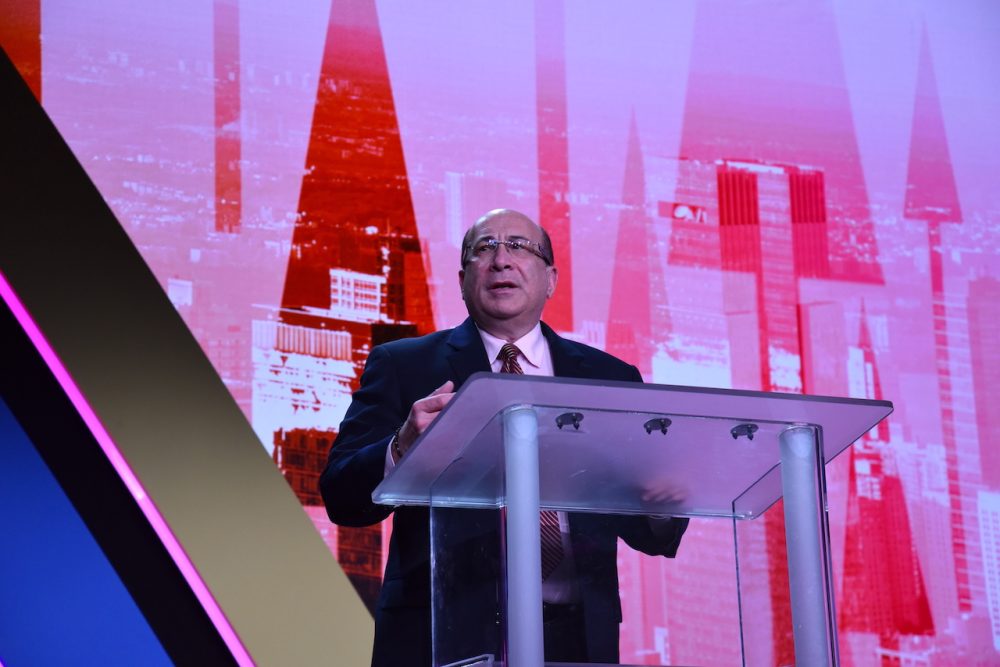
Expressing his own personal view, he believed that despite considerable tests on the immediate horizon, the US economy, and indeed the confectionery sector itself in the region, has proved itself to be notably resilient.
