Exclusive: Alland & Robert makes strides with fresh corporate sustainability report
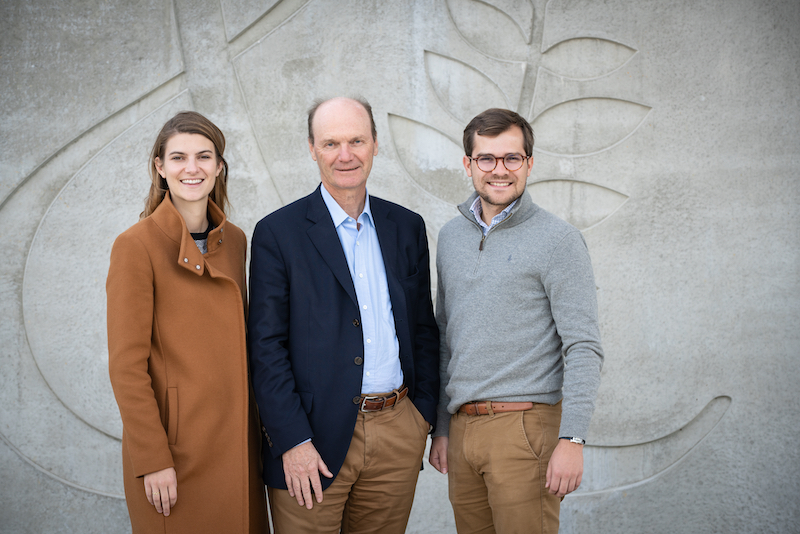
The Alland family have celebrated expanding acacia gum production expansion of its French site. Pic: Alland & Robert
Alland & Robert, the French-based ingredient supplier has stressed the significance of working with industry partners, NGO’s and international organisations for its environmental performance, as it releases its latest corporate responsibility report, writes Neill Barston.
The company, which is due to take up a prominent role speaking at our upcoming World Confectionery Conference on 11 September (you can register for the event in Brussels via the following link), has noted key areas of progress in terms of its emissions, human rights policies and direct support for farmers in its value chain, including acacia gum.
As the company’s CEO Charles Alland noted, he believed the company had set out an ambitious course of maintaining dedicated climate impact reduction goals in line with the Paris Agreement, which he said had been underpinned by recently gaining Fairtrade status as a business.
Speaking in its latest report, he believed that attaining such accreditation was of critical importance in helping drive further improvements right across its supplier chains.
The business now has a total of more than 140 years of history, operating in 72 countries, and attaining revenue of over €93 million in the past year from its 32,000 tonnes of acacia gum production.
As its CEO notes, the company remains a proud signatory of the UN compact on sustainable development goals that were enacted a decade ago, which have provided a strong foundation for operating standards. But he felt there were further enhancements that can be made.
He commented: “Our vision for the future is clear: to offer natural, plant-based and low- carbon solutions for healthier and more sustainable diets. To preserve traditional know-how by supporting the acacia gum harvest and the resilient development of local communities.
“The challenges before us appear at once numerous and exciting. Alland & Robert won’t rest on its laurels. Our commitments to sustainability are growing and we will continue to expand our ambitions: we must do better, do differently and do more, noting that reducing its carbon footprint was a significant priority for the business. This included finding optimum solutions for reducing emissions? I am convinced that the future of Alland & Robert depends closely on the actions we take to improve our environmental performance.
“Doing things differently means adapting to our changing world and fighting climate change. In the regions of the Sahel where we work, recurrent droughts are degrading the land.”
As he added, he believed that it is in the interest of the industry to do everything we can to curb the effects of climate disruption, since rising temperatures have a direct impact on the gum harvest.
He explained that the business had drafted an ambitious climate strategy with a chief goal is to comply with the 2015 Paris agreements to keep climate change well below 2°C.
“To this end, every five years we will review our objectives and draw up a list of further measures to be taken to attain them.
“And finally, doing more means ensuring that gum pickers— without whom nothing we do is even possible—gain more from the economic benefits of gum acacia. We must lead by exemplarity and make sure that they are paid a fair price,” added Alland of its approach.
Supply chain tests
As the company noted, in terms of treatment of it supply chains, it endeavoured to exceed standards set by wider food sectors, including fair and advanced payments to farming cooperatives to ensure that workers were able to exceed. living standards beyond US poverty line payments of €1.90 a day (which has just been raised to $3.00 a day, reflecting higher costs of living within the past few years.
Significantly, the business has taken a strong stand on respecting human rights, and confirmed that there had been no cases of child labour within its supply chains in the past five years for acacia gum, with the business placing a package of support for communities high on its agenda.
Its sustainability strategy has been based around four key pillars, including protecting the planet, creating a positive impact, working with local communities and supporting team members.
In terms of its approach to environmental protections, the company has taken a strategy of continuous monitoring, with some of its projects including restoring around 26,700 hectares of land in Mali in 2024, as well as a 25% rise in incomes from non-timber forest products in Ghana, over 2,800 people supported in Ethiopia on land management schemes.
As regards its precise impacts, since 2020, the company created an action plan for a five-year period that saw an objective of reducing all greenhouse gas emissions by 20% during those years, in line with targets laid-down in the Paris Agreement of 2015.
Some of its actions to reduce emissions included investing in energy-saving equipments, prioritising electricity over gas in its plants, optimising freight and working with suppliers and clients on low-carbon freight options.
The business also work with the French local authorities to create low-carbon options around our facilities, for our collaborators, our raw materials but also our finished products.
In addition, the company has also placed a strong emphasis on tackling deforestation. As it noted, sustainable extraction practices are essential to minimise the environmental and social impacts associated with the use of raw materials. In response, it encourages responsible sourcing, resource efficiency, regulatory compliance and the support of certification programs that verify sustainable and ethical sourcing practices, such as the SEDEX.
Furthermore, the company has partnered with UK-based NGO Tree Aid on the reforestation initiative “Let’s plant trees together”, launched in 2020.
This venture has been based on the volume of gum acacia sold by Alland & Robert and financed through the Corporate Foundation Alland. Between January 2020 and 2024, this initiative funded the planting of more than 19,000 trees in different countries in the Sahel.
The venture has worked in the dry regions of Africa to help local populations fight poverty and the effects of climate change.
As the company added, the reforestation and the restoration of degraded lands are the main levers used by Tree Aid. They help to improve the income of local populations while ensuring nature thrives, and by providing local food. Between 2023 and 2024, Tree Aid supported over 1,701,380 people across the Sahel to grow out of poverty, by increasing incomes by an average of 83%, and creating 785 new enterprises. Tree Aid regenerated over 2,569,587 trees in 2024 as part of its wider sustainability efforts.
People